

Edge Banding Guide: One-Stop Answers from Materials, Adhesives to Common Questions
While edge banding may seem like a small detail, it is crucial to the aesthetics, durability, and environmental friendliness of furniture. Whether you are a furniture manufacturer, woodworking enthusiast, or general consumer, understanding the frequently asked questions about edge banding can help you make more informed decisions. This article, in an FAQ format, comprehensively explains the materials, adhesives, processes, and common issues related to edge banding, helping you avoid pitfalls easily!
I. Basic Concepts
Q1: What is edge banding? Why is it essential for furniture?
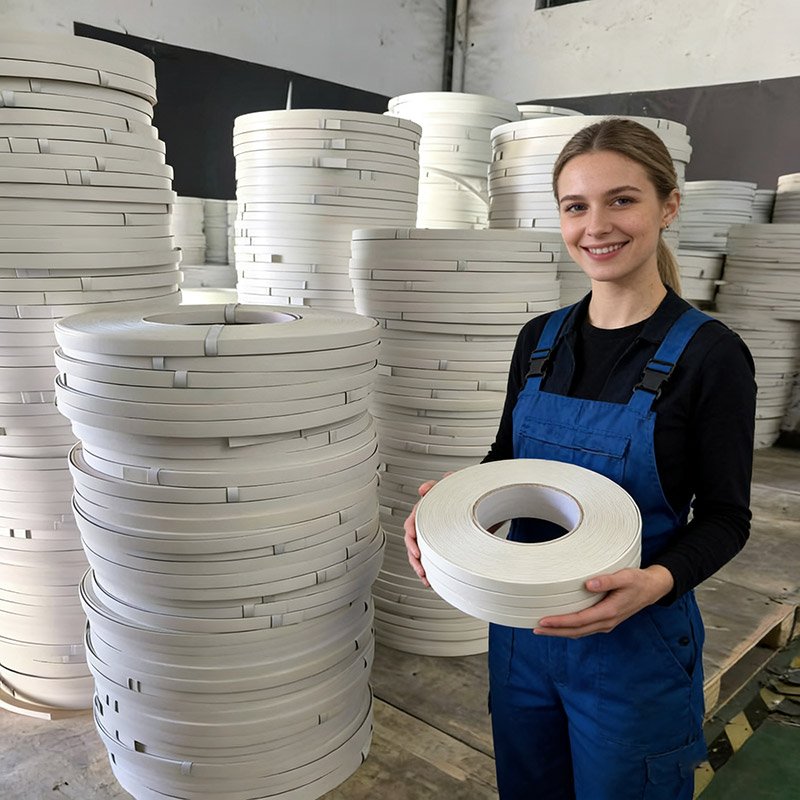
Edge banding is a narrow strip material used to cover the exposed edges of cut boards. Its main functions include:
- Moisture-proof and Warp-resistant: Boards (like MDF, particle board) can swell and warp when exposed to humid air; edge banding effectively blocks moisture ingress.
- Sealing Formaldehyde: Formaldehyde in artificial boards can be released from the edges; proper edge banding reduces formaldehyde emission.
- Enhancing Aesthetics: Covers chipping and burrs from cutting, making the furniture look neater.
- Reinforcing Edges: Prevents edge damage from impact, extending furniture life.
Consequences of No Edge Banding: Board swelling/deformation from moisture, excessive formaldehyde release, edge cracking/chipping, severely affecting furniture usability.
II. Materials & Processes
Q2: What are the common materials for edge banding? How to choose?
- PVC Edge Banding
- Features: Affordable, rich patterns (wood grain, solid colors, etc.), good wear resistance, suitable for most furniture.
- Applications: Cabinet boxes, side panels, and other non-high-contact areas.
- ABS Edge Banding
- Features: Chlorine-free and eco-friendly, good toughness, smooth cut edges that aren’t sharp, better feel than PVC.
- Applications: Door panels, countertops, drawers, and other frequently touched areas.
- Wood Veneer Edge Banding
- Features: Natural wood grain texture, high-end and beautiful, but requires secondary coating/finishing for protection; higher cost.
- Applications: Solid wood furniture or high-end custom pieces with veneer.
- PMMA Edge Banding
- Features: Glass-like transparency, high hardness, scratch-resistant, suitable for modern style furniture.
- Applications: Kitchen cabinets, display cabinets requiring high gloss.
- Metal Edge Banding
- Features: Oil-resistant, wear-resistant, strong decorative effect, common in industrial design.
Selection Advice:
- Budget option: PVC. Pursuing quality: ABS or Wood Veneer. Humid environments: PVC or ABS.
Q3: What are the edge banding processes? Differences between EVA, PUR, and Laser?
- EVA Edge Banding
- Principle: Adhesive applied hot, solidifies upon cooling (physical change).
- Pros: Low cost, simple operation, suitable for most furniture factories.
- Cons: Higher glue consumption, prone to glue ooze; poor heat resistance (may crack at high temps); average aesthetics.
- PUR Edge Banding
- Principle: Adhesive reacts with moisture in the air to cure (chemical change), forming an irreversible bond.
- Pros:
- Strong bonding force, resistant to high and low temperatures (effective from -40°C to 150°C).
- Excellent moisture resistance, ideal for kitchen/bathroom cabinets.
- Thinner glue line, aesthetics close to laser banding.
- Cons: Higher adhesive cost, requires special cleaner.
- Laser Edge Banding
- Principle: The edge banding tape has an activation layer; laser instantly heats and “welds” it to the board.
- Pros: Seamless, no glue line, top-level waterproof/moisture resistance.
- Cons: Expensive equipment (e.g., Homag), limited tape selection.
Process Selection Guide:
- Standard cabinets: EVA
- Kitchen/Bathroom cabinets / High-end cabinets: PUR
- Top-tier customization: Laser
III. Adhesives
Q4: What types of adhesives are commonly used? EVA vs. PUR, which is better?
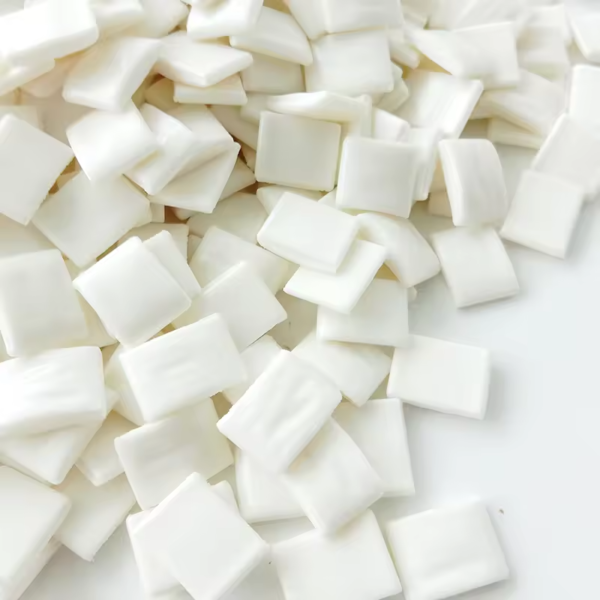
- EVA Hot Melt Adhesive
- Characteristics: Economical and versatile, fast curing (sets upon cooling), but poor resistance to high temperatures and moisture.
- Suitable for: Indoor furniture, low-humidity environments.
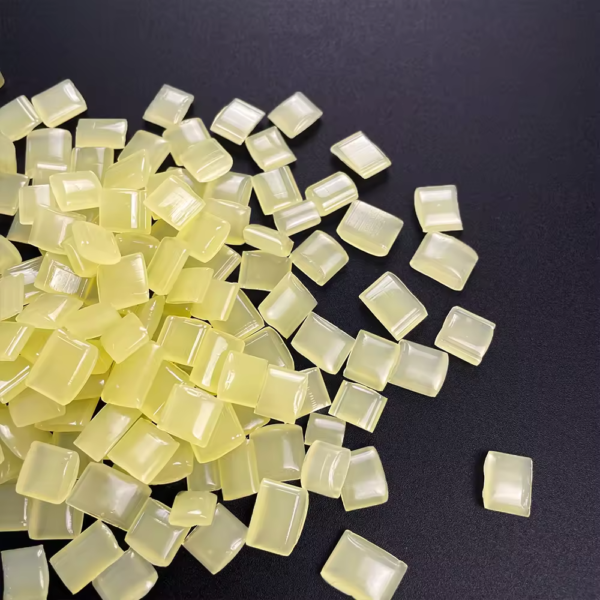
- PUR Hot Melt Adhesive
- Characteristics:
- Forms strong chemical bonds after moisture curing; bond strength can be >50% higher than EVA.
- Excellent weather resistance: withstands high temps, humidity, chemicals.
- Thinner, nearly invisible glue line.
- Suitable for: Bathroom vanities, outdoor furniture, high-end projects.
- Characteristics:
- Eco-friendly Adhesive Options
- Micro-emission PUR: Isocyanate content <0.1%, reduces harmful vapor release.
- Bio-based PUR: Uses renewable carbon-based raw materials, more environmentally friendly.
Selection Advice:
- Standard furniture: Use EVA for cost control. Humid/High-temperature environments: Must choose PUR.

IV. Application & Practical Operation
Q5: How is edge banding adhesive applied? Key steps?
- Heat Adhesive: Heat glue tank to specified temperature (EVA ~150°C–180°C, PUR ~120°C–140°C).
- Apply Glue & Press:
- Glue roller applies adhesive evenly; board passes without touching the roller (prevents contamination).
- Edge banding tape and board are pressed together via pressure rollers; pressure must be even.
- Trim & Clean: Trim excess tape, clean residual adhesive with specialized cleaner.
Important Notes:
- Ambient temperature ≥18°C to prevent adhesive cooling too quickly.
- Board edges must be clean and dust-free; ensure bonding surface is flat.
Q6: Common Edge Banding Problems & Solutions
| Problem | Cause | Solution |
|---|---|---|
| Banding Cracking | Adhesive not moisture resistant / Low temp | Switch to PUR adhesive; Increase room temp |
| Visible Glue Line / Oozing | Too much EVA adhesive | Adjust glue amount; Switch to thin-glue-line PUR |
| Tape Peeling Off | Uneven board surface / Uneven pressure | Clean substrate; Calibrate pressure rollers |
| Glue Line Turns White | Low-quality ABS material | Choose high-quality ABS edge banding |
V. Selection & Inspection
Q7: How to judge edge banding quality?
- Check Flatness: Banding fits flush with the board surface, no gaps, uniform thickness.
- Feel the Edge: Smooth feel, no burrs; ABS edge banding has rounded cut edges, not sharp.
- Test Flexibility: Bend the banding – it shouldn’t break easily (inferior products are brittle).
- Smell Odor: High-quality banding has no pungent smell.
Q8: How to maintain furniture edge banding?
- Avoid scraping the banding joint with sharp objects.
- In humid areas (e.g., bathrooms), regularly check for lifting edges and maintain promptly.
- When cleaning, avoid strong acids/alkalis to prevent corroding the adhesive layer.
VI. Trends & Innovation
Q9: What are the new trends in edge banding technology?
- Eco-friendliness: Micro-emission PUR, renewable raw material adhesives are becoming more common.
- High Performance: PUR edge banding costs are decreasing, making it mainstream for high-end customization.
- Customization: Supports color and texture customization to meet personalized needs.
Edge banding is the “guardian edge” of furniture. Choosing the right material, adhesive, and process can make your cabinets last 20 years longer! If you have special requirements for edge banding or adhesives (e.g., custom colors, high-temperature resistance formulas), please feel free to contact us. We offer free samples and professional technical support!