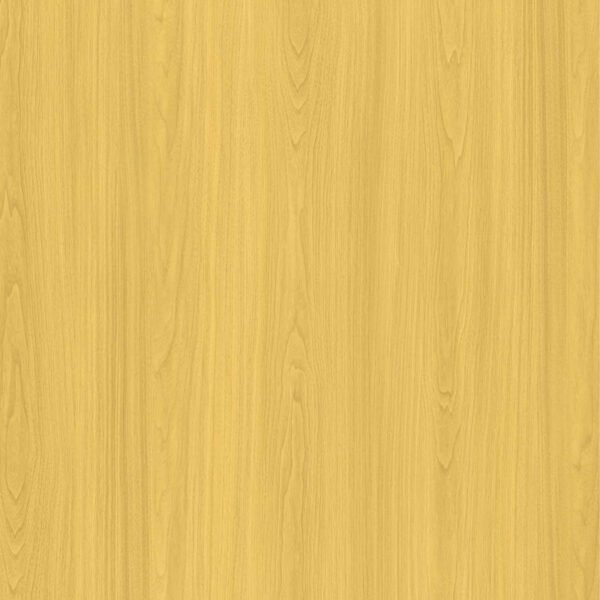


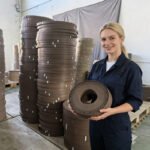

In the world of furniture manufacturing, cabinetry, and office fit-outs, the finish of exposed panel edges is not just a detail—it defines durability, aesthetics, and perceived value.Edge banding is the critical process that transforms raw panel edges into seamless, protected, and visually appealing surfaces. Among the myriad of options, three materials dominate the market:PVC, ABS, and Wood Veneer edge banding.
Choosing the right one can impact your product’s cost, lifespan, environmental footprint, and market appeal. This ultimate comparison provides a clear, at-a-glance analysis to guide furniture makers, cabinet manufacturers, and procurement professionals in making an informed decision.
1. PVC Edge Banding: The Versatile Workhorse
What it is:Polyvinyl Chloride (PVC) edge banding is a thermoplastic material, available in thousands of colors, patterns, and finishes (gloss, matt, textured, solid, and woodgrain prints).
Key Advantages:
- Cost-Effectiveness:Generally the most economical option, offering a low cost per meter without compromising on basic functionality.
- Durability & Moisture Resistance:Highly resistant to moisture, common cleaning chemicals, and impacts. This makes it ideal for kitchen cabinets, bathroom vanities, and office furniture subjected to daily wear.
- Versatility in Design:With advanced printing technology, PVC can mimic wood grains, concrete, marble, and metallic finishes with impressive accuracy, providing endless design possibilities.
- Ease of Application:Works seamlessly with standard hot-melt (EVA) glue edge banding machines. It is forgiving and widely used in factories of all sizes.
Considerations:
- Environmental Profile:Traditional PVC contains chlorine and can release chlorine gas if incinerated. However,eco-friendly PVC options(phthalate-free, using calcium-zinc stabilizers) are increasingly available.
- Feel & Authenticity:While visually versatile, it retains a plastic feel to the touch, which may not satisfy high-end projects seeking a natural material experience.
- Thermal Sensitivity:Can expand or contract slightly with extreme temperature fluctuations and is not heat-resistant near direct sources like stovetops.
Best For:High-volume production, moisture-prone environments (kitchens, bathrooms), commercial office furniture, and projects where budget and visual variety are paramount.
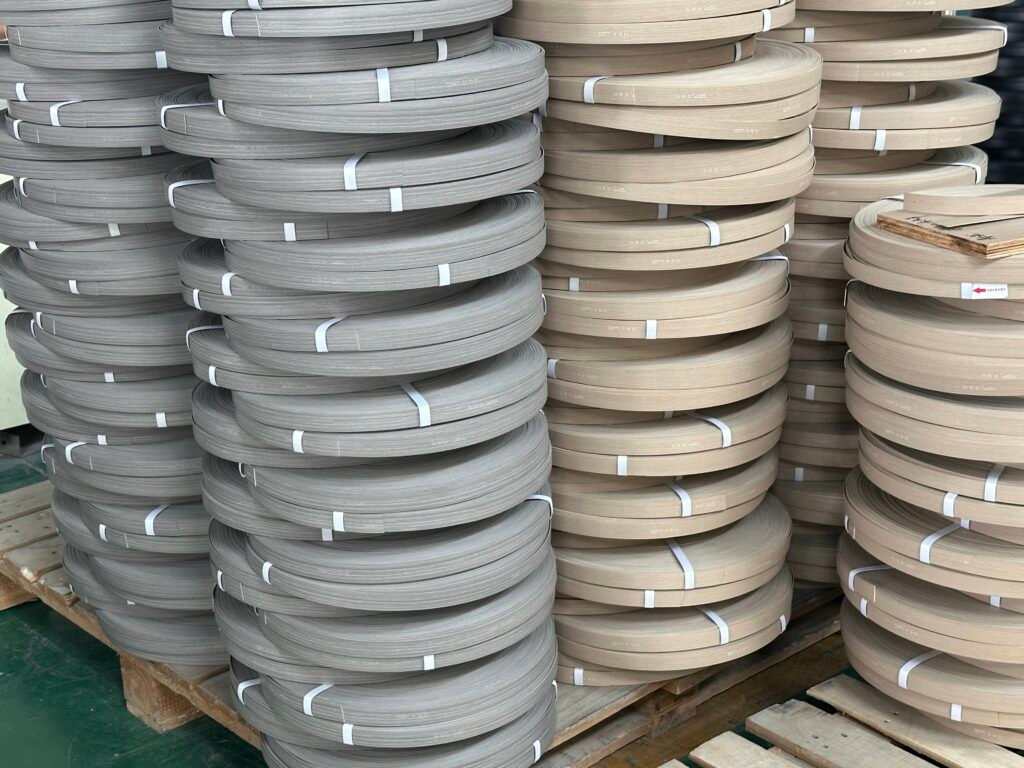
2. ABS Edge Banding: The Premium Plastic Alternative
Acrylonitrile Butadiene Styrene (ABS) is a high-performance, non-chlorinated thermoplastic widely recognized as a premium and more environmentally sustainable alternative to conventional PVC. Its core advantages stem from a unique combination of safety, durability, and finish quality. A key selling point is its enhanced safety and eco-friendliness: the material’s chlorine-free formula not only simplifies and safeguards manufacturing operations but also supports superior end-of-life outcomes, including efficient clean recycling.
It emits minimal odor during processing and is often fully recyclable, making it compatible with stringent green building standards such as GREENGUARD. In terms of physical properties, ABS offers superior flexibility and impact resistance—it remains less brittle than PVC, particularly in low temperatures, which significantly reduces chipping and damage during transport, handling, and on curved profiles. Additionally, it delivers an excellent finish and consistency, with rich, deep colors and a smoother, more refined surface that machines to a cleaner, crisper edge than PVC. It also exhibits better heat and UV resistance, showing less tendency to yellow over time and maintaining integrity under higher thermal exposure.
However, these benefits come with certain trade-offs: ABS typically carries a cost premium of 20–40% over standard PVC, which can impact material budgets in large-scale projects. Moreover, while still highly moisture-resistant, it may slightly underperform compared to PVC under prolonged, extreme wet conditions, though it remains fully suitable for the vast majority of applications. Given this profile, ABS is ideally suited for manufacturers who prioritize environmental credentials, require high durability and a premium finish—such as in high-end office furniture, children’s furniture, and applications demanding excellent machinability and flexibility.
3. Wood Veneer Edge Banding: The Authentic Classic
Wood veneer edge banding consists of real, thin slices of natural wood, typically backed with a hot-melt or heat-activated adhesive, delivering the most authentic natural wood finish available. Its foremost advantage lies in its unmatched authenticity, providing the exact grain, texture, and color variation of the veneered panel itself to create a seamless, monolithic appearance that synthetic materials cannot replicate, with a genuinely wooden touch and feel.
Perfect color and grain matching makes it essential for high-end furniture and architectural millwork, where edges must blend flawlessly with adjacent surfaces, particularly when working with exotic or custom-stained woods. It also offers exceptional finish compatibility, allowing it to be sanded, stained, lacquered, or oiled in tandem with the main panel—enabling custom on-site finishing and precise sheen alignment. As a naturally sourced, biodegradable material from renewable forests, it supports strong sustainability claims, aligning with projects targeting LEED certification or appealing to environmentally conscious consumers.
However, wood veneer edge banding involves higher cost and greater application complexity; the material itself is more expensive, requires skilled handling, is less forgiving than thermoplastics, and typically demands post-machining steps such as sanding, trimming, and finishing. It is also more susceptible to environmental factors, as natural wood expands and contracts with humidity and can be vulnerable to moisture, heat, and scratches without a properly applied protective topcoat. Furthermore, it has limited availability in terms of color and grain options, confined to existing wood species—unlike the nearly infinite digital print possibilities of PVC or ABS.
Given these characteristics, wood veneer edge banding is ideally suited for high-end residential furniture, executive office suites, luxury retail interiors, hotel fit-outs, and any application where the authentic beauty and inherent value of real wood are non-negotiable elements of design and quality.
The Ultimate Comparison at a Glance
| Feature | PVC Edge Banding | ABS Edge Banding | Wood Veneer Edge Banding |
| Core Material | Polyvinyl Chloride (Thermoplastic) | Acrylonitrile Butadiene Styrene (Thermoplastic) | Natural Wood Slice |
| Primary Advantage | Low cost, vast design library | Eco-safe, flexible, superior machined finish | 100% authentic natural look & feel |
| Cost | $(Most Economical) | $$(Moderate Premium) | $$$(Highest) |
| Durability | Excellent impact & moisture resistance | Excellent impact resistance, good moisture resistance | Good, but requires protective finish |
| Moisture Resistance | Excellent | Very Good | Fair(Requires sealing) |
| Heat Resistance | Fair | Good | Fair (Varies by wood & finish) |
| Environmental Profile | Standard options are lower; Eco-PVC available | Excellent(Recyclable, no chlorine) | Excellent(Natural, biodegradable) |
| Application Ease | Very Easy (Standard machines) | Very Easy (Standard machines) | Moderate to Difficult (Skill & finishing needed) |
| Aesthetic Authenticity | Good printed imitation | Very good printed imitation | Perfect(Real wood) |
| Best Application | Kitchens, Bathrooms, Offices, Volume Furniture | Green Buildings, High-Traffic Offices, Child-Friendly Furniture | Luxury Furniture, Executive Offices, Custom Millwork |

Choosing the Right Edge Banding for Your Project
Your choice ultimately hinges on the project’s priorities:
- Choose PVC if:Your project demands cost-efficiency, maximum design variety, and robust performance in humid environments. It remains the undisputed king of volume manufacturing for kitchens, offices, and contract furniture.
- Choose ABS if:Your brand emphasizes safety, environmental responsibility, and a premium finish without the natural wood cost. It’s the intelligent upgrade for durable, high-quality office systems, healthcare furniture, and design-forward projects where flexibility and a clean finish matter.
- Choose Wood Veneer if:Authenticity, luxury, and natural material harmony are the top criteria. It is the only choice for high-end, custom work where the edge must be indistinguishable from the face, aligning with a premium brand identity.
Pro-Tip for Sourcing:
Always request physical samples of the exact edge banding rolls you intend to order. Check for color matching against your panels, flexibility, thickness consistency, and the quality of the adhesive layer. For veneers, examine the grain matching and slice quality.
Conclusion: It’s About Value, Not Just Price
In furniture, cabinetry, and office manufacturing, the edge banding you select is a silent ambassador of your product’s quality. While PVC offers unparalleled versatility, ABS brings a responsible, high-performance edge to the table, and Wood Veneer delivers timeless authenticity.
By understanding the strengths and trade-offs of each material, you can strategically specify edge banding that aligns with your functional requirements, brand values, and target market’s expectations. The right edge doesn’t just cover a panel—it defines the entire piece. Make your choice with confidence.
Upgrade your edge. Define your finish. – Contact shanghai luyao industry co.ltd