






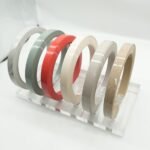
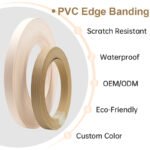
In furniture manufacturing, edge banding not only affects the aesthetic appeal of a product but also directly influences its durability, moisture resistance, and service life. As market demand for high-quality furniture continues to grow, traditional EVA hot melt edge banding can no longer fully meet the requirements of high-end cabinets, office furniture, and custom furniture. PUR (Polyurethane Reactive) hot melt edge banding technology, with its exceptional bonding strength, heat resistance, and moisture resistance, has become a key innovation in modern furniture manufacturing. This article delves into the complete process solution for PUR hot melt edge banding, providing technical guidance and implementation strategies for furniture, cabinet, and office equipment manufacturers.
Advantages and Application Scenarios of PUR Hot Melt Adhesive
1. Analysis of Technical Advantages
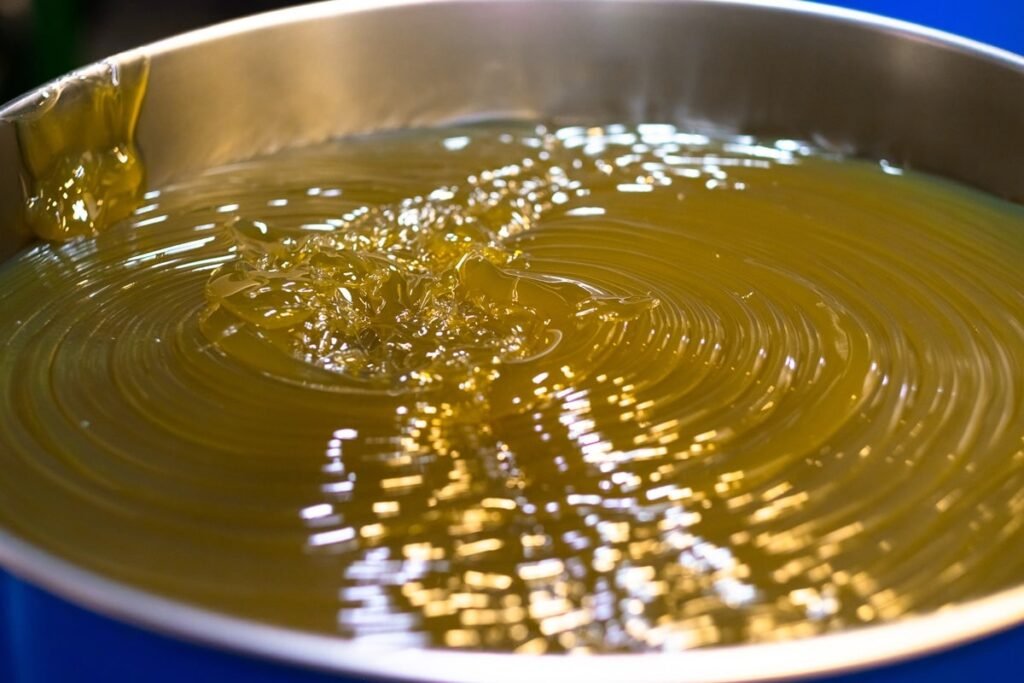
PUR hot melt adhesive initiates a curing reaction upon exposure to air, forming an irreversible, high-strength bonding layer. In comparison to traditional EVA adhesives, PUR demonstrates several significant advantages: it possesses exceptional temperature resistance, capable of enduring temperatures ranging from -40°C to 120°C, making it suitable for diverse climatic environments; it exhibits superior moisture resistance, becoming insensitive to moisture post-curing and effectively preventing edge banding separation; it provides a strong bonding force, forming a durable bond with various substrates including melamine boards, PVC, acrylic, and others; it enables a fine, aesthetic glue line, achieving an almost invisible edge banding effect that enhances the product grade; and it offers chemical corrosion resistance, withstanding exposure to cleaning agents and common chemicals.
2. Analysis of Application Scenarios
PUR edge banding technology is particularly suitable for the following application areas: in high-end cabinet manufacturing, especially for kitchen and bathroom cabinets that need to withstand humidity changes and temperature fluctuations; in office furniture production, where it meets requirements for high-intensity use and long-term durability; in custom furniture manufacturing, where it ensures secure edge banding for special designs and irregular components; and in laboratory and medical furniture manufacturing, where the environments specifically require resistance to chemicals and frequent cleaning.
Complete Process Solution for PUR Edge Banding
1. Pre-Production Preparation and Material Selection
Successful PUR edge banding begins with meticulous preparation:
- Substrate Treatment: Ensure precise panel cutting, smooth edges without burrs, and moisture content controlled between 8-12%
- Edge Band Selection: Choose appropriate PVC, ABS, acrylic, or wood veneer edge banding based on product requirements
- PUR Adhesive Selection: Select adhesive types with appropriate open time, curing speed, and viscosity according to specific application environments
2. Equipment Configuration and Modification
Implementing PUR edge banding requires appropriate equipment support:
- Dedicated PUR Edge Banding Machine: Equipped with a precise temperature control system (typically maintained at 110-130°C)
- Adhesive Application System: Ensures uniform adhesive application, avoiding excess or insufficiency
- Cleaning Device: Regularly removes cured adhesive residue to prevent clogging
- Environmental Control: Maintains workshop temperature at 15-25°C and relative humidity at 40-60%
3. Optimization of Process Parameters
Key process parameters directly affect edge banding quality:
- Adhesive Temperature Control: Precisely controlled within ±2°C range
- Adhesive Application Amount: Adjusted based on edge band thickness, typically 150-250g/m²
- Pressure Settings: Pre-pressure, main pressure, and trimming pressure require graded optimization
- Curing Time: While initial bonding strength forms quickly, full curing requires 24-72 hours
4. Detailed Operational Process
Standardized operational procedures ensure consistent quality:
- Substrate Pre-treatment: Clean edges to remove dust and oil contamination
- Preheating Stage: Moderate preheating of panel edges to improve initial bonding strength
- Adhesive Application: Ensure continuous, uniform adhesive layer without interruption
- Edge Band Attachment: Precise alignment to avoid misplacement
- Pressure Application: Apply appropriate pressure in stages to ensure full contact
- Edge Trimming: Perform fine trimming after preliminary adhesive curing
- Cleaning and Maintenance: Promptly remove excess adhesive and maintain equipment cleanliness
Contact Supplier
5. Quality Control System
Establish comprehensive quality assurance measures:
- Process Monitoring: Real-time monitoring of adhesive temperature, application amount, and pressure parameters
- Sampling Testing: Regular peel strength, heat resistance, and moisture resistance tests
- Standard Operating Procedures: Develop detailed SOP documents and provide regular employee training
- Problem Tracing: Establish a quality traceability system for quick problem identification and resolution
Common Issues and Solutions
1. Edge Banding Separation Issues
Common causes of such failure include insufficient adhesive application, inadequate bonding pressure, excessively high substrate moisture content, or improper surface cleaning. To address these issues, the following corrective measures are recommended: first, increase adhesive application to the standard specified range; second, inspect and calibrate the pressure system to ensure adequate bonding force; third, strictly control substrate moisture content within acceptable limits; and fourth, enhance the pre-bonding cleaning process to ensure optimal surface preparation.
2. Visible Glue Line Issues
The causes for this issue typically include excessive adhesive application, improper timing for the trimming operation, or significant wear on the trimming tools. The corresponding solutions involve optimizing the adhesive application settings to control the amount dispensed, performing the trimming process specifically when the adhesive is in a semi-cured state to ensure a clean cut, and establishing a regular schedule for replacing worn tools to maintain processing quality.
3. Edge Band Shrinkage Issues
The cause analysis for this issue primarily includes improper storage conditions of the edge banding material or a significant temperature difference between the substrate and the edge band during processing. The corresponding solutions involve strictly controlling the storage temperature and humidity of the edge banding materials and ensuring temperature balance between the substrate and the edge band prior to bonding.
Industry Application Cases
1. High-End Cabinet Manufacturing
A German cabinet brand extended its product lifespan by 3 times in humid heat environment tests after adopting PUR edge banding technology, reducing customer complaints by 70%. Key success factors include:
- Selecting specialized PUR adhesive types resistant to high temperature and humidity
- Implementing strict pre-production substrate treatment
- Establishing fully automated adhesive application and pressure control systems
2. Office Furniture Production
An international office furniture manufacturer achieved excellent performance in durability tests after introducing PUR edge banding, particularly suitable for high-intensity use in meeting rooms and public spaces. Implementation highlights include:
- Customizing adhesive types and process parameters for different usage scenarios
- Developing fast-curing formulas to adapt to efficient production cycles
- Implementing multi-level quality inspection systems
3. Custom Furniture Innovation
A high-end custom furniture company achieved perfect edge banding for complex curved surfaces and irregular edges using PUR technology, expanding design possibilities. Innovative practices include:
- Developing specialized application heads for special geometric shapes
- Optimizing pressure distribution solutions for irregular edge banding
- Creating collaborative workflows between designers and process engineers
Future Development Trends and Investment Recommendations
1. Technology Development Trends
- Intelligent Integration: PUR edge banding equipment will become more deeply integrated into smart manufacturing systems
- Environmentally Friendly Adhesives: Development of PUR products with lower VOC emissions and recyclable components
- Multifunctional Integration: Edge banding equipment will integrate more pre-treatment and post-treatment functions
- Rapid Curing Technology: Shortening curing time to improve production efficiency
2. Investment Return Analysis
Although initial investment in PUR edge banding is higher than traditional processes, long-term returns are significant:
- Brand premium from improved product quality
- Cost savings from reduced rework rates
- Enhanced market competitiveness from extended product lifespan
- Business expansion opportunities from access to high-end markets
3. Implementation Recommendations
For companies planning to introduce PUR edge banding technology:
- Phased Implementation: Validate on small-batch production lines first, then gradually expand application
- Supplier Collaboration: Establish strategic partnerships with reliable PUR adhesive and equipment suppliers
- Personnel Training: Invest in technical training for operators and maintenance personnel
- Continuous Improvement: Establish data collection and analysis systems to continuously optimize process parameters
Conclusion
PUR hot melt edge banding represents the future direction of edge banding technology in furniture manufacturing, particularly suitable for cabinets, office furniture, and custom furniture fields with high-quality requirements. By implementing a complete end-to-end process solution, furniture manufacturers can not only significantly improve product quality and durability but also establish technological barriers and brand advantages in a competitive market.
Successful application of PUR edge banding technology requires a systematic approach, with each step—from material selection and equipment configuration to process optimization and quality control—being crucial. As technology continues to advance and costs gradually optimize, PUR edge banding will become the standard choice for more furniture manufacturers, driving the entire industry toward higher quality and more sustainable development.
For companies preparing to upgrade their edge banding processes, now is the ideal time to evaluate and implement PUR technology. Through careful planning and step-by-step implementation, this investment will bring long-term technological advantages and market competitive advantages to your furniture manufacturing business.


