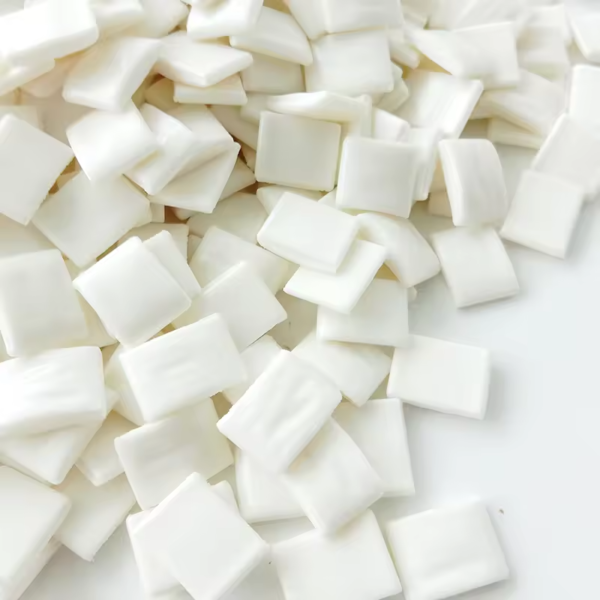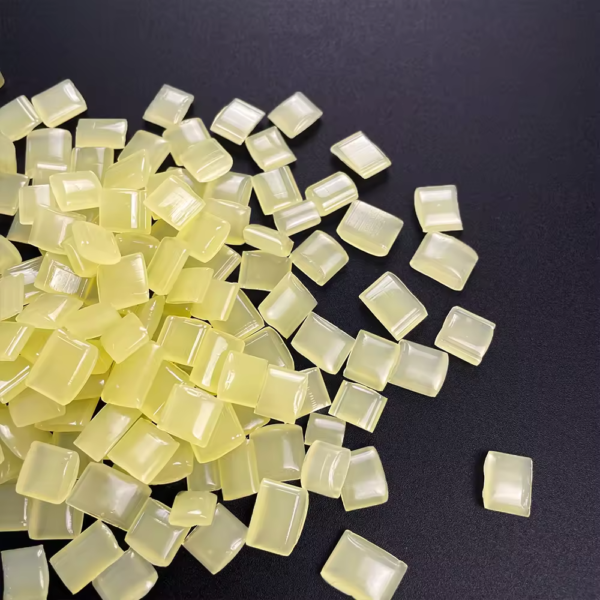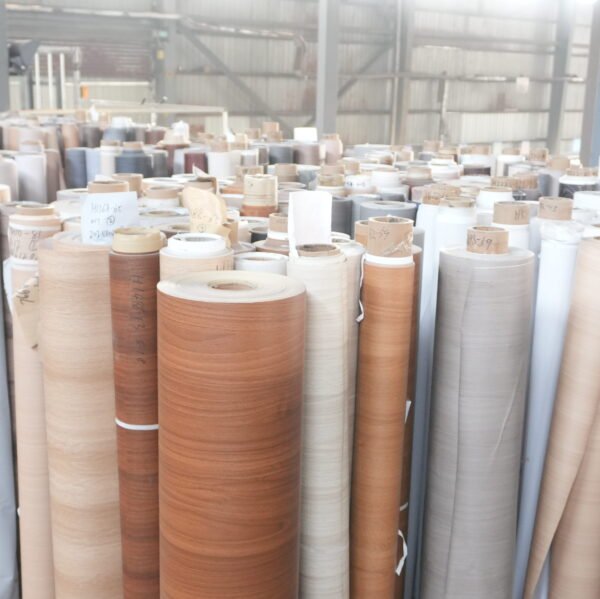


As a global manufacturer, what support do you provide for B2B customers using your edge banding adhesives?
We offer integrated B2B support covering production, compliance, and application:
- Customized production: Tailor EVA/PUR formulations (e.g., low-temperature EVA for wood veneer, waterproof PUR for kitchens) and adjust production parameters to match customers’ equipment.
- Compliance support: Assist with regional certification applications (REACH, SOR/2001-269) and provide localized documentation (e.g., Canadian bilingual SDS).
- Technical guidance: On-site training for production operators, including adhesive preheating, temperature control, and equipment maintenance.
- Full-cycle service: Pre-production raw material testing, in-production process optimization, and post-sales quality tracking. We aim to be a specialized hot melt adhesive solutions provider for global woodworking and furniture industries.
As a global manufacturer of EVA and PUR hot melt adhesives, we often receive questions from customers in the woodworking, furniture, and cabinet industries about product selection, application, performance, production processes, and regional compliance. Below are the most frequently asked questions, with detailed answers to help you make informed decisions for edge banding projects and meet global market requirements.

1. What is the core difference between EVA hot melt adhesive and PUR hot melt adhesive?
The key distinction lies in their bonding mechanism and performance. EVA hot melt adhesive (Ethylene Vinyl Acetate) is a thermoplastic material that bonds via physical cooling—when heated to 150-180°C, it melts and wets the substrate, then solidifies as it cools to form a bond. It is cost-effective, easy to process, and suitable for most general edge banding applications. PUR hot melt adhesive (Polyurethane Reactive) is a reactive adhesive that cures via moisture in the air, forming chemical crosslinks while physically hardening. This gives it superior bond strength, heat resistance (>150°C vs. 80-120°C for EVA), and waterproof performance. While PUR has higher costs, it excels in premium or harsh-environment edge banding tasks.
2. Can both EVA and PUR hot melt adhesives be used for edge banding?
Absolutely—both are widely used in edge banding, but for different scenarios. EVA hot melt glue for edge banding is versatile, compatible with PVC, melamine, ABS, acrylic, and wood veneer edge bands, as well as substrates like MDF and particleboard. It is the go-to choice for standard furniture and cabinet production due to its affordability and easy operation. PUR hot melt adhesive for edge banding is preferred for premium projects, such as kitchen and bathroom cabinets, where moisture resistance and long-term durability are critical. It adheres well to nearly all substrates and maintains stability in high-humidity environments.
3. How to choose between EVA and PUR for edge banding materials like PVC or melamine?
For PVC edge banding, both EVA and PUR work, but EVA is more cost-effective for general use, while PUR is better for PVC edge bands in wet areas. For melamine edge banding, EVA hot melt for melamine edge banding is sufficient for indoor furniture, but PUR is recommended if the product needs to withstand temperature fluctuations or moisture. For ABS and acrylic edge bands, EVA’s quick bonding works for mass production, while PUR enhances the edge band’s resistance to chipping and wear. For wood veneer edge banding, EVA’s low-temperature option (120-140°C) avoids damaging the veneer, while PUR ensures a tight, long-lasting bond.
4. What are the key factors to consider when selecting edge banding hot melt adhesive?
Four core factors:
- Load-bearing and application environment: Use EVA for light to medium loads in dry indoor spaces; choose PUR for heavy loads or humid areas (e.g., bathrooms).
- Substrate and edge band material: Match the adhesive to materials—e.g., EVA for wood veneer (low heat), PUR for PVC in kitchens.
- Processing efficiency: EVA has faster bonding and shorter open time, ideal for high-speed production lines; PUR requires moisture curing time but offers better long-term performance.
- Regulatory compliance: Opt for low VOC hot melt edge banding adhesive or eco-friendly variants if targeting markets with strict environmental standards (e.g., Europe, North America).
5. Do EVA and PUR hot melt adhesives require different edge banding equipment?
Yes. EVA hot melt edge banding machine requirements are simple—standard hot melt applicators work, with no special environmental controls. This reduces equipment investment for manufacturers. PUR hot melt edge banding equipment needs specialized systems: sealed melting tanks to prevent moisture absorption (which triggers premature curing), and precision nozzles to control application. While the initial cost is higher, it is necessary to ensure PUR’s performance. Some machines are compatible with both, but dedicated equipment is recommended for mass production.
6. Are there waterproof or low-temperature options for edge banding hot melt adhesives?
Yes. For waterproof needs,waterproof PUR edge banding adhesive is the top choice—it resists water immersion for 72 hours without delamination, suitable for kitchen and bathroom furniture. EVA also has water-resistant variants, but they are only for moderately humid environments. For low-temperature processing, low temperature hot melt adhesive for edge banding (120-140°C) is available, reducing energy consumption by over 30% and protecting heat-sensitive substrates like thin wood veneer. These are popular in eco-conscious manufacturing.
7. What regional compliance certifications should industrial hot melt adhesive manufacturers provide for edge banding?
As a B2B manufacturer, we offer products compliant with global regional regulations and certifications:
- Quality management: ISO 9001.
- Europe: REACH SVHC (no more than 0.1% content of high-concern substances, notification required for annual imports exceeding 1 ton), CE MDR, and DIN EN 12590 (for viscosity and setting time testing); ZDHC Level 3 for eco-friendly requirements.
- North America: FDA 21 CFR Part 175 for food-contact furniture, SOR/2001-269 (Canada, mandatory bilingual labels, lead ≤90ppm, cadmium ≤130ppm) – industrial-grade products for B-end customers are exempt from partial consumer regulations.
- Asia-Pacific: China’s GB/T 28197-2011, Japan’s JIS K 6956, and South Korea’s KS standards. We also provide ASTM D-1838 (bond strength) and ISO 1133 (melt flow rate) test reports, material SDS, and compliance declarations to support customers’ market access.
8. Why do some edge banding projects experience adhesive failure, and how to avoid it?
Common causes include incorrect adhesive selection (e.g., using EVA in humid areas), insufficient substrate cleaning, improper processing temperature, or non-compliant raw materials in production. To avoid failure: ① Choose the right adhesive—PUR for moisture-prone areas, EVA for standard use. ② Ensure substrates (MDF, particleboard) are dry and free of dust. ③ Control processing temperature: 150-180°C for EVA, 120-160°C for PUR; maintain EVA’s thermal stability (viscosity change rate ≤10% within 50-70 hours). ④ For PUR, allow 24-48 hours of curing in 40-60% humidity. We also offer professional hot melt edge banding solutions, including production process audits and raw material compliance verification, to troubleshoot and optimize processes.
10. Are there sustainable or bio-based options for EVA and PUR hot melt adhesives?
Yes. We integrate sustainability into the entire production process and offer eco-friendly hot melt edge banding adhesive variants: ① Bio-based EVA hot melt adhesives, made from renewable plant-based vinyl acetate, produced via low-energy pre-melting processes, with low VOC emissions and recyclable properties. ② 100% solids PUR hot melt adhesives, manufactured in sealed systems to avoid moisture contamination, solvent-free to reduce environmental impact. These products meet global green trends—our bio-based EVA has bonding strength comparable to petroleum-based alternatives but a 30% lower carbon footprint, and complies with EU and North American eco-label requirements.
9. As a hot melt adhesive manufacturer, what are your production processes and quality control advantages?
We have a complete end-to-end production system for EVA and PUR hot melt adhesives:
- Raw material control: Select high-purity EVA resin, isocyanate monomers, and food-grade additives; conduct incoming REACH SVHC and heavy metal testing to ensure compliance.
- Production process: EVA adhesives adopt jacketed melting pots for pre-melting (2-hour preheating) and twin-screw extrusion granulation, with real-time viscosity monitoring to maintain stability. PUR adhesives use sealed melting tanks and nitrogen protection to prevent premature curing, with precision metering to control component ratios.
- Quality inspection: Online testing of melt flow rate (ISO 1133) and thermal stability; offline verification of bond strength (ASTM D-1838) and setting time (DIN EN 12590); each batch undergoes low VOC and heavy metal detection. We support custom formulations (e.g., viscosity-adjusted EVA for high-speed edge banding machines) and offer small-batch trial production, with a annual capacity of 50,000 tons to meet global bulk orders.