

In the global woodworking and furniture manufacturing industry, edge banding is a critical process that determines product durability, aesthetics, and market competitiveness. As the core material of edge banding, hot melt adhesives have undergone continuous technological iteration, withEVA hot melt adhesive and PUR hot melt adhesive becoming the two dominant solutions. For manufacturers targeting the global market, understanding the application characteristics, regional compliance requirements, and production technology of these two adhesives is key to seizing market opportunities. This article explores the application scenarios, technical differences, compliance standards, and future trends of EVA and PUR hot melt adhesives in edge banding, providing insights for industry practitioners.
I. Application Segmentation: EVA vs. PUR in Global Edge Banding Scenarios
Edge banding applications cover furniture, cabinets, wood-based panels, and other fields, with diverse requirements for adhesive performance. The choice between EVA and PUR is largely determined by application scenarios, cost budgets, and environmental conditions.
1.1 EVA Hot Melt Adhesives: The Cornerstone of Mass Production
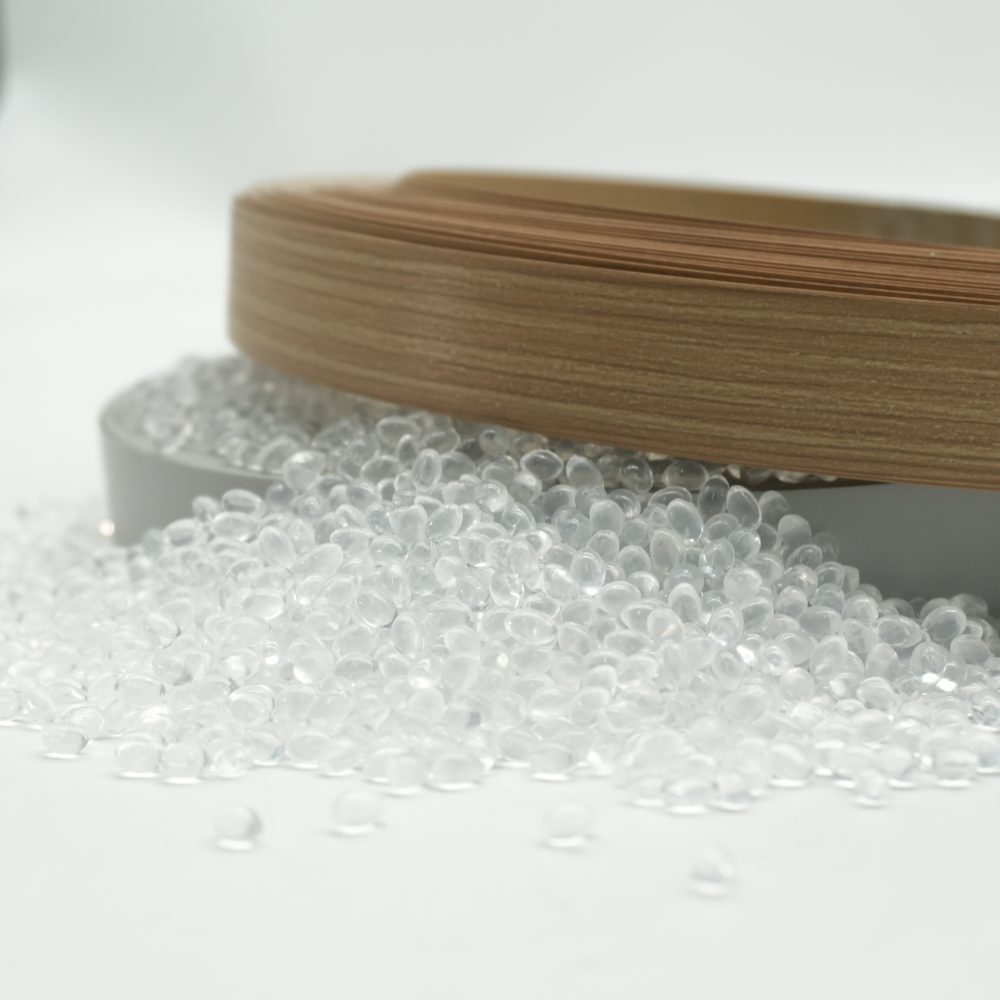
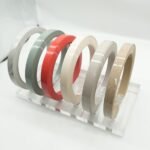
EVA hot melt glue for edge banding is widely recognized for its cost-effectiveness, easy processing, and strong versatility, making it the preferred choice for mass-produced furniture and standard cabinets. It is compatible with various edge band materials, including PVC, melamine, ABS, acrylic, and wood veneer, and can bond well with substrates such as MDF, particleboard, and plywood. In the European and North American mid-range furniture markets, EVA hot melt for melamine edge banding and EVA hot melt for PVC edge banding are widely used in living room furniture and office cabinets, thanks to their fast bonding speed (setting time within 3-5 seconds) and adaptability to high-speed edge banding machines.
In emerging Asian markets, EVA hot melt edge banding glue dominates due to its affordable price and low equipment investment requirements. Manufacturers can use standard EVA hot melt edge banding machine without specialized modifications, reducing initial production costs. Additionally, low-temperature EVA hot melt adhesives (processing temperature 120-140°C) have become popular in the wood veneer edge banding field, as they avoid thermal damage to thin veneers while reducing energy consumption by over 30%.
Polyurethane reactive hot melt adhesive (commonly referred to as PUR hot melt adhesive or PUR hot melt) has gained prominence in high-end markets due to its superior performance. Unlike EVA’s physical cooling bonding, this Reactive PUR hot melt adhesive relies on its inherent characteristic as a Moisture-curing PUR hot melt—it forms stable chemical crosslinks when in contact with air humidity, delivering exceptional bond strength, heat resistance, and waterproof properties. Specifically, High-temperature PUR hot melt can withstand temperatures exceeding 150°C, making it suitable for environments with thermal fluctuations.
In kitchen and bathroom cabinet production—where moisture, temperature changes, and frequent use are common—Waterproof PUR hot melt adhesive is irreplaceable. It can withstand 72 hours of water immersion without delamination, fully meeting the durability requirements of humid environments. Additionally, most commercial products are One-component PUR hot melt adhesive, which eliminates the need for on-site mixing, simplifying operation while ensuring consistent performance, a key advantage for large-scale manufacturing.
In the European premium furniture market, PUR hot melt glue (a consumer-friendly term for PUR hot melt adhesive) is widely used in custom furniture and high-end cabinetry. Its reactive curing mechanism enhances edge resistance to chipping and wear, maintaining long-term stability even under heavy use. However, Reactive PUR hot melt adhesive has strict equipment requirements: it needs specializedPUR hot melt edge banding equipment, including sealed melting tanks and precision nozzles, to isolate air moisture and prevent premature curing of the Moisture-curing PUR hot melt. While this increases initial equipment investment, the performance advantages of Polyurethane reactive hot melt adhesive—such as non-yellowing, high peel strength, and environmental durability—make it a cost-effective choice for high-end projects in the long run.
1.3 PUR Hot Melt Adhesives: Cross-Industry Applications Beyond Edge Banding
Beyond furniture and woodworking, PUR hot melt adhesive (short for Polyurethane reactive hot melt adhesive) has expanded into multiple high-demand industries, driven by its unique performance advantages as a Moisture-curing PUR hot melt. Its ability to form durable chemical bonds, resist extreme conditions, and adapt to diverse substrates makes it indispensable in sectors requiring long-term reliability.
In the automotive industry, High-temperature PUR hot melt is widely used for interior component bonding, such as door panels, instrument panels, and seat cushions. It withstands high temperatures (exceeding 150°C) and frequent vibrations, maintaining stable bonds even in harsh in-vehicle environments. As a One-component PUR hot melt adhesive, it simplifies the automated production process, eliminating on-site mixing and improving assembly efficiency—critical for mass automotive manufacturing. Additionally, Waterproof PUR hot melt adhesive is applied in exterior parts like sunroof seals and door trims, resisting rain, snow, and temperature fluctuations.
The electronics industry relies on Reactive PUR hot melt adhesive for precision bonding of components such as circuit boards, sensors, and battery packs. Its low outgassing, excellent electrical insulation, and moisture-curing property ensure no damage to sensitive electronic parts, while forming airtight seals to prevent dust and moisture intrusion. PUR hot melt also accommodates the thermal expansion of electronic materials, reducing the risk of bond failure due to temperature changes.
In packaging and printing, Waterproof PUR hot melt glue is used for heavy-duty packaging (e.g., corrugated boxes for industrial parts) and food packaging. It provides strong bonding strength for multi-layer substrates, resists moisture and oil, and complies with food contact standards (such as FDA 21 CFR Part 175). For high-speed packaging lines, One-component PUR hot melt adhesive offers fast initial bonding while ensuring long-term seal integrity, suitable for frozen food packaging and outdoor transportation.
The construction industry adopts PUR hot melt adhesive for bonding decorative materials, such as wall panels, floor tiles, and window frames. High-temperature PUR hot melt resists outdoor UV radiation and thermal cycles, while its waterproof performance prevents bond degradation in humid construction environments. It also adheres well to non-porous substrates like glass, metal, and PVC, expanding its application in interior and exterior decoration.
In the medical device industry, Reactive PUR hot melt adhesive is used for bonding disposable medical supplies (e.g., syringes, medical dressings) and durable equipment (e.g., diagnostic instruments). It meets biocompatibility standards, has low VOC emissions, and forms sterile, waterproof bonds—essential for medical products that require strict hygiene and reliability. As amoisture-curing solution, it cures at room temperature without additional heat, avoiding damage to heat-sensitive medical materials.
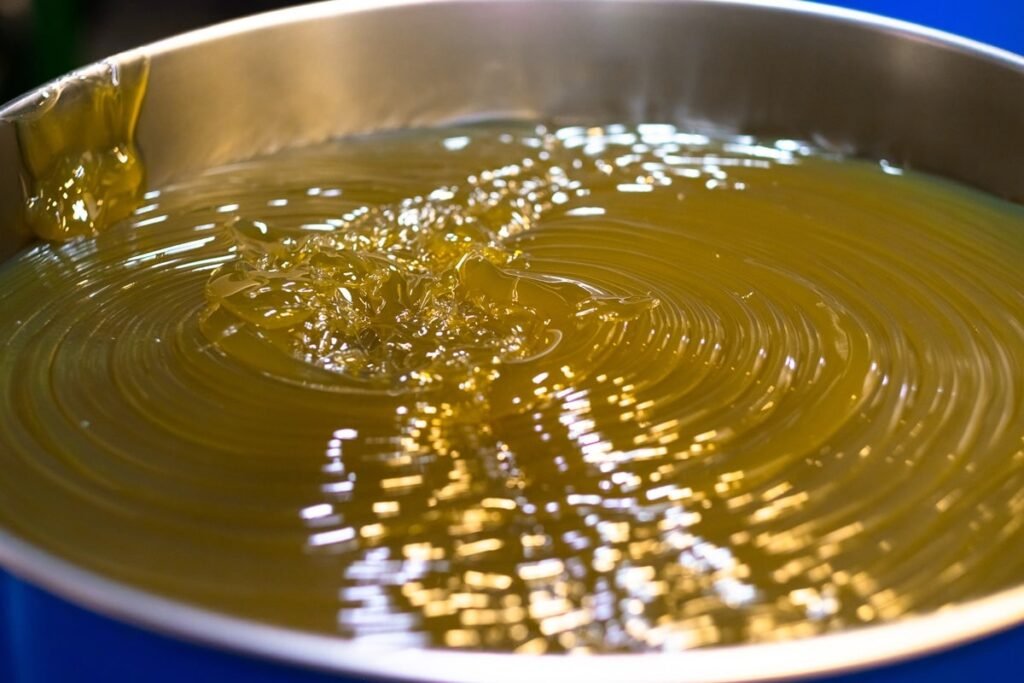
PUR hot melt glue
II. Production Technology: Core Competitiveness of Hot Melt Adhesive Manufacturers
As a global manufacturer of EVA and PUR hot melt adhesives, mastering advanced production processes and strict quality control is crucial to ensuring product consistency and compliance. The production of EVA and PUR adhesives has distinct technical requirements, reflecting the manufacturer’s R&D and production capabilities.
2.1 EVA Hot Melt Adhesive Production: Stability as the Core
The production of EVA hot melt adhesives follows a strict process: raw material selection, pre-melting, extrusion granulation, and quality inspection. High-purity EVA resin (vinyl acetate content 18-33%) and food-grade additives are selected as raw materials, with incoming inspections for heavy metals and REACH SVHC substances to ensure compliance. In the production stage, jacketed melting pots are used for pre-melting (2-hour constant-temperature preheating at 150-160°C) to avoid local overheating and resin degradation. Twin-screw extrusion granulation is adopted, with real-time viscosity monitoring (viscosity change rate ≤10% within 50-70 hours) to ensure stable product performance.
Offline quality inspection covers melt flow rate (ISO 1133), bond strength (ASTM D-1838), and setting time (DIN EN 12590), with each batch undergoing low VOC detection to meet global environmental standards. Manufacturers can also customize formulations according to customer needs, such as adjusting viscosity to match high-speed edge banding machines or optimizing flexibility for acrylic edge banding.
The production of Reactive PUR hot melt adhesive has higher requirements for process sealing and component ratio control, especially for One-component PUR hot melt adhesive, which integrates all reactive components into a single formula. The production process adopts sealed melting tanks with nitrogen protection to isolate air moisture—this is critical for Moisture-curing PUR hot melt, as even trace moisture can trigger premature curing of isocyanate monomers.
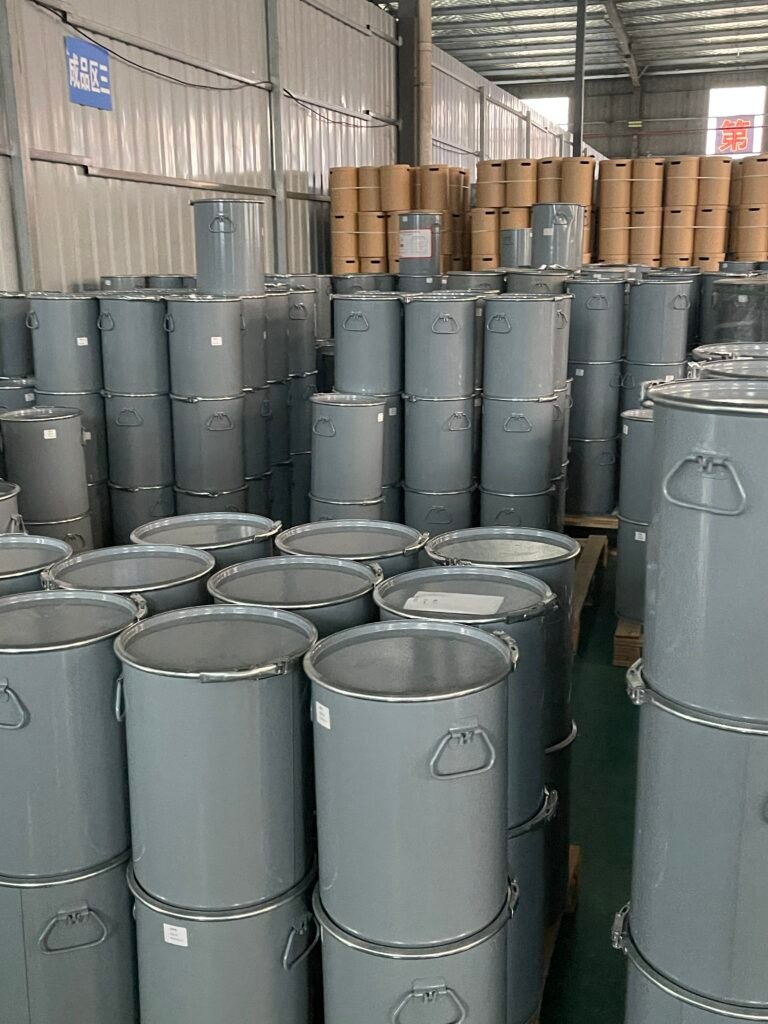
Precision metering pumps are used to control the ratio of polyol and isocyanate components (error ≤±1%), ensuring stable curing speed and bond strength of the PUR hot melt adhesive. For High-temperature PUR hot melt variants, additional heat-resistant modifiers are added during production, with strict temperature control during extrusion to avoid ingredient degradation. After granulation, all PUR hot melt products are packaged in moisture-proof aluminum foil bags with desiccants, extending the shelf life to 6 months under sealed conditions and ensuring consistent performance upon delivery to global customers.
Quality control for PUR focuses on curing speed, bond strength, and water resistance. Each batch is tested for curing time under 40-60% humidity (standard curing within 24-48 hours) and water immersion resistance, ensuring compliance with high-end application requirements. For specialized scenarios such as marine furniture, manufacturers can adjust the formula to enhance corrosion resistance, making the product suitable for harsh environments.
III. Global Compliance: Breaking Regional Market Barriers
For manufacturers targeting the global market, complying with regional regulations and certifications is a prerequisite for market access. EVA and PUR hot melt adhesives must meet different compliance standards in Europe, North America, Asia-Pacific, and other regions, covering environmental protection, safety, and product quality.
3.1 European Market: Strict Environmental and Safety Requirements
The European market has stringent requirements for hot melt adhesives, with core certifications including REACH SVHC, CE MDR, and ZDHC Level 3. Products must not contain more than 0.1% of high-concern substances listed in REACH SVHC, and annual imports exceeding 1 ton require prior notification. CE MDR certification is mandatory for medical-related woodworking products, ensuring no harmful substances are released. Additionally, DIN EN 12590 standard testing for viscosity and setting time is required for edge banding adhesives, and low VOC hot melt edge banding adhesive (VOC content ≤5g/L) is preferred to meet indoor air quality requirements.
3.2 North American Market: Food Contact and Heavy Metal Limits
In North America, adhesives used in kitchen cabinets and food-contact furniture must comply with FDA 21 CFR Part 175, ensuring no migration of harmful substances into food. Canada implements SOR/2001-269 regulations, requiring bilingual (English-French) labels, lead content ≤90ppm, and cadmium content ≤130ppm. Industrial-grade products for B-end customers are exempt from partial consumer regulations but must provide ASTMD-1838 bond strength test reports and SDS documents to prove product safety.
3.3 Asia-Pacific Market: Local Standard Adaptation
The Asia-Pacific market has diverse regional standards: China implements GB/T 28197-2011 for hot melt adhesives, specifying viscosity, bond strength, and environmental indicators; Japan requires compliance with JIS K 6956, with strict limits on formaldehyde emissions; South Korea enforces KS standards, focusing on product durability and low-temperature performance. Manufacturers need to adjust formulations and testing items according to local standards to adapt to market demand.
IV. Future Trends: Sustainable Development and Technological Innovation
With the global emphasis on environmental protection and the upgrading of manufacturing technology, EVA and PUR hot melt adhesives are moving toward sustainability, intelligence, and high performance.
4.1 Sustainable Development: Eco-Friendly Formulations
Bio-based and low-carbon products have become the focus of industry innovation. Manufacturers are developing eco-friendly hot melt edge banding adhesive variants, such as bio-based EVA hot melt adhesives made from renewable plant-based vinyl acetate, which have a 30% lower carbon footprint than petroleum-based alternatives. 100% solids PUR hot melt adhesives, with no solvents and recyclable packaging, are widely promoted in European markets, meeting green production goals of furniture manufacturers.
Intelligent production is gradually popularized, with manufacturers introducing IoT monitoring systems to realize real-time tracking of production parameters (temperature, viscosity, component ratio) for Polyurethane reactive hot melt adhesive, improving product consistency. In terms of performance, technological breakthroughs focus on two directions: one is low-temperature curing Reactive PUR hot melt adhesive (processing temperature ≤120°C), which expands application scenarios to heat-sensitive substrates; the other is upgrading High-temperature PUR hot melt to withstand temperatures up to 180°C, adapting to industrial edge banding scenarios with high thermal loads.Meanwhile, One-component PUR hot melt adhesive is being optimized for faster curing speed, reducing production cycle time while retaining the convenience of one-step operation, further enhancing its competitiveness in the global market.
V. Conclusion
EVA and PUR hot melt adhesives play irreplaceable roles in the global manufacturing landscape, with EVA dominating mass production in furniture and woodworking, and PUR hot melt adhesive leading high-end and cross-industry applications.
From automotive interiors to electronic components, from construction decoration to medical devices, Polyurethane reactive hot melt adhesive—with its characteristics as a Moisture-curing PUR hot melt, High-temperature PUR hot melt, and Waterproof PUR hot melt adhesive—continues to expand its reach. For global manufacturers, mastering core production technologies of One-component PUR hot melt adhesive and other variants, complying with regional regulations, and leveraging its cross-industry adaptability are key to maintaining competitiveness.
As industries upgrade, Reactive PUR hot melt adhesive will further iterate, providing more efficient, environmentally friendly, and reliable bonding solutions for diverse sectors, driving the high-quality development of the global manufacturing industry.