





I. Basic Understanding
1. What is Edge Banding? What are its core functions?
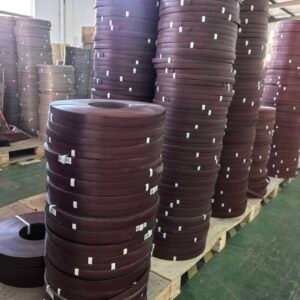
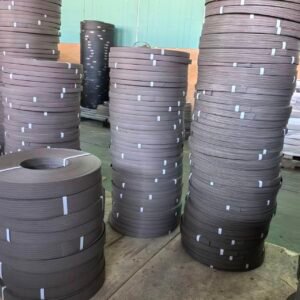
Edge banding refers both to a process for treating the edges of wood-based panels and the narrow decorative protective strips used in conjunction. It is widely applied to the exposed edges of plywood, particleboard, medium-density fiberboard (MDF), and other panels. Its core functions include three aspects: first, enhancing aesthetics by creating an integrated high-end texture, making ordinary panels visually resemble solid materials; second, strengthening protection by blocking moisture intrusion and the release of harmful substances from the panels; third, extending service life by improving the structural stability of panel edges and preventing damage from impacts.


II. Material Selection
1. What are the main types of edge banding materials, and what scenarios are they suitable for?
Mainstream edge banding materials can be divided into thermoplastic materials, wood-based materials, and other special materials, each with distinct applicability:
- Thermoplastic materials: Preferred for industrial mass production, including PVC, ABS, and acrylic. PVC edge bands are cost-effective with rich textures, suitable for ordinary furniture and cabinets; ABS edge bands are eco-friendly, wear-resistant, and impact-resistant, ideal for high-end scenarios such as kitchens and medical facilities; acrylic edge banding feature high light transmittance and seamless splicing, mostly used in high-end custom furniture and decorative panels.
- Wood-based materials: Including solid wood and veneer edge bands, offering a natural texture that matches classical-style and high-end solid wood furniture. Solid wood edge banding must have a moisture content consistent with the base material (8%~12%) to avoid deformation and debonding; veneer edge banding are thin, flexible, suitable for curved edge banding, and require subsequent painting for protection.
- Other materials: Melamine edge banding are hard, formaldehyde-free but poor in flexibility, only suitable for straight edge banding; metal edge band (such as aluminum) are moisture-proof and fire-resistant, mostly used for decorative purposes in special scenarios.
2. How to select edge banding materials based on application scenarios?
Selection should comprehensively consider cost, environmental friendliness, durability, and aesthetic needs: choose PVC edge bands for limited budgets and basic effects; opt for ABS edge bands for high requirements on environmental protection and durability (e.g., medical facilities, kitchens); select acrylic edge bands for high-end customization and seamless texture; match wood-based edge bands with classical solid wood furniture; and use melamine edge bands for straight-line and high-wear applications.
III. Process Operation
1. What are the core processes of automatic edge banding and the key requirements for each link?
The core processes of automatic edge banding include preprocessing, gluing, pressing, edge trimming, and post-processing, with the following key requirements for each link:
- Preprocessing: Control the moisture content of panels (particleboard, MDF ≤10%), wipe the edges with alcohol to remove oil and dust; the thickness of the edge band should be 0.1~0.2mm smaller than the panel, with a 0.5~1mm trimming allowance reserved for width.
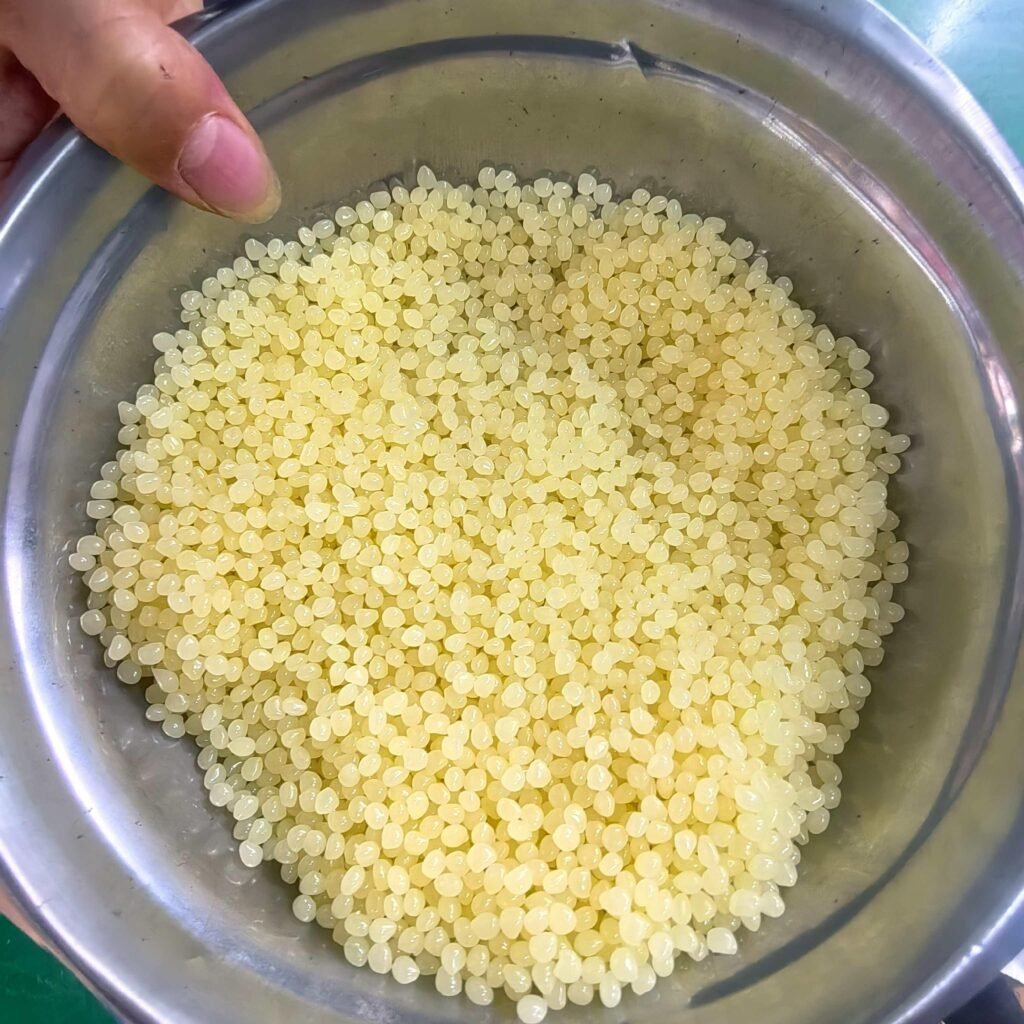
- Gluing: Use hot-melt adhesive—EVA adhesive is suitable for PVC edge bands (operating temperature 160℃~200℃), while PUR adhesive is suitable for solid wood and acrylic (operating temperature 200℃~220℃). The glue layer thickness should be controlled at 0.1~0.2mm to ensure uniformity without accumulation.
- Pressing: Apply a linear pressure of 5~10kg/cm via pressure rollers, with the pressing temperature matching the hot-melt adhesive and the pressing time lasting 3~5 seconds. The interval between gluing and pressing should be ≤2 seconds to prevent premature curing of the glue layer.
- Edge Trimming: Perform rough trimming (30°~45° tool, cutting amount ≤0.3mm per pass), fine trimming (60°~75° tool, cutting amount ≤0.1mm per pass), and rounding (R0.5~R2mm tool) in sequence.
- Post-processing: Remove residual glue with a neutral cleaner, air-dry naturally in an environment of 20℃~25℃ and humidity ≤60%, then conduct a final inspection.
2. What are the differences between EVA adhesive and PUR adhesive for edge banding? How to choose?
The core differences between the two lie in performance and application scenarios: EVA adhesive has fast bonding speed and low cost, suitable for PVC edge bands and mid-to-low-end furniture but poor water resistance; PUR adhesive offers strong water resistance and firmer bonding, suitable for solid wood, acrylic edge bands, and high-end scenarios (e.g., kitchens, humid environments), but requires higher operating temperature and has a slightly higher cost. For mid-to-low-end mass-produced products, choose EVA adhesive; for high-end and humid scenarios, select PUR adhesive.
3. What is the difference between traditional manual edge banding and modern automatic edge banding?
Traditional manual edge banding relies on woodworking tools and basic bonding materials, featuring low efficiency and poor precision, only suitable for small-batch, personalized products; modern automatic edge banding realizes integrated operations through edge banding machines, with standardized processes, high precision, and fast efficiency, suitable for large-batch, repetitive production (e.g., cabinet doors, wardrobe panels). It relies on hot-melt adhesive for stable bonding and can effectively control key parameters such as glue layer thickness and pressing pressure.
IV. Quality Control
1. What are the core evaluation standards for edge banding quality?
The core standards cover three aspects: appearance, physical performance, and environmental protection:
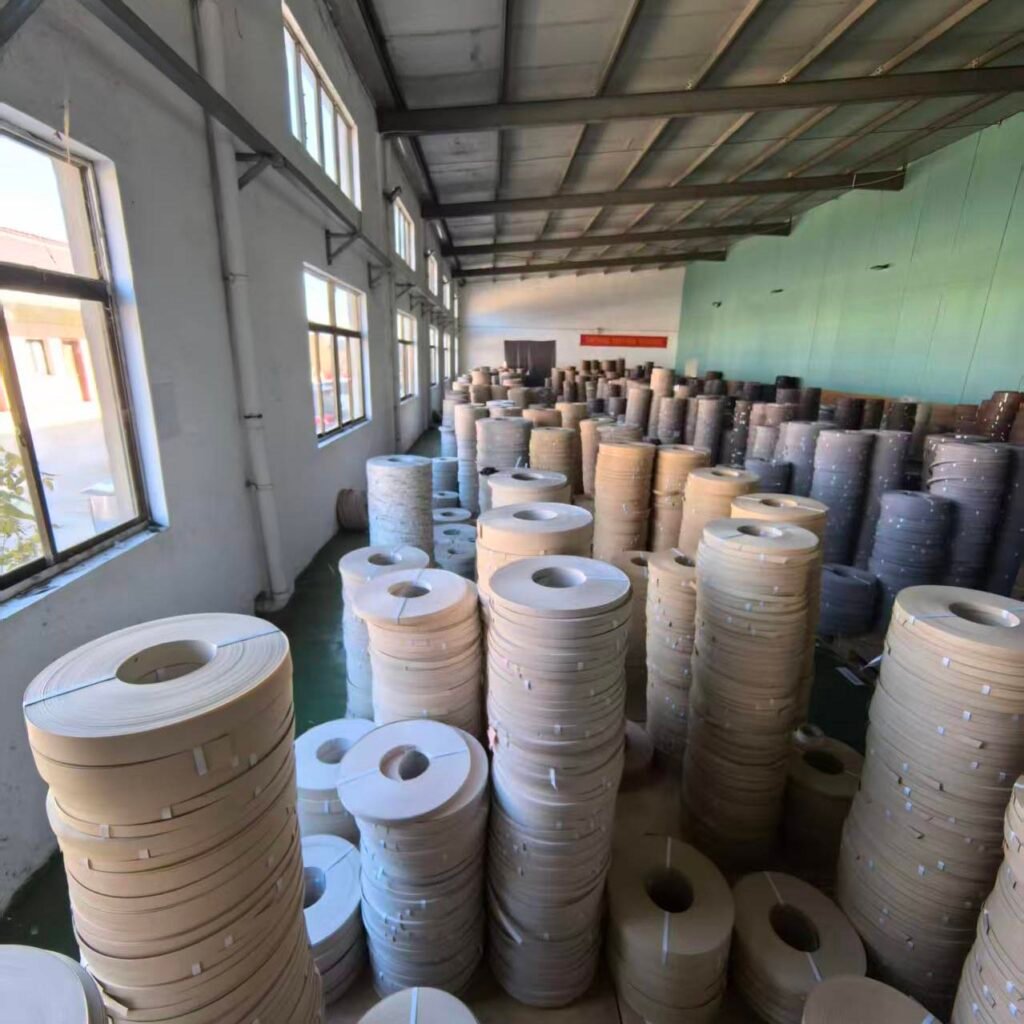
- Appearance Standards: Bonding gap ≤0.1mm (continuous gap ≤5mm per meter), flatness deviation ≤0.3mm per meter detected by a 2m straightedge, no edge chipping or burrs, and no obvious color or texture difference from the panel when observed at 50cm under natural light.
- Physical Performance: Normal-temperature bonding strength ≥10N/mm (PVC + particleboard ≥8N/mm), bonding strength retention rate ≥85% after thermal cycling; Taber abrasion test (1000g load) ≥500 cycles without exposing the base material; no blistering or delamination after soaking in 25℃ water for 24 hours.
- Environmental Protection Standards: Formaldehyde emission meets E1 grade (≤0.124mg/m³) or E0 grade (≤0.050mg/m³), and heavy metal content complies with relevant indoor decorative material requirements.
2. What are the causes and solutions for common edge banding problems such as debonding, edge chipping, and color difference?
- Debonding/Insufficient Bonding: Mostly caused by insufficient glue amount, low pressing temperature, or excessive panel moisture content. Solutions: Increase glue thickness by 0.05~0.1mm, raise pressing temperature by 5℃~10℃, dry panels with excessive moisture content at 60℃~80℃ for 4~6 hours, and replace with suitable adhesive.
- Edge Chipping/Burrs: Result from dull tools, excessive cutting amount, or uneven panel edges. Solutions: Replace worn tools (edge wear >0.1mm), reduce cutting amount, and sand panel edges with a sander (roughness Ra ≤6.3μm).
- Color Difference/Texture Mismatch: Caused by batch differences of edge bands or inconsistent texture directions. Solutions: Purchase products of the same batch and color number, screen texture directions before production, compare color differences under 5500K±500K natural light, and replace edge bands if the difference exceeds the limit.
3. How to establish a full-process edge banding quality control system?
It is necessary to start from four aspects: personnel, equipment, process, and traceability. Conduct skill assessments for personnel quarterly; inspect equipment temperature, pressure, and tool status per shift; implement first article inspection (3 samples) + hourly patrol inspection (5 samples) during the process; establish a traceability system to record panel and edge band batches as well as production parameters, enabling traceability and rectification of problems.