


Edge banding strips Guide
Let’s be honest – picking the right PVC edge banding tape isn’t the most exciting part of making furniture. But get it wrong, and your beautiful cabinets start peeling, yellowing, or showing ugly white lines at the edges. That’s why we’ve put together this guide: 30 real questions from buyers like you, answered straight up. No fluff, no technical overkill – just what you need to know before placing your next order for edge banding strips.
You’ve been there before. A batch of edge banding strips arrives——the color looks fine on the sample roll, but when you run it through your automatic edge bander, the thickness varies by 0.15mm. Tapes ride up, overhangs are uneven, and your production line slows down. Your team spends hours reworking panels instead of shipping finished furniture.
Or maybe it’s the yellowing. Three months after delivery, white cabinets in a sunlit kitchen show a distinct yellow stripe along every edge. Your customer is unhappy. You eat the replacement cost.
These aren’t hypothetical problems. They happen every day when edge banding strips is made with inconsistent raw materials, skipped quality checks, or corners cut on UV protection.
That‘s exactly why we built this guide——and why we manufacture edge banding strips the way we do. Not to check boxes. To solve problems like these before they reach your factory floor.
Product Deep Dive
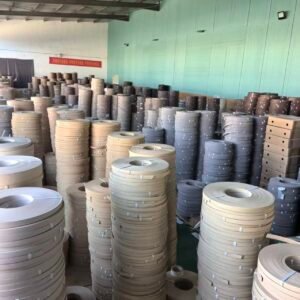
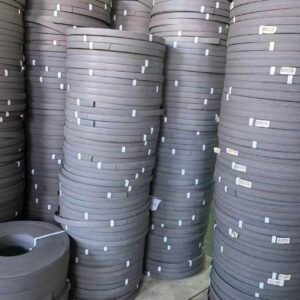
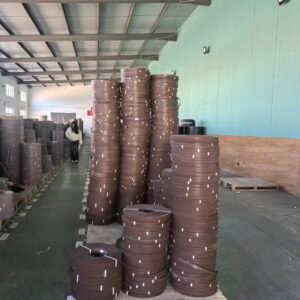
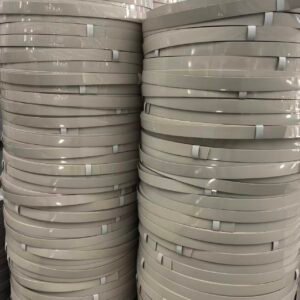
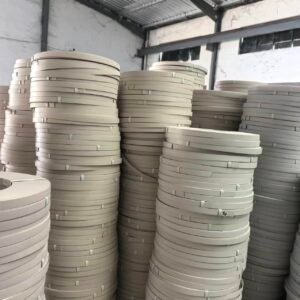
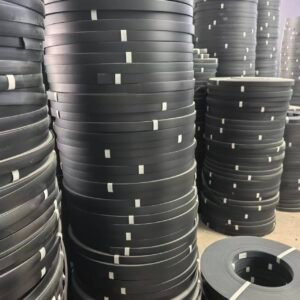
PVC Edge Banding strips——The Reliable Workhorse
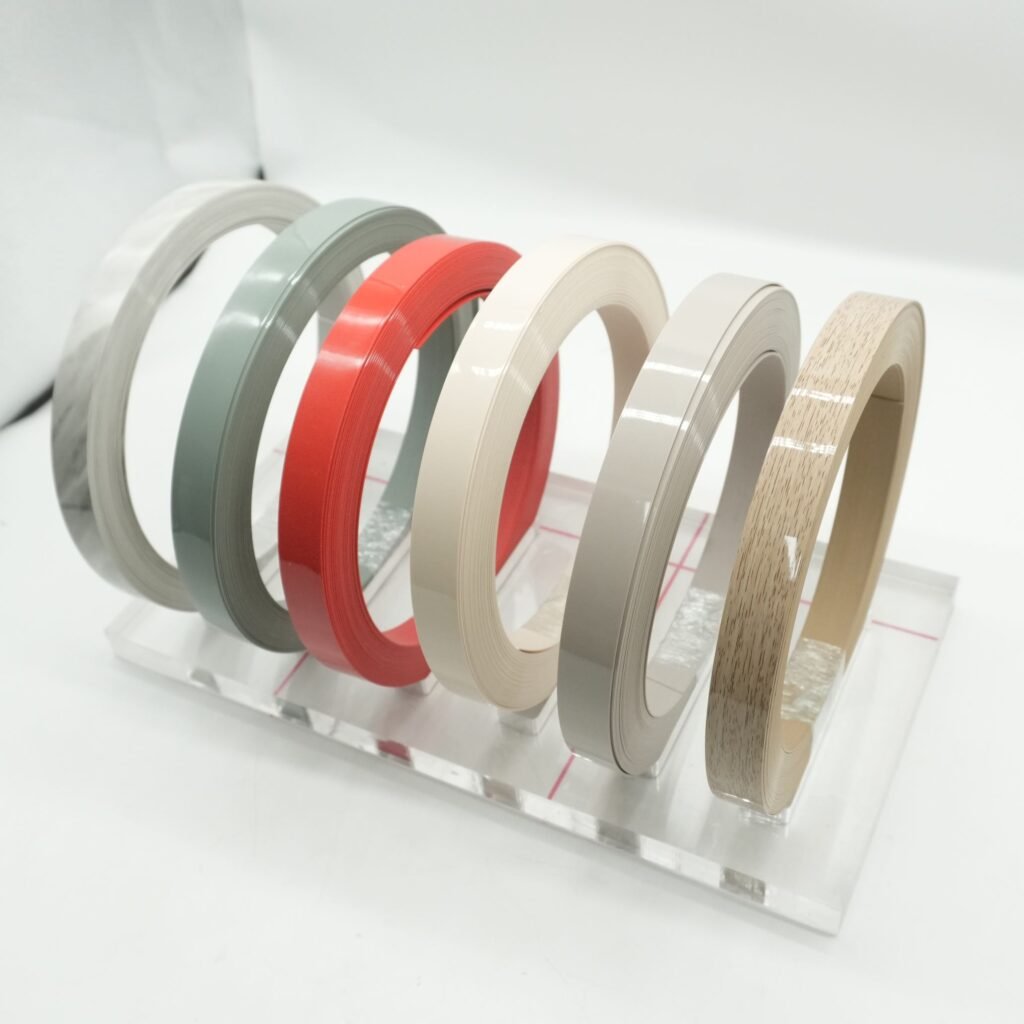
PVC remains the most widely used edge banding strips material globally because it works——consistently, affordably, and across virtually every furniture category. Our PVC edge banding is formulated with brand-name PVC resin, titanium dioxide with rutile for white color stability, and carefully calibrated calcium carbonate for hardness without brittleness.
What this means for your production line: The formulation includes adequate plasticizers for flexibility, so the tape feeds smoothly through both straight and curved automatic edge banders——even on R-shaped or irregular profiles.When trimmed, the color runs through the entire thickness, avoiding the common problem of white filler lines on darker finishes. Surface options include high-gloss, matte, solid colors, wood grains, and embossed textures.
The numbers buyers ask about: Thickness tolerance ±0.05mm for 0.4-0.7mm range; peel strength ≥5 N/mm when applied with hot melt adhesive; pencil hardness ≥F for standard finishes.
Best suited for: Office furniture, bookshelves, rental-grade case goods, mass production runs where cost per meter is the primary driver.
ABS Edge Banding strips——The Eco-Conscious Premium Choice
ABS (acrylonitrile butadiene styrene) shares PVC‘s processing ease but offers two critical upgrades: it contains no chlorine, and it contains no calcium carbonate filler. The absence of filler means trimmed edges stay the same color as the surface——no white line, no matter how close you cut.
Why this matters in real production: For dark-colored panels, a white trim line is a visible defect. With ABS, that problem disappears. ABS also handles higher temperatures (up to 99°C before deformation) compared to PVC‘s 70°C softening point——a meaningful difference for kitchens near ovens or furniture shipped in hot containers.
Environmental considerations: ABS is 99% naturally recyclable. Our ABS edge banding is also phthalate-free and low-VOC, making it the standard choice for children‘s furniture and green building projects.
The numbers: Notched impact strength 35 kJ/m²; heat deflection temperature 85-100°C; UV resistance maintains color for 5-8 years without significant yellowing.
Best suited for: Kitchen cabinets, children‘s furniture, eco-certified export orders, any application where trimmed edges cannot show filler lines.
Acrylic (PMMA) Edge Banding——The Luxury Showpiece
Acrylic edge banding strips (PMMA) belongs to a different category entirely. Where PVC and ABS prioritize function, acrylic prioritizes visual effect——specifically, clarity and depth.
What you‘re paying for: Light transmittance of 92% ±2 with haze ≤1.5%. That’s more transparent than glass, yet lighter and less prone to shattering. The decorative pattern is applied to the back of the acrylic layer, so the surface remains uninterrupted——no frame effect when milled, and surface scratches can be polished away without damaging the design.
Durability data: Weathering resistance passes 3,000 hours QUV accelerated aging with ΔE <2. Surface hardness reaches 2H-3H on the pencil scale, resisting scratches from keys, cleaning tools, and daily contact. The material passes 50 cycles of cleaning agent resistance testing with no degradation.
Best suited for: High-end kitchen fronts, retail display fixtures, luxury furniture lines, projects requiring transparent or 3D depth effects, commercial interiors where every edge needs to gleam.
Melamine Edge Banding——The Seamless Match
Melamine edge banding strips serves a different purpose from the three plastic options above. It‘s made from paper——170g pure wood pulp base paper impregnated with melamine resins, then printed and sealed.
Where it excels: When you need the edge to match the panel exactly——same decor, same texture, same sheen. Because melamine edge banding is manufactured from the same decorative paper family as melamine panels, the visual continuity is seamless in a way that printed PVC cannot fully replicate.
Application notes: Melamine edge banding strips is thinner (0.3-0.55mm) and more rigid than PVC. It works best on straight edges; curved applications require more careful handling. The material is hygroscopic, so it must be stored in dry conditions before use.
Best suited for: Panel furniture, wardrobes, interior trim where panel and edge need to read as a single surface, showpiece installations where color variation is not acceptable.
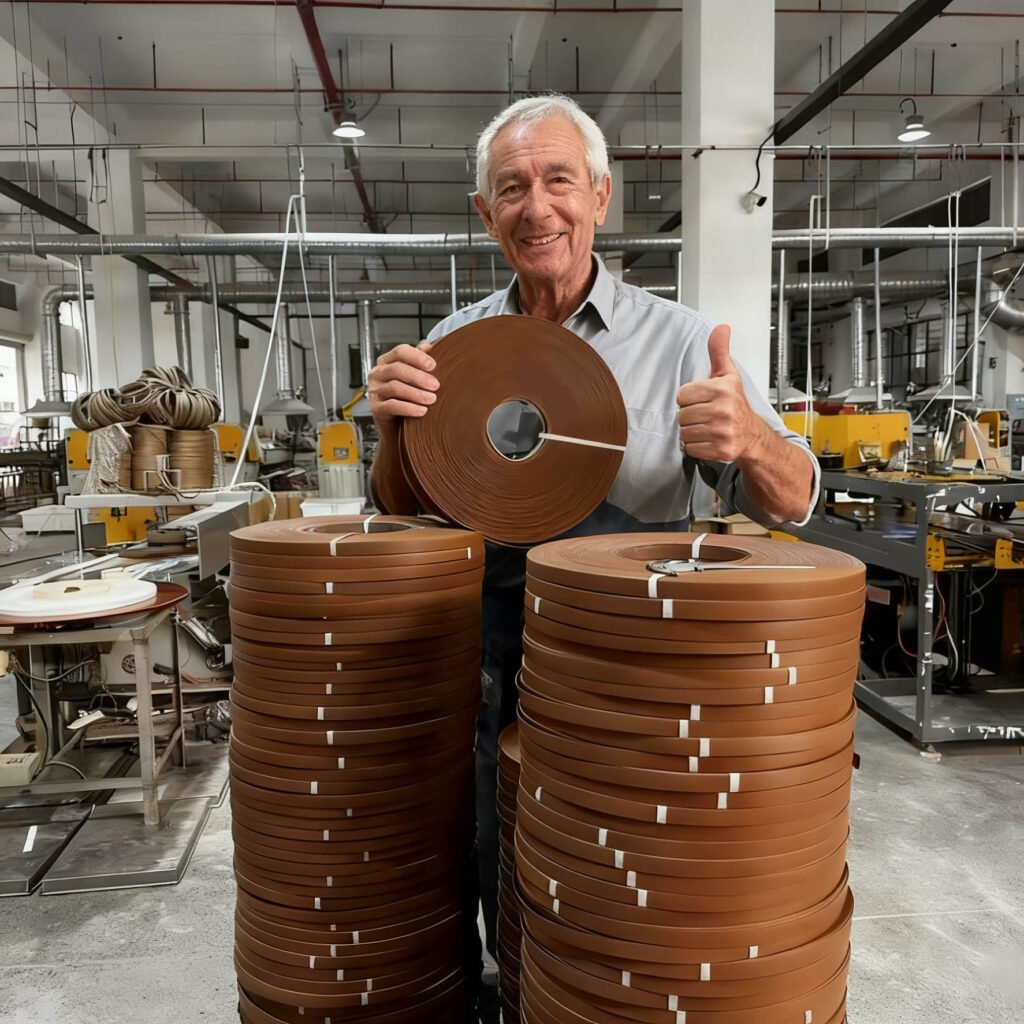
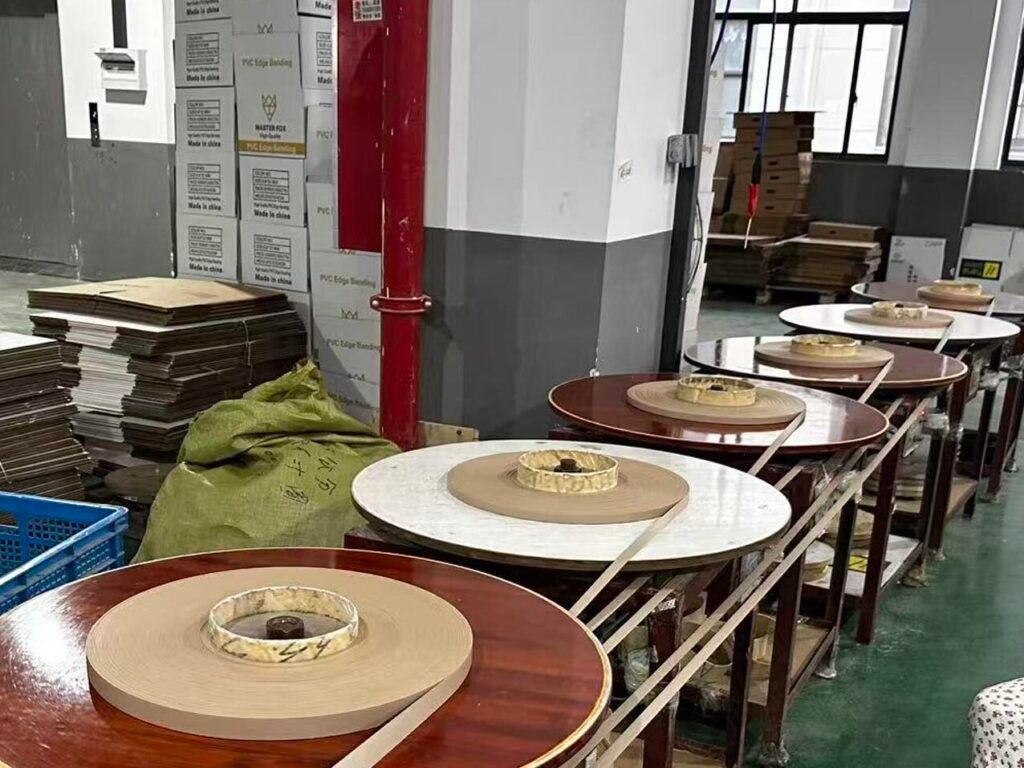
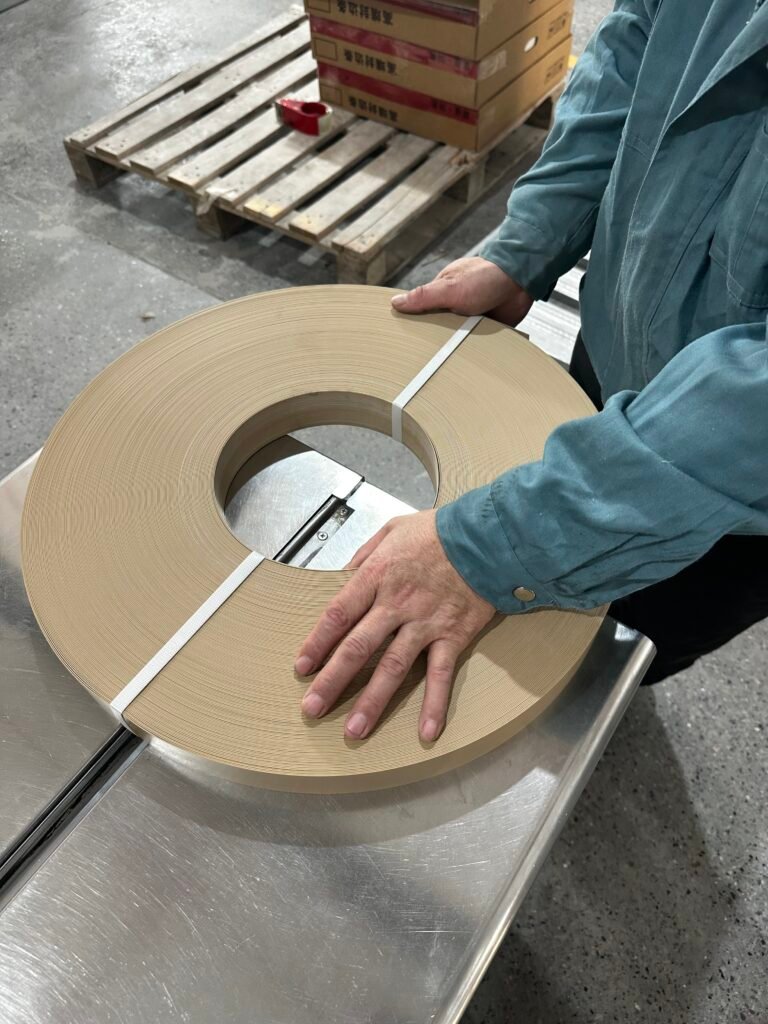

We’re not a giant, faceless factory. We’ve been making edge banding strips since 2002 – that’s over 20 years of figuring out what works and what doesn’t. Our plant is in Taizhou, Jiangsu, and our team is based in Shanghai. We ship to Canada, Australia, Russia, Spain, UAE, and many more.
What makes us different? We actually answer your WhatsApp within an hour. We keep real samples of every color we’ve ever made. And we know that a 0.05mm tolerance matters when your automatic edge bander is running at 30m/min.
We do PVC, ABS, PP, and acrylic edge banding strips. We match colors to Egger, Kronospan, Pfleiderer – you name it. And we don’ hide behind “it’s within industry standard” – we show you the test report.
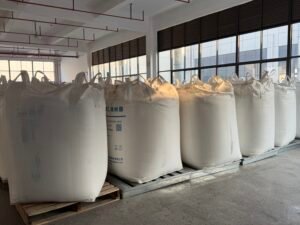

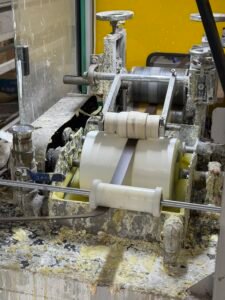
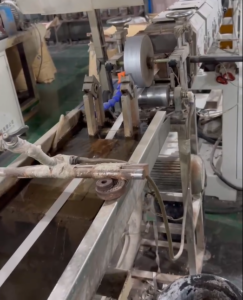

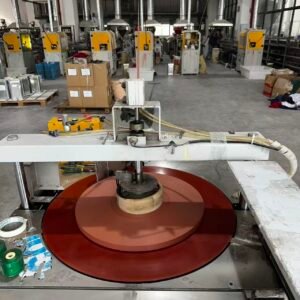

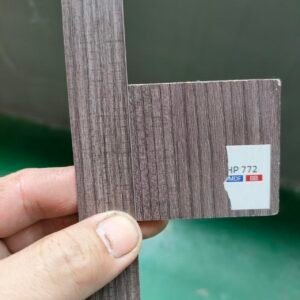
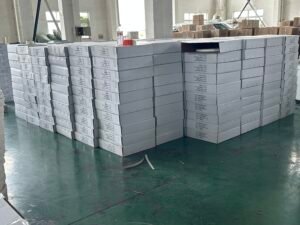
How PVC Edge Banding Strips Are Made
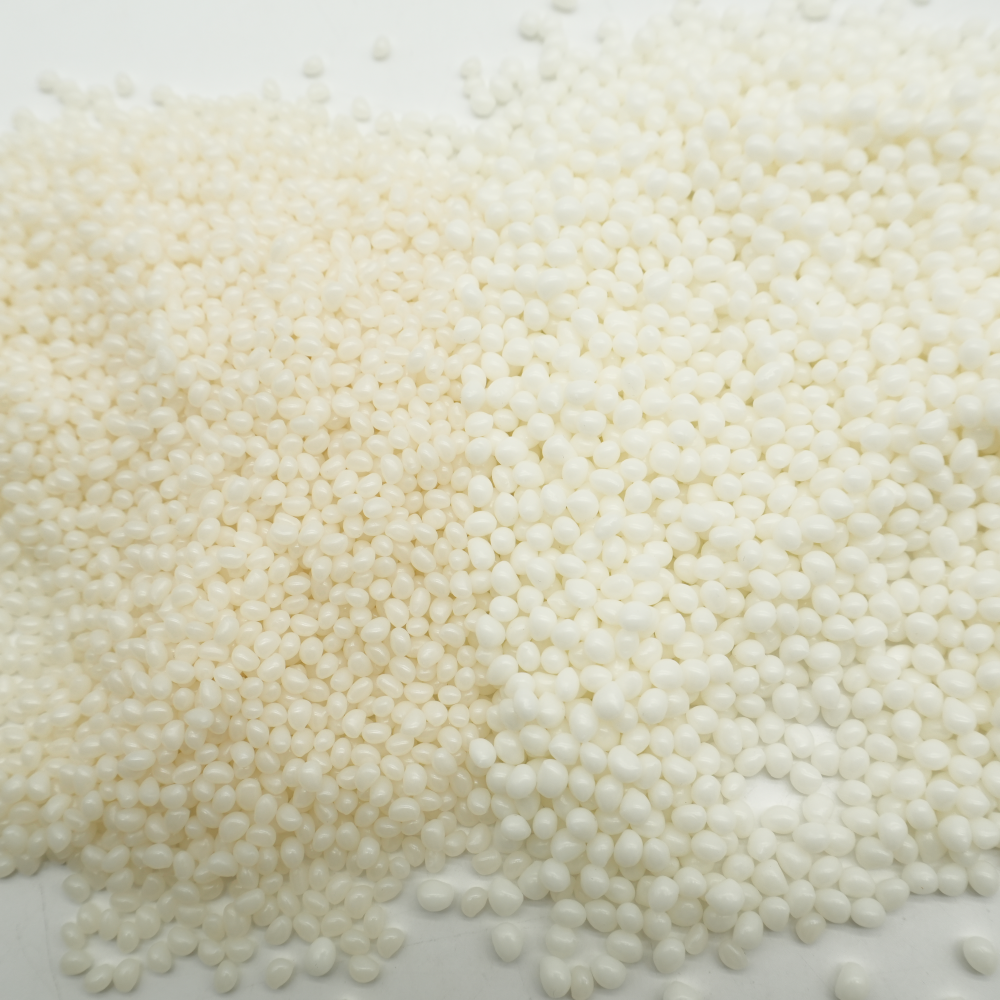
- Mixing – We take PVC resin, plasticizers, stabilizers, and color pigments. Cheap producers add lots of chalk (calcium carbonate) – we keep it balanced for strength.
- Extrusion – Melt the mix and push it through a steel die. The die decides thickness and width. Our dies are precision-machined to ±0.01mm.
- Cooling – Run the hot strip through a water bath. Cool too fast? It warps. Cool too slow? It sticks. We’ve dialed it in over 20 years.
- Printing & Coating – For wood grain, we print the pattern with rotogravure rolls, then apply UV lacquer. That lacquer is what stops scratches and yellowing. Without it, you get a cheap product.
- Slitting & Winding – Cut to your exact width, then wind onto cores. Wide strips go horizontally, narrow ones vertically – that’s how they feed smoothly into your machine.
- Quality Check – Every batch gets measured, peeled, scratched, and color-matched. If it fails any test, it doesn’t leave the factory.
Ready to move forward? Tell us your thickness, width, color/finish, and estimated quantity. We’ll reply within 24 hours with a quote, lead time, and sample arrangement.
Edge Banding Product Overview
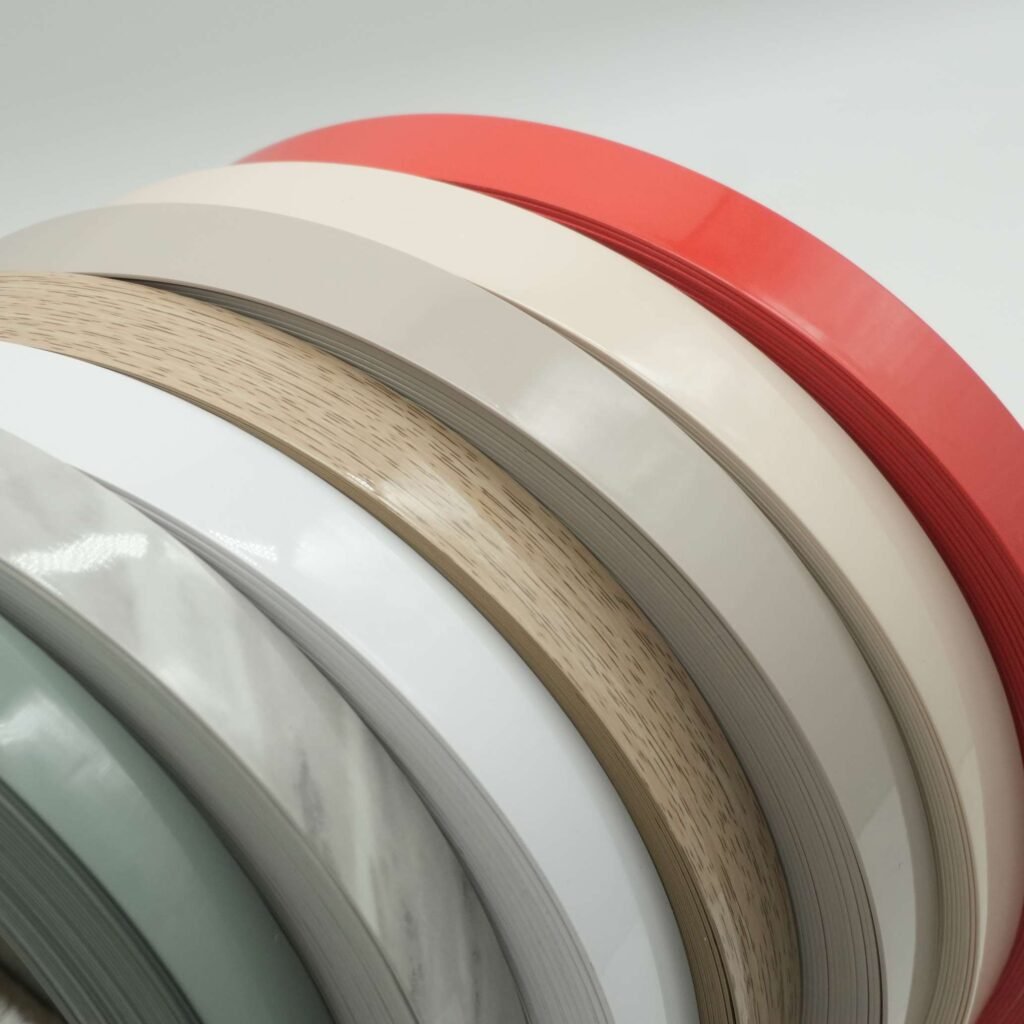
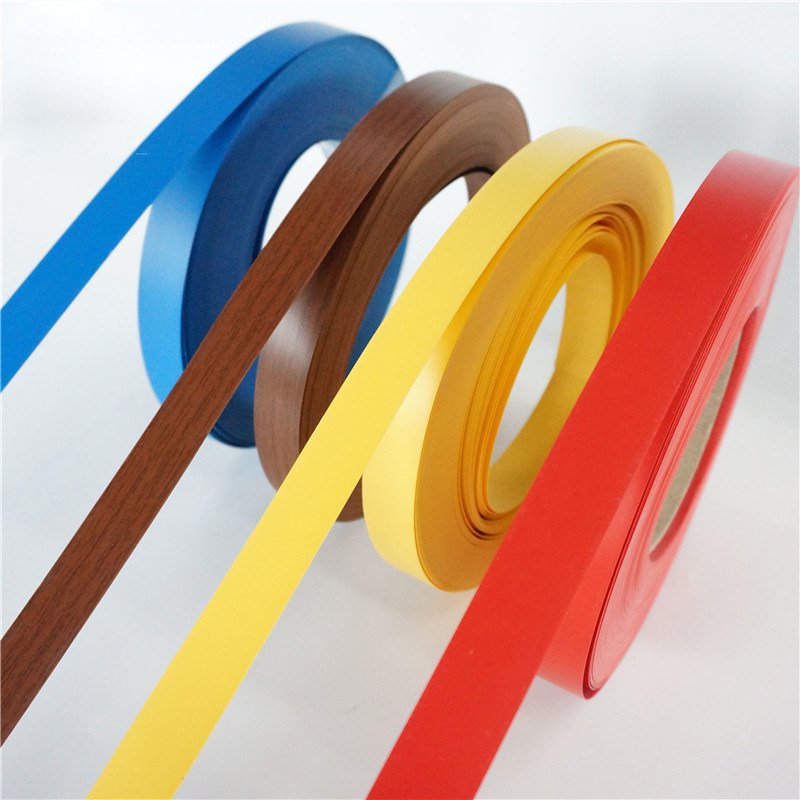
Tight budget, large volume
PVC Edge Banding
High-gloss, matte, wood grain, embossed, solid colors
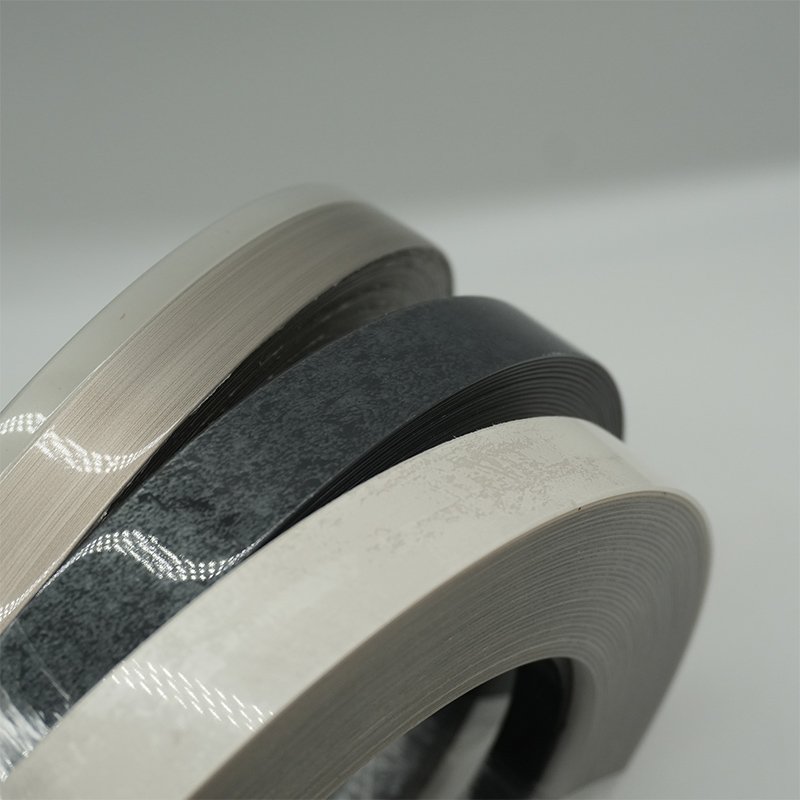
Eco‑export, no white edge
ABS Edge Banding
Matte, high-gloss, wood grain, soft-touch
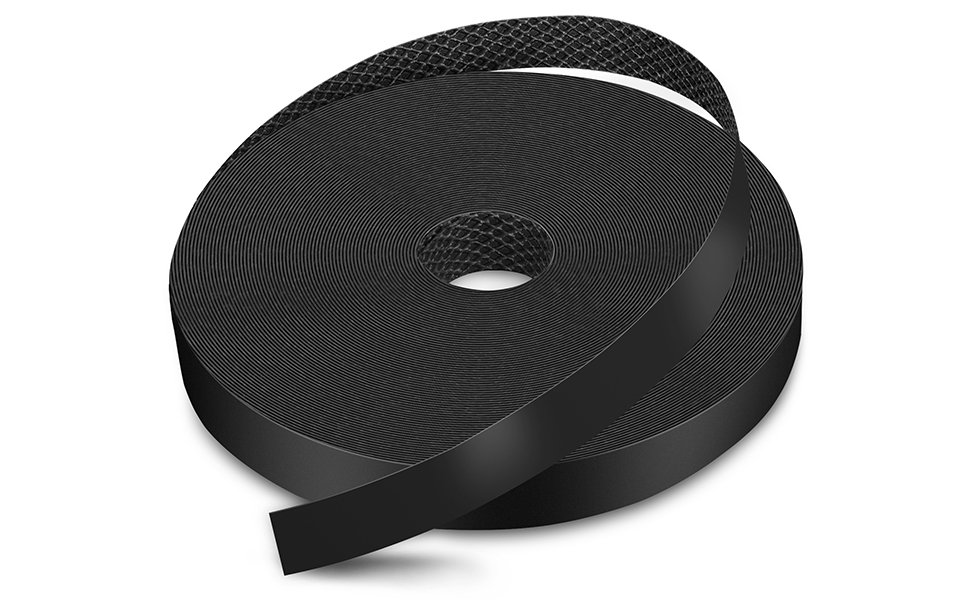
Mirror gloss, premium look
Acrylic Edge Banding
Mirror gloss, super matte, 3D depth
Exact match to panel pattern
Melamine Edge Banding
Synchronized texture, printed wood grain
Manufacturing Integrity
Raw Material Traceability
Every batch of edge banding strips we produce starts with documented raw materials. We use brand-name PVC from Xinjiang Tianye and Inner Mongolia Junzheng; high-mesh calcium carbonate for hardness without brittleness; titanium dioxide containing rutile for white color stability; DOP oil that does not leach under high temperatures; JOWAT or Taiwan Shinmeiguang adhesives.
Why this matters to you: When raw materials are consistent, product behavior is predictable. You don‘t get one container that trims cleanly and the next that leaves a rough edge. Our formula recipes are fixed and traceable to batch numbers.
Process Documentation
Unlike manufacturers that skip the granulation step and extrude directly from mixed powder, our process includes a complete granulation and cooling phase. This extra step significantly improves product flexibility and prevents common issues: surface roughness, brittleness, and whitening during edge trimming.
We also run a four-layer printing process for wood grain products——not two or three. Four layers mean richer color depth and more durable print adhesion.
Quality Control Protocol
Every batch undergoes multi-point inspection before leaving the factory: dimensional measurement (thickness, width, roll length), surface inspection for bubbles or scratches, peel strength testing on standard substrates, color verification by spectrophotometer with documented ΔE values.
Our defect rate: <2% for surface defects in regular production. When issues do occur, we replace at no cost.