
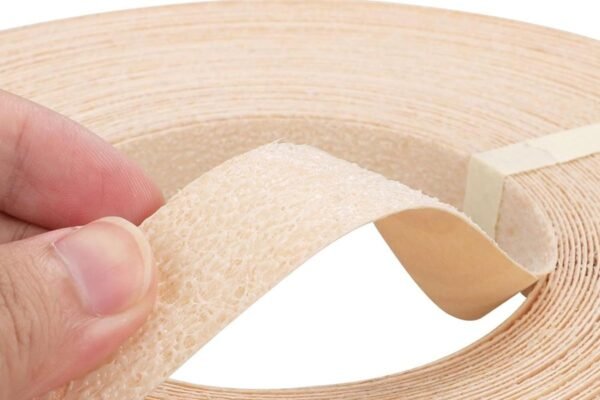
Melamine Edge Banding Strip — Bulk Supply for Furniture Manufacturers & Importers
Container-load supply, pre-glued for high-volume edge bonding
Our melamine edge banding strip is factory-coated with hot-melt EVA adhesive, color-matched to your specified melamine-faced panel supplier, and produced to consistent thickness and width tolerances suitable for both manual and machine application. With twenty-two years of edge banding production experience and a decor library covering 2,000+ archived patterns, we serve buyers who need reliable color matching, stable supply, and FCL-level pricing — not one-off samples.
This page covers product specifications, our pre-glued adhesive system, color matching capabilities, container loading policy, and machine compatibility. If you’re sourcing melamine edge banding strip by the container and want to compare suppliers seriously, this is the page to read end to end.
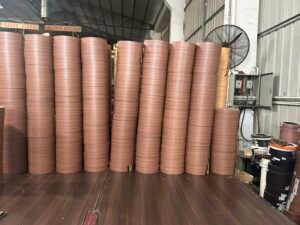
What is melamine edge banding — and when to choose it over PVC
Melamine edge banding strip is a paper-based edge banding material. The base is decorative paper impregnated with melamine resin, the same material technology used to manufacture melamine-faced particleboard and MDF panels. The decorative paper is laminated to a thin backing layer, coated with pre-applied hot-melt adhesive on the reverse side, and slit into strips matching standard panel thicknesses.
The key difference from PVC edge banding is the material itself:
- Melamine edge banding — paper-based, naturally matches melamine-faced panels because they use the same decorative paper technology, thinner profile, faster to apply, lower cost per meter
- PVC edge banding — plastic-based, more impact-resistant, available in wider thickness range (0.4-3.0mm), better for high-traffic surfaces like countertops and commercial furniture
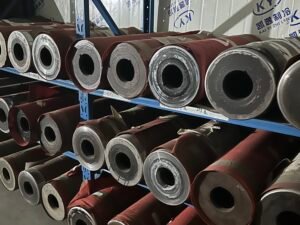
Most large furniture manufacturers stock both materials. Melamine is used for the bulk of standard cabinet work — bedroom furniture, wardrobe interiors, office desks, kitchen carcass panels, retail display fixtures — where the edge banding matches a melamine-faced panel and high impact resistance isn’t required. PVC is reserved for visible high-wear edges, premium product lines, and applications requiring thicker edges (typically 1.0mm and above).
The economic case for melamine is straightforward: for matched melamine panel applications, it costs 30-50% less per meter than PVC, applies faster on automated edgebanders due to the pre-applied adhesive, and delivers a more visually integrated finish because the edge and the face use the same decor paper source. For container-volume buyers serving price-sensitive markets, this cost difference compounds significantly across annual purchasing.
Product specifications
Our standard melamine edge banding strip is produced in the following specifications:
| Parameter | Specification |
|---|---|
| Thickness | 0.3mm, 0.4mm, 0.5mm (standard); 0.6mm, 0.8mm available |
| Width | 17mm, 19mm, 22mm, 28mm, 32mm, 36mm, 42mm, 50mm (custom widths to 100mm) |
| Roll length | 100m, 150m, 200m per roll (customizable) |
| Adhesive | Pre-applied EVA hot-melt, 80-100 g/m² coating |
| Activation temperature | 130-180°C |
| Base material | Melamine-impregnated decorative paper with cellulose backing |
| Surface finishes | Matte, satin, semi-gloss, high gloss, embossed woodgrain texture |
| Color range | 500+ active decors, 2,000+ archived patterns |
| Tolerances | Width ±0.2mm, thickness ±0.05mm |
Standard widths are sized to match common panel thicknesses (18mm panel → 22mm or 19mm edge banding, accounting for trim allowance on edgebanders). Custom widths are available with sufficient order quantity — typically 5,000+ meters per width specification. Roll lengths can be customized to match your edgebander’s roll capacity; most automated lines run 150m or 200m rolls for fewer changeovers.
For container buyers, mixing thickness, width, and color within a single FCL is standard practice — we’ll cover the mixed-loading policy in detail below.
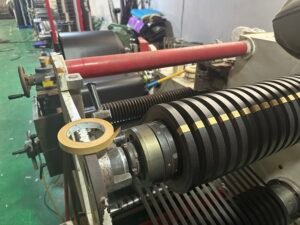
Pre-glued hot-melt adhesive — the operational core
The single most important quality parameter for melamine edge banding strip in high-volume production isn’t the decor or the thickness. It’s the adhesive layer. A poorly coated edge banding will cause adhesion failures, edgebander jams, inconsistent bond lines, and ultimately rejected finished goods — even if the color match is perfect and the price is competitive.
Our pre-applied hot-melt adhesive system controls four critical parameters:
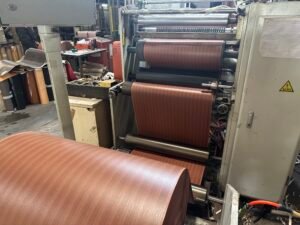
Coating weight consistency. We apply EVA hot-melt adhesive at 80-100 g/m² with in-line gravimetric monitoring across the full strip width. Coating weight variation is held within ±5% across a production run. This matters because edgebanders are calibrated to a specific adhesive volume — if coating weight drifts, bond quality drifts with it, and operators end up adjusting feed rates or temperatures to compensate.
Activation temperature window. Our adhesive formulation activates cleanly between 130°C and 180°C, which covers the operating range of virtually all common edgebanders from manual portable units through fully automatic lines. The wide activation window means your operators don’t have to fine-tune temperature for each batch — the same machine settings work across reorders.
Open time and bond development. The adhesive transitions from melt to bond within 3-5 seconds of pressure application, which matches the well time of standard edgebander pressure zones. Bond strength develops to 80% within 60 seconds and reaches full strength within 24 hours. This profile prevents two common failure modes: edges that pop off during stacking immediately after the line (too slow), and edges that lock before pressure rollers can fully seat them (too fast).
Adhesive layer stability in storage. EVA hot-melt is sensitive to humidity and temperature during storage. Pre-glued edge banding stored in unfavorable conditions can absorb moisture, causing foaming during activation or weakened bond strength. Our adhesive formulation includes moisture-resistant additives, and we package every roll in sealed PE film with desiccant for ocean freight stability. Under standard warehouse conditions (below 30°C, below 70% RH), shelf life is 18 months from production date.
For automated edgebander operations running 8-12 hours per shift, this adhesive consistency is what determines whether your melamine edge banding strip line runs clean or stops every two hours for adjustment. The cost of unplanned line stops in a furniture factory — operator time, panel rework, downstream scheduling impact — far exceeds the per-meter price difference between a quality edge banding and a cheap one.
Color matching to your specified melamine board supplier
Melamine edge banding has to match a melamine-faced panel — and unlike PVC, where the edge and the face use different material technologies, melamine edge banding strip and melamine boards share the same decorative paper source. In principle, this makes color matching easier. In practice, it makes it more demanding, because the eye expects a perfect match between edge and face, not just a close approximation.
Our color matching protocol for melamine edge banding strip follows a four-stage process:
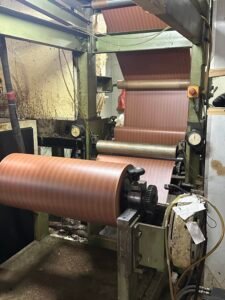
Stage 1 — Panel sample receipt. You send us a physical sample of the melamine board your factory uses, or specify the panel supplier and decor code (Kronospan, Egger, Arauco, Duratex, Masisa, and major Chinese panel manufacturers are all in our reference database). For repeat orders against an established panel supplier, we match against our archived master.
Stage 2 — Spectrophotometer measurement. Each sample is measured under D65 standardized lighting in CIE Lab color space. Our target tolerance is ΔE ≤ 1.5, with critical accounts tightened to ΔE ≤ 1.0. This numerical baseline replaces visual guesswork.
Stage 3 — Pigment formulation and pilot run. Our color technicians formulate against the measured Lab values, then trial-print 50-100 meters on production substrate. The pilot is measured against the original panel sample under the same standardized lighting.
Stage 4 — Customer approval sample. Once in-house tolerance is achieved, we ship a one-meter approval sample by DHL or FedEx. No bulk production starts until you sign off on the physical match.
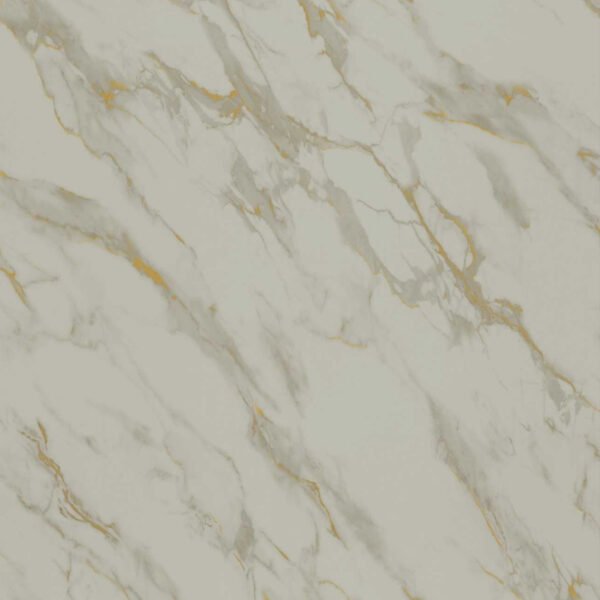
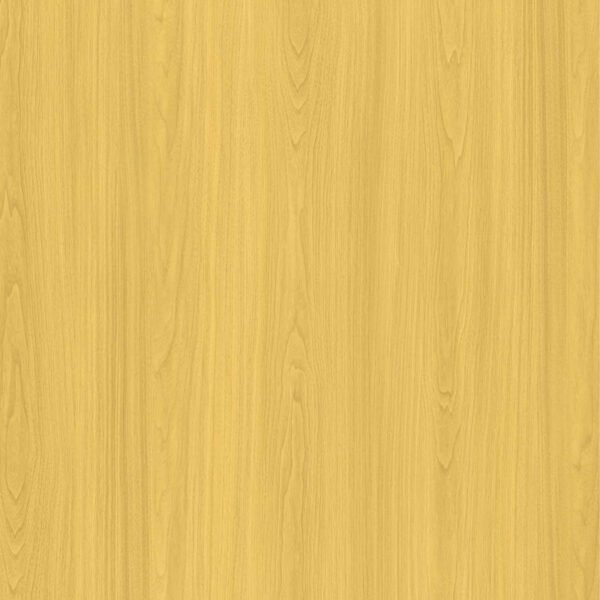
Our decor library covers 2,000+ archived patterns and 500+ active decors. For most major panel supplier ranges, we already have a matched master in archive — meaning your reorder six months or two years from now matches the same archived sample, not a fresh interpretation of the decor code. This is how we maintain color consistency across reorders, which is the single hardest thing for buyers to verify in supplier evaluation but the most important thing in long-term sourcing.
FCL bulk supply and mixed container loading
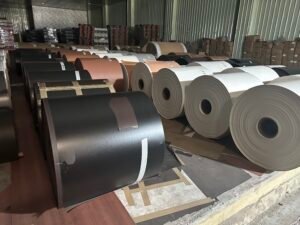
Our standard supply model for melamine edge banding strip is full container load with mixed specifications. A typical 20-foot or 40-foot container can hold the following mix:
| Container | Total capacity | Typical mix |
|---|---|---|
| 20’GP | 80,000-100,000 meters | 15-25 SKUs (color × width combinations) |
| 40’GP | 180,000-220,000 meters | 25-40 SKUs |
| 40’HQ | 220,000-260,000 meters | 30-50 SKUs |
Mixed-loading policy:
- Minimum per-SKU quantity: 2,000 meters for active library decors, 5,000 meters for custom-matched colors
- No surcharge for mixing thicknesses, widths, or colors within a container
- Pricing follows volume tiers based on total container quantity, not per-SKU quantity — so loading 40 different SKUs at 5,000m each gets the same per-meter price as loading 5 SKUs at 40,000m each
- Production lead time: 20-30 days for active library decors, 35-50 days for orders including custom-matched or archived decors requiring fresh production
For importers and distributors building broad inventory across many colors and widths, this mixed-loading flexibility is operationally critical. Most melamine edge banding strip suppliers either refuse mixed loading or charge significant surcharges for SKU complexity — we don’t, because our production scheduling is built around running short batches of many decors rather than long batches of a few.
Payment terms. Standard terms are 30% T/T deposit, 70% balance against B/L copy before shipment. For established repeat buyers with three or more clean transaction histories, we extend to 30% deposit, 70% against B/L with the balance due 30 days after shipment, or letter of credit at sight for buyers preferring bank-mediated payment.