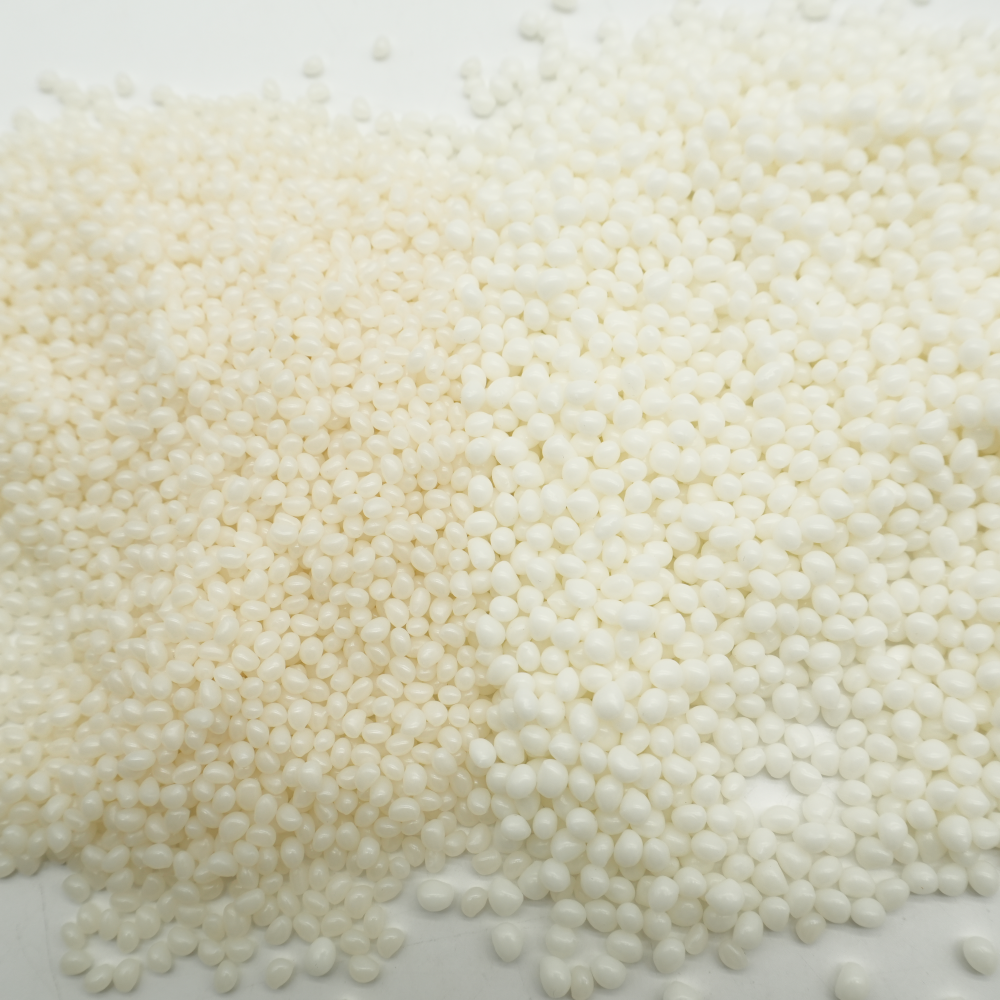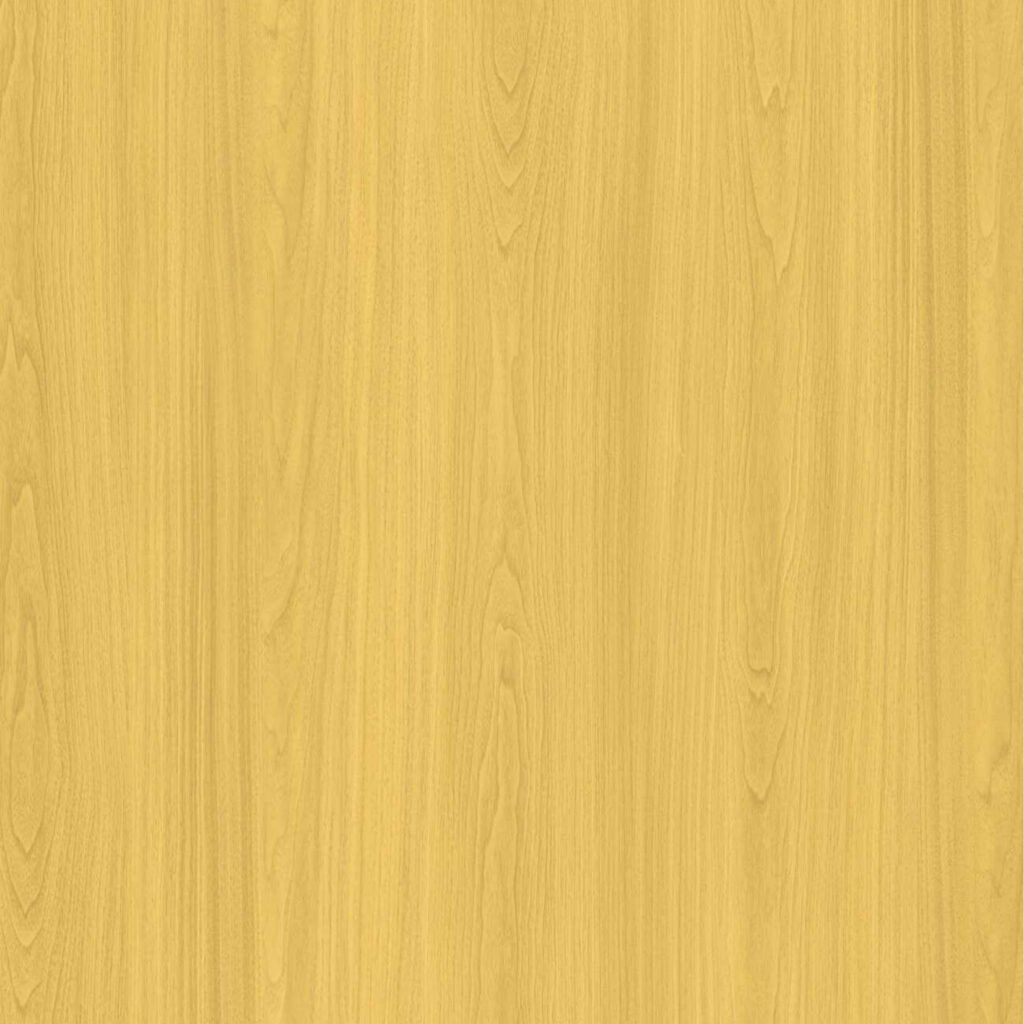



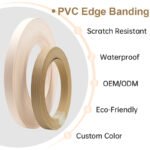

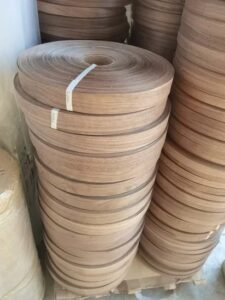
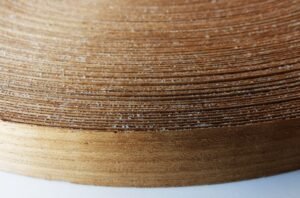
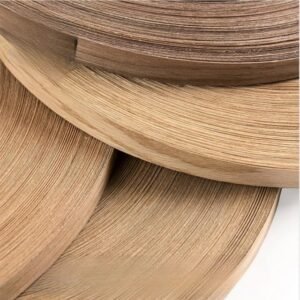
Veneer edgebanding is a thin real wood veneer strip that is adhered to the edges of engineered wood substrates such as MDF, particle board, and plywood. It presents the look of solid wood, shields the panel edges from moisture and impact damage, and ensures a flawless, professional finish on furniture.
Coming in pre-gummed, with fleece backing and non-gummed versions, veneer edgebanding finds its place in cabinetry and furniture production, architectural millwork and interior design applications.
Table of Contents
- What Is Veneer Edgebanding?
- How Veneer Edge Banding Works
- Why Furniture Manufacturers Use Veneer Edgebanding
- Key Benefits of Veneer Edgebanding
- Types of Veneer Edgebanding
- Veneer Species Guide
- White Oak Veneer Edge Banding Guide
What Is Veneer Edgebanding?
In contemporary furniture production, the look and durability are inseparable. Although engineered wood panels (MDF, plywood, particle board, and melamine faced board) provide good stability and are cost efficient, their exposed edges usually expose raw core materials. This is why veneer edgebanding is necessary.
Veneer edgebanding is a real wood veneer with a heat-activated adhesive on the back that is used to finish and seal the edges of panels. When veneer edgebanding is applied, it turns engineered panels into finished products that can almost pass for solid wood furniture.
There are advantages to wood veneer edgebanding both practical and aesthetic. It can be stained, lacquered, painted or oiled to blend in with the rest of the surface, and that’s why it is an ideal choice for fine furniture or cabinetry.
Veneer edgebanding has become synonymous as the choice of wood edgebander for:
- Furniture manufacturers
- Cabinet makers
- Millwork companies
- Interior designers
- Commercial fixture producers
- Architectural woodworking professionals
Whether making home furnishings, or filling a large scale commercial job with custom interiors, veneer edgebanding offers manufacturers superior looks with budget-minded production control.
Definition
At its simplest veneer edgebanding is made up of thin slices of natural wood that have been processed into rolls or strips. These strips are bonded to the edges of engineered wood panels with heat, pressure, an adhesive, or a combination of the three.
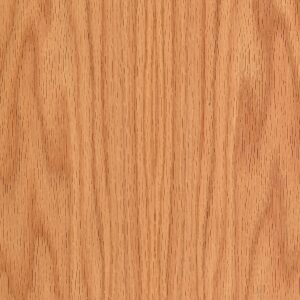
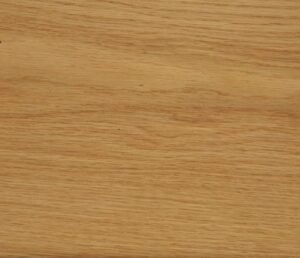
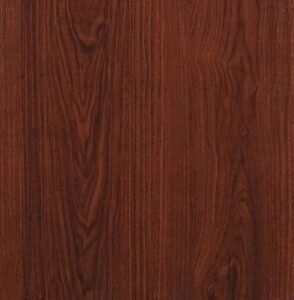
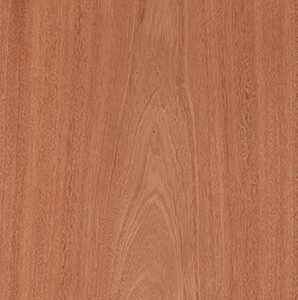
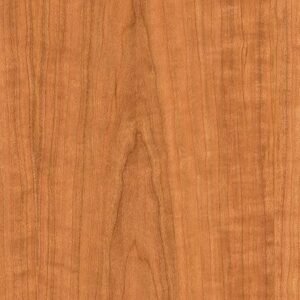
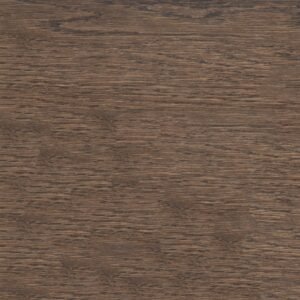
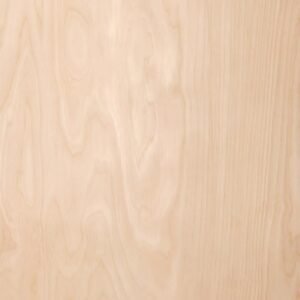
Some popular veneer species are:
- White Oak
- Red Oak
- Walnut
- Maple
- Birch
- Cherry
- Ash
- Beech
- Teak
- Sapele
The result is a finished edge that closely matches the face veneer or decorative surface of the panel.
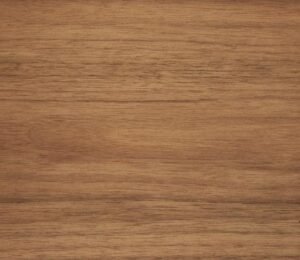
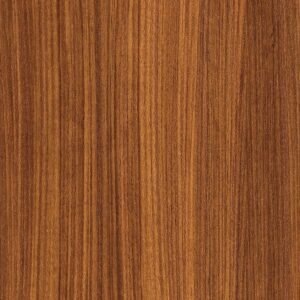
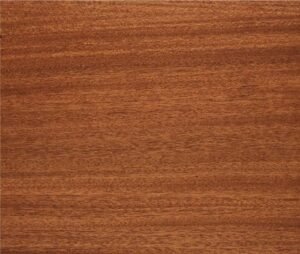
How Veneer Edge Banding Works
The idea of veneer edge banding is simple, but powerful.
When a panel of plywood or MDF is cut, the core is exposed along its length.This uncovered edge is susceptible to:
- Moisture absorption
- Chipping
- Impact damage
- Delamination
- Reduced visual appeal
By applying a veneer edge band, manufacturers create a protective and decorative barrier.
The process typically involves:
- Preparing the substrate edge.
- Selecting the appropriate veneer species.
- Applying adhesive or activating pre-applied glue.
- Pressing the veneer firmly onto the edge.
- Trimming excess material.
- Sanding and finishing.
The end result looks like it was made from a solid hardwood board instead of an engineered panel.
Why Furniture Manufacturers Use Veneer Edgebanding
Furniture producers are always looking for the right mix of quality, efficiency and cost. Veneer edgebanding is important in this mix.
Cost Efficiency
The good thing about solid hardwood furniture is it will last for a long time, but it can also be expensive to fix if it gets moved out of alignment by changes in humidity. Veneered panel construction with veneer edgebanding can provide the same look for a fraction of the cost.
Production Flexibility
Users can design large panels, custom furniture, and even intricate cabinetry without the constraints of working with solid wood.
Consistent Appearance
Natural veneer edge banding enables manufacturers to produce outstanding grain and color match on multiple pieces of furniture.
Improved Durability
Veneer edgebanding, when applied correctly, shields the weak panel edges from the wear and tear of everyday use.
Sustainability
The use of veneer, as opposed to thick solid hardwood parts, helps to more efficiently utilize precious timber resources.
Key Benefits of Veneer Edgebanding
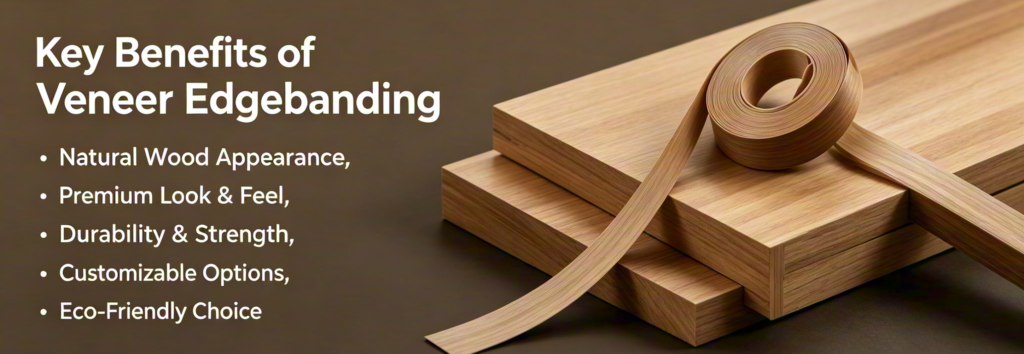
There are several key advantages that are driving the increasing demand for veneer edgebanding.
Creates a Solid Wood Appearance
One of the leading reasons furniture manufacturers opt for veneer edgebanding is beauty.
Natural wood veneer offers:
- Authentic grain patterns
- Natural color variation
- Rich texture
- Premium visual appeal
Real wood veneer, as opposed to manmade material, develops a character and depth that over time adds to the quality of the furniture.
Veneer edgebanding also gives the look of a solid wood construction for high-end residential and commercial applications.
Protects Panel Edges from Moisture and Damage
The Industry Rationale: Interface surfaces are usually the weakest part of engineered wood products or composite material products. Moisture can enter through the MDF or particle bord edges and cause: Swelling
- Expansion
- Delamination
- Structural deterioration
Veneer edgebanding seals these vulnerable areas and increases the life of the product. It also protects against:
- Scratches
- Chipping
- Minor impacts
- Everyday wear
This protection is especially important for kitchen cabinets, office furniture, and commercial fixtures.
Improves Furniture Durability
When buying furniture, a key factor for buyers is durability.
By covering exposed edges, veneer edgebanding:
- Reduces edge damage
- Minimizes maintenance requirements
- Increases service life
- Maintains appearance over time
“Veneer edge banding with quality adhesives and installation, forms a structural element of the finished article.”
Cost-Effective Alternative to Solid Wood
It is why many furniture makers prefer veneered panel construction over solid wood. .
Benefits include:
- Lower material costs
- Reduced waste
- Improved dimensional stability
- Better production efficiency
- Easier machining
When combined with matching veneer edgebanding, completed furniture is frequently hardly distinguishable from solid wood items.
Supports Sustainable Manufacturing
Sustainability has gained importance across the whole furniture industry.
Veneer edgebanding, when compared to solid wood edge strips, consumes way less wood and makes the most out of each and every log.
Benefits include:
- Reduced resource consumption
- Improved material utilization
- Lower environmental impact
- Better support for responsible forestry practices
Among furniture brands with a focus on environmental friendliness, wood veneer edgebanding is the most compatible with sustainable principles while still providing a high level of performance.
Types of Veneer Edgebanding
Different jobs call for different types of edge banding construction.
Knowing these choices enable manufacturers to choose the best one that would meet the requirements of their production.
Pre-Glued Veneer Edgeband
Pre-glued veneer edgeband has a heat-activated adhesive backing that is applied in the factory. This is one of the most dashing options for :
- Cabinet makers
- Small woodworking shops
- DIY projects
- Custom furniture production
Advantages include:
- Easy application
- Minimal equipment requirements
- Fast installation
- Consistent adhesive coverage
Application typically requires only:
- Household iron
- Heat gun
- J-roller
- Edge trimmer
For its convenience, many woodworkers still opt for the pre-glued veneer edgeband.
Fleece-Backed Veneer Edgebanding
The fleece-backed veneer edgebanding has a layer of fabric backing which enhances flexibility and strength.
Benefits include:
- Reduced cracking risk
- Enhanced flexibility
- Improved handling
- Better performance on curved surfaces
This form of edgeband veneer is frequently used in the production of commercial furniture and in architectural millwork.
This is particularly handy when shaping complex forms and curved edges.
Unglued Veneer Edge Banding
Unfastened veneer edge banding enable producers to select their ideal adhesive system.This option is found popular in:
- Automated production lines
- Industrial furniture manufacturing
- Large-volume cabinet production
Advantages include:
- Adhesive flexibility
- Improved process control
- Compatibility with EVA and PUR systems
- Higher production efficiency
Many professional producers choose to use unglued veneer edgebanding as it is a perfectly fit for use with robotic edge banding machine.
Thick Veneer Edgebanding
Thicker veneer products provide additional durability and finishing flexibility.
Common thicknesses include:
- 0.5 mm
- 1 mm
- 2 mm
- 3 mm
Applications include:
- Commercial furniture
- Hospitality projects
- High-traffic environments
- Premium cabinetry
Thicker veneer allows for deeper sanding and refinishing while providing enhanced impact resistance.
Flexible Veneer Edge Banding
Flexible veneer edge banding is made for use on curves and radiuses .
Typical uses include:
- Reception desks
- Curved cabinetry
- Retail displays
- Architectural features
- Custom furniture designs
With solid wood edge banding in veneer form, designers have more flexibility to be creative, while still preserving the warm appeal of real wood.
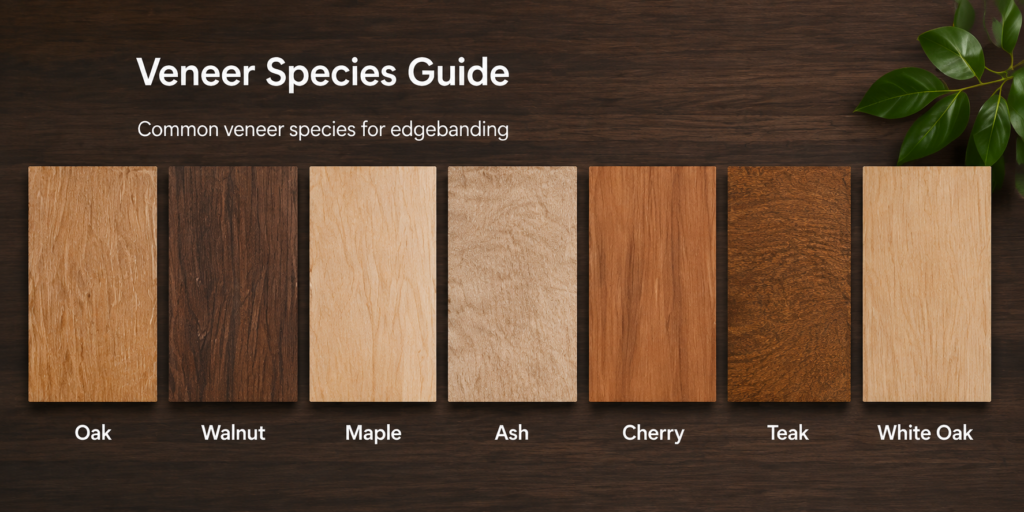
Veneer Species Guide
Selecting the appropriate wood species is the most critical choice you make when edgebanding with veneer.
Each species has its own unique grain pattern, colour variation and performance.
White Oak Veneer Edge Banding
American white oak edge banding is widely used for it is one of the best selling products in North America and Europe.
Characteristics include:
- Straight grain structure
- Excellent durability
- Modern appearance
- Superior stain acceptance
White oak complements contemporary, Scandinavian, transitional, and luxury interior designs.
Applications include:
- Kitchen cabinets
- Wardrobes
- Commercial millwork
- Hospitality furniture
Red Oak Veneer Edge Banding
Red oak provides:
- Distinctive grain patterns
- Warm color tones
- Excellent availability
- Cost-effective pricing
It remains a popular choice for traditional and transitional furniture styles.
Walnut Veneer Edge Banding
Walnut is widely regarded as one of the most premium veneer species available.
Benefits include:
- Rich chocolate tones
- Elegant grain
- Luxury appearance
- Strong market demand
Walnut veneer edgebanding is often specified for executive offices, luxury homes, and custom cabinetry projects.
Maple Veneer Edge Banding
Maple offers:
- Smooth texture
- Light coloration
- Contemporary appearance
- Excellent finishing properties
It is particularly popular in modern kitchens and minimalist furniture collections.
Birch Veneer Edge Banding
Birch provides:
- Uniform grain
- Bright appearance
- Cost efficiency
- Excellent machinability
It remains a common choice for large-scale furniture manufacturing.
Cherry Veneer Edge Banding
Cherry is valued for its:
- Warm reddish tones
- Smooth grain
- Elegant aging characteristics
Over time, cherry develops a richer color that enhances its visual appeal.
Ash Veneer Edge Banding
Ash combines:
- Strong grain definition
- High durability
- Excellent stain compatibility
It is commonly used in contemporary furniture and commercial interiors.
Custom Veneer Species
While at LUYAO, we also provide customized veneer species for the special projects and extraordinary design needs.
Options may include:
- Teak
- Beech
- Elm
- Sapele
- Mahogany
- Exotic hardwoods
Custom solutions help furniture brands achieve distinctive product designs while maintaining consistency across production runs.
White Oak Veneer Edge Banding Guide
Of all veneer species, white oak continues to lead the current furniture and cabinetry trends. Its versatility, durability and classic look make it a popular choice with architects, designers, cabinet makers and furniture manufacturers across the globe. White Oak Veneer Edge Banding Guide
Why White Oak Is So Popular
White Oak has been one of the most specified species in residential and commercial interiors over the last ten years. From contemporary kitchens and high-end wardrobes to hospitality solutions and architectural millwork, white oak remains at the forefront of design direction.
List of popularity factors:
Natural beauty that lasts forever
With its clean, straight grain and light, subtle color variations, white oak wood is ideal for both traditional and modern furniture pieces.
Excellent Durability
When compared to other hardwoods, white oak is a very hard and wear resistant wood, perfect for furniture pieces that are subjected to daily use.
More Finishing Options
White oak veneer edgebanding stains, oils, lacquers, and clear finishes beautifully enabling manufacturers to produce a broad range of colors while retaining natural grain characteristics.Global Design Trend Alignment
White oak is commonly specified by interior designers as it] easily complements: Scandinavian interiors
- Modern minimalist designs
- Contemporary kitchens
- Luxury residential projects
- Commercial office environments
For those furniture brands that want to present a high-quality image but need a flexible material, white oak veneer edge banding is still among the safest and most financially viable options.
Matching White Oak Plywood
A popular use of white oak veneer edgebanding is to use it with white oak veneered plywood.
Proper matching should include the following:
Grain Consistency
The veneer edge should be almost indistinguishable from the panel face, giving the impression of solid wood.
Color Matching
It’s the natural variations in the wood that make the color consistency even more important. Premium suppliers will sort veneer in such a way to produce somewhat consistent runs.
Finish Compatibility
The plywood face and the veneer edge banding should both take stain and clear coats in a similar manner.
The color matching system at LUYAO makes furniture manufacturers achieve consistency in the cabinet, shelve system, wardrobe and contract furniture suites.
White Oak in Modern Kitchens
Kitchen cabinetry remains one of the largest markets for veneer edgebanding.
White oak is especially popular because it offers:
- Warm natural appearance
- Excellent moisture resistance when properly finished
- Compatibility with modern hardware finishes
- Long-term durability
Hundreds of top-rated cabinet makers pair white oak plywood with matching white oak veneer edge banding to offer a seamless premium look and still be production efficient.
Finishing White Oak Veneer Edgebanding
Coating: Finishing is a key step in bringing out the beauty of the white oak to the fullest. Among the trendy finishing choices are:
Clear Coating
Retains natural look and feel with moisture and abrasion protection.
Natural Oil Finishes
The depth of the grain is increased and enhanced the texture while appearing natural. The depth of the grain is increased and enhanced the texture whilst being natural.
Light Stains
Grain character is accentuated to complement modern design styles.
Dark Stains
Make strong visual statements while allowing the oak’s unique grain to show through.
Professional finish processing will give you the best results, as it will ensure that your veneer edgebanding matches perfectly with your horizontal surfaces.
White Oak Applications
White oak veneer edge banding is commonly used in:
- Kitchen cabinets
- Bathroom vanities
- Custom wardrobes
- Retail fixtures
- Office furniture
- Hospitality interiors
- Luxury residential millwork
- Commercial casework
Its versatility makes it one of the most requested veneer species worldwide.
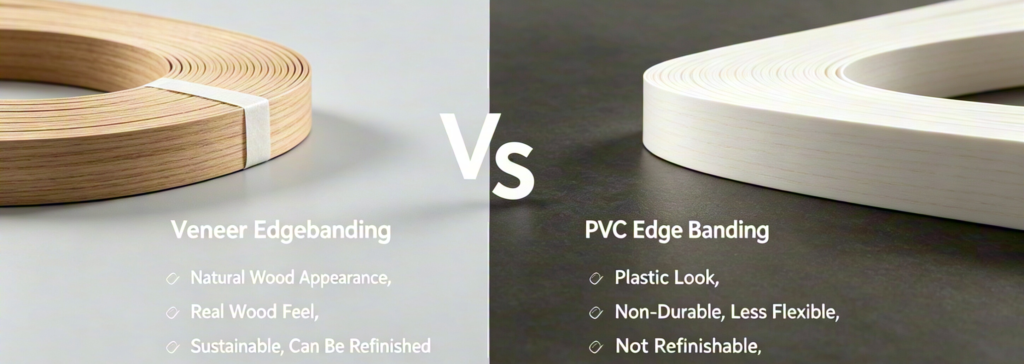
Veneer Edgebanding vs PVC Edge Banding
Furniture Makers will compare veneer edgebanding to pvc edge banding when deciding on what material they are going to use for a job.
Both are options to fulfill the same basic needs, but the advantages are far apart.
| Feature | Veneer Edgebanding | PVC Edge Banding |
| Appearance | Real wood grain | Artificial texture |
| Paintability | Excellent | Limited |
| Sustainability | Renewable resource | Plastic based |
| Premium Furniture | Preferred | Less common |
| Repairability | Easier | More difficult |
| Natural Character | Yes | No |
| Stain Compatibility | Excellent | Not applicable |
| Luxury Applications | Highly suitable | Limited |
When to Choose Veneer
Veneer edgebanding is generally the preferred choice when:
- Premium appearance is required
- Natural wood grain is desired
- Furniture is intended for higher-end markets
- Sustainability goals are important
- Matching wood veneers is necessary
Applications include:
- Luxury cabinetry
- Hospitality furniture
- Architectural millwork
- Executive office furniture
- Custom woodworking
When PVC Makes Sense
PVC edge banding may be suitable when:
- Budget is the primary concern
- High-volume production is required
- Consistent solid colors are needed
- Moisture resistance is a priority
- Wood grain matching is unnecessary
Many manufacturers offer both options depending on project requirements.
Veneer Edgebanding vs Solid Wood Edge Strips
There is another popular comparison in discussion: veneers edgebanding vs. solid wood strips for edges.
Both offer the look of natural wood but are very different in terms of performance, price and manufacturing effectiveness.
Material Comparison
Veneer Edgebanding
- Thin natural wood veneer
- Flexible
- Lightweight
- Easy to process
- Suitable for automated production
Solid Wood Edge Strips
- Solid hardwood construction
- Greater thickness
- Higher material consumption
- More labor intensive
Cost Comparison
Veneer edgebanding typically offers lower material and production costs.
Benefits include:
- Better wood utilization
- Reduced waste
- Faster application
- Lower shipping weight
- Improved manufacturing efficiency
For large-scale furniture production, veneer solutions often provide significant cost savings.
Manufacturing Efficiency
Modern edge banding machines can process veneer edgebanding quickly and consistently.
Advantages include:
- Faster production speeds
- Automated processing
- Reduced labor requirements
- Consistent quality
Solid wood edge strips generally require additional machining and finishing steps.
Furniture Design Flexibility
Veneer edgebanding allows manufacturers to:
- Use large engineered panels
- Create complex furniture designs
- Maintain dimensional stability
- Achieve seamless appearance
This flexibility supports modern furniture production methods.
Best Applications for Each
Veneer Edgebanding
Best for:
- Cabinets
- Furniture panels
- Architectural millwork
- Commercial fixtures
- Production furniture
Solid Wood Edge Strips
Best for:
- Heavy-duty furniture
- Specialty woodworking
- Premium handcrafted products
- Thick edge designs
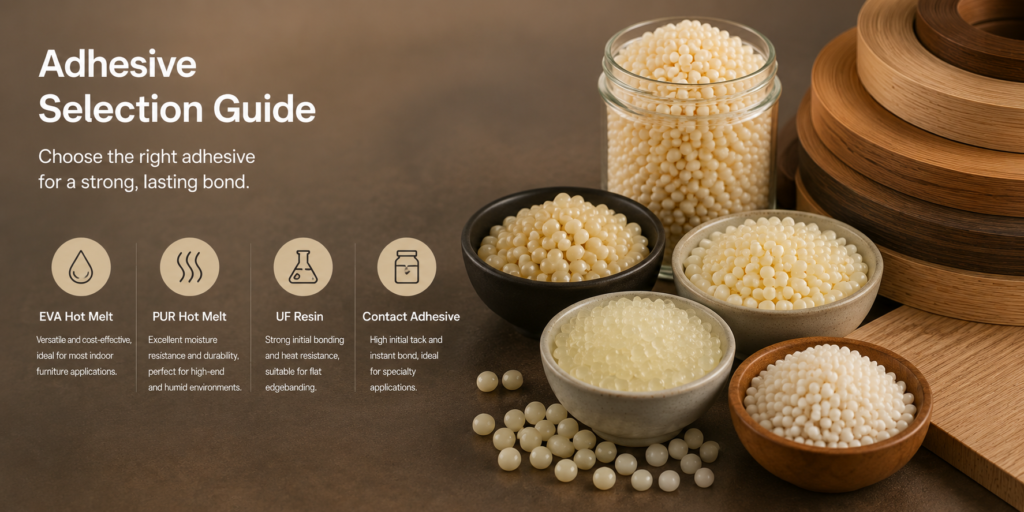
Adhesive Selection Guide
Adhesives are essential for the durability of veneer edgebanding.
Veneer is not immune to the effects of inferior adhesive systems, even superior material can be ruined.
Knowledge of adhesive choices enables producers to enhance product quality and minimize warranty problems.
Why Adhesive Matters
The adhesive must:
- Create strong bond strength
- Resist heat and humidity
- Accommodate wood movement
- Support production efficiency
- Maintain appearance over time
Several factors influence adhesive performance:
- Substrate material
- Production environment
- Application temperature
- Humidity levels
- Production speed
Selecting the correct adhesive is essential for long-term success.
EVA Hot Melt Adhesive
EVA (Ethylene Vinyl Acetate) remains one of the most commonly used adhesive systems in furniture manufacturing.
Advantages include:
- Cost-effective
- Fast processing
- Easy machine application
- Reliable performance
Applications:
- Residential furniture
- Office furniture
- Standard cabinetry
Many automated edge banding lines rely on EVA hot melt systems for everyday production.
PUR Hot Melt Adhesive
PUR (Polyurethane Reactive) adhesive represents a premium solution.
Benefits include:
- Exceptional moisture resistance
- High heat resistance
- Superior bond strength
- Long-term durability
Ideal applications:
- Kitchen cabinets
- Bathroom furniture
- Hospitality projects
- High-humidity environments
PUR adhesive is increasingly preferred by premium furniture manufacturers.
Contact Adhesives
Contact adhesives offer flexibility for specialized applications.
Advantages:
- Strong initial tack
- Useful for curved surfaces
- Suitable for small-scale production
These adhesives are often used in custom furniture workshops and repair projects.
Which Adhesive Is Best for Veneer Edgebanding?
There is no single universal answer.
The best adhesive depends on:
- Product type
- Production method
- Environmental exposure
- Performance requirements
For most furniture manufacturers:
- EVA provides excellent value.
- PUR delivers premium performance.
- PVA works well for manual projects.
- Contact adhesive supports specialized applications.
Adhesive Selection by Application
| Application | Recommended Adhesive |
| Kitchen Cabinets | PUR |
| Bathroom Furniture | PUR |
| Office Furniture | EVA |
| Residential Furniture | EVA |
| Custom Woodworking | PVA |
| Curved Surfaces | Contact Adhesive |
| Hospitality Projects | PUR |
| Retail Fixtures | EVA or PUR |
How to Apply Veneer Edgebanding
Proper installation is critical for achieving a professional result.
Even premium veneer materials require correct application techniques to maximize performance and appearance.
Tools Required
Typical installation tools include:
- Measuring tape
- Utility knife
- Edge banding trimmer
- Household iron
- Heat gun
- J-roller
- Sanding block
- Fine-grit sandpaper
- Clamps (if required)
Using the proper tools improves consistency and finish quality.
Surface Preparation
Before installation:
- Remove dust and debris.
- Ensure the edge is square.
- Check for moisture contamination.
- Smooth rough surfaces.
Proper preparation creates the foundation for strong adhesion.
Measuring and Cutting
Cut the veneer strip approximately one inch longer than the panel edge.
This additional length allows for precise trimming after bonding.
Iron-On Installation Method
For pre-glued veneer edgebanding:
- Position the strip along the edge.
- Set the iron to high heat.
- Move slowly along the strip.
- Maintain consistent pressure.
- Ensure complete adhesive activation.
This process is widely used by cabinet makers and woodworking professionals.
J-Roller Pressure Technique
Pressure is just as important as heat.
Immediately after heating:
- Roll firmly across the entire edge.
- Remove trapped air pockets.
- Improve adhesive penetration.
- Ensure full surface contact.
Many professional woodworkers consider this step essential for long-term performance.
Trimming Excess Material
After cooling:
- Trim both ends.
- Remove side overhangs.
- Use sharp cutting tools.
- Work carefully to avoid tear-out.
Accurate trimming contributes significantly to appearance quality.
Sanding and Finishing
Use fine-grit sandpaper (180–220 grit).
Light sanding:
- Softens sharp edges
- Removes excess adhesive
- Improves finish quality
- Creates seamless transitions
Over-sanding should be avoided because veneer is relatively thin.
Quality Inspection Checklist
Before final approval, inspect:
✓ Edge alignment
✓ Bond strength
✓ Surface smoothness
✓ Color consistency
✓ Trim accuracy
✓ Finish quality
✓ Adhesive coverage
✓ Absence of bubbles or gaps
Consistent inspection helps maintain production standards and customer satisfaction.
Manual vs Machine Edge Banding
Choosing between manual and machine application depends on production volume, budget, project complexity, and quality requirements.
DIY Application
Manual application is commonly used by:
- Hobby woodworkers
- DIY enthusiasts
- Small furniture shops
- Cabinet repair specialists
Typical tools include:
- Household iron
- Heat gun
- J-roller
- Utility knife
- Edge trimmer
Advantages:
- Low investment cost
- Flexible for custom projects
- Ideal for one-off furniture pieces
Limitations:
- Slower production
- Greater dependence on operator skill
- Less consistency on large projects
For homeowners and small workshops, pre-glued veneer edgebanding remains one of the easiest and most cost-effective solutions.
Small Workshop Production
Growing woodworking businesses often combine manual techniques with semi-automated equipment.
Benefits include:
- Improved efficiency
- Better consistency
- Reduced labor time
- Lower investment than full automation
This approach is common among regional cabinet makers and custom furniture manufacturers.
Industrial Furniture Manufacturing
Large-scale furniture production requires speed, precision, and repeatability.
Industrial edge banding systems provide:
- Consistent adhesive application
- High production speeds
- Accurate trimming
- Reduced labor costs
- Improved quality control
Most commercial furniture manufacturers rely on automated systems to meet production targets.
Automated Edgebander Process
Modern edge banding machines perform multiple operations in a single workflow:
- Panel feeding
- Adhesive application
- Edge band placement
- Pressure rolling
- End trimming
- Top and bottom trimming
- Corner rounding
- Buffing and finishing
This automated procedure enhances efficiency without sacrificing a high-quality end product.
At LUYAO, our veneer edgebanding can run reliably on most edgebanders worldwide.
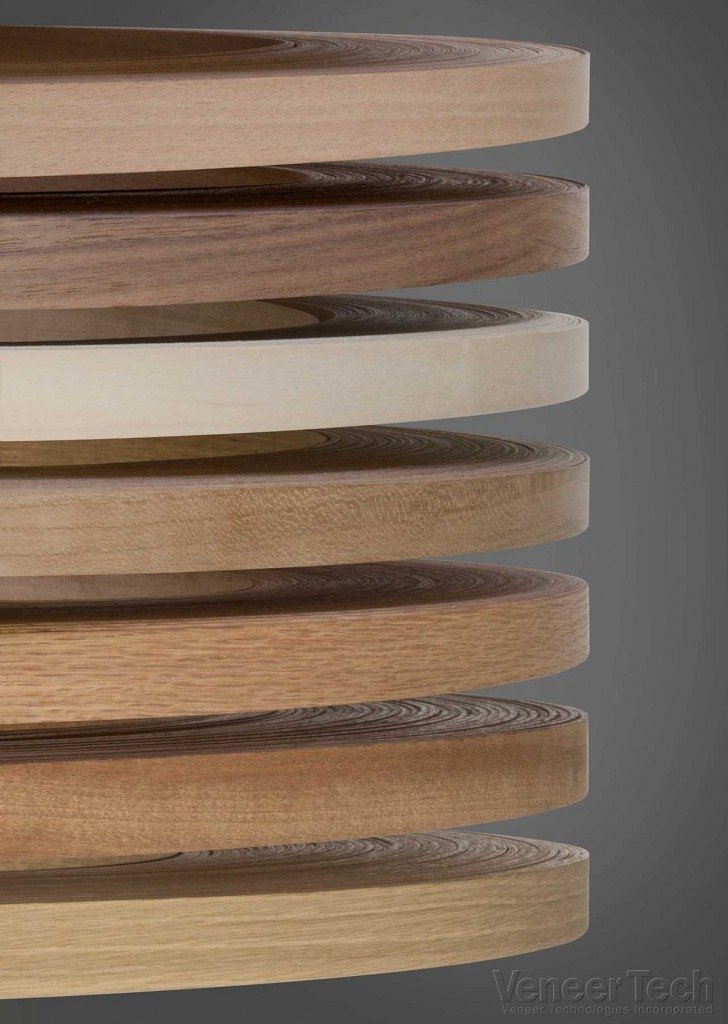
Common Installation Mistakes
There are still the occasional edge band failures even from the best of the pros. Knowing the most common mistakes is a good way to improve your rates of success in application.
Insufficient Heat
When applying pre-glued veneer edgebanding, inadequate heat may prevent proper adhesive activation.
Symptoms:
- Weak bonding
- Edge lifting
- Early failure
Solution:
- Increase heat gradually
- Ensure even temperature distribution
- Follow manufacturer recommendations
Poor Pressure Application
Heat alone does not guarantee a strong bond.
Without sufficient pressure:
- Air pockets may remain trapped
- Adhesive contact may be incomplete
- Bond strength may decrease
Using a J-roller immediately after heating helps create a durable bond.
Incorrect Adhesive Selection
Different applications require different adhesive systems.
Common mistakes include:
- Using EVA in high-moisture environments
- Selecting low-performance adhesives for commercial projects
- Ignoring temperature requirements
Matching adhesive type to project requirements is essential.
Inadequate Surface Preparation
Dust, debris, and uneven edges can compromise adhesion.
Always:
- Clean surfaces thoroughly
- Remove contaminants
- Verify panel edges are square and smooth
Preparation often determines final performance.
Trimming Too Early
Cutting the veneer before the adhesive has fully cooled can cause:
- Edge movement
- Misalignment
- Weak bonding
Allow sufficient cooling time before trimming.
Excessive Sanding
Although sanding improves appearance, excessive sanding can:
- Damage veneer surfaces
- Expose substrate material
- Create uneven edges
Use light pressure and appropriate grit levels.
Uneven Edge Alignment
Poor alignment affects both appearance and durability.
To avoid problems:
- Center the veneer carefully
- Check positioning before bonding
- Use guides when necessary
Precision during installation reduces rework.
Moisture-Related Failures
Moisture remains one of the leading causes of edge banding problems.
Potential causes include:
- Wet substrates
- High humidity environments
- Inadequate sealing
Proper adhesive selection and finishing help minimize moisture-related issues.

Veneer Edgebanding Manufacturing Process
Firstly, the high standard of manufacture and adherence to quality control is essential for good veneer edgebanding. For Shanghai Luyao Industry Co., Ltd.,LUYAO has a series of production from which it achieves stable performance and good reliability for the furniture manufacturers all over the world.
Veneer Selection
The process begins with carefully selected hardwood logs.
Factors considered include:
- Grain consistency
- Color uniformity
- Wood density
- Structural integrity
Selecting premium raw materials is essential for producing superior veneer products.
Veneer Slicing
Logs are cut into sheets of veneer through the use of rotary cutting equipment. This method ensures maximum material utilization with natural grain formations kept. The produced veneer forms the base of high quality veneer edgebanding.
Drying and Conditioning
After slicing, veneer must be properly conditioned.
Controlled drying helps:
- Stabilize moisture content
- Reduce future movement
- Improve adhesive performance
- Enhance dimensional stability
This step contributes significantly to long-term product reliability.
Finger Jointing
For longer continuous rolls, veneer sections may be finger-jointed.
Benefits include:
- Extended lengths
- Consistent appearance
- Improved production efficiency
High-quality finger joints remain virtually invisible after finishing.
Backing Application
Depending on product specifications, additional backing materials may be applied.
Options include:
- Fleece backing
- Paper backing
- Reinforcement layers
These materials improve flexibility and handling characteristics.
Adhesive Coating
For pre-glued veneer edgebanding, heat-activated adhesive is applied under controlled conditions.
Consistent coating ensures:
- Reliable activation
- Uniform bond strength
- Improved application performance
Slitting and Rewinding
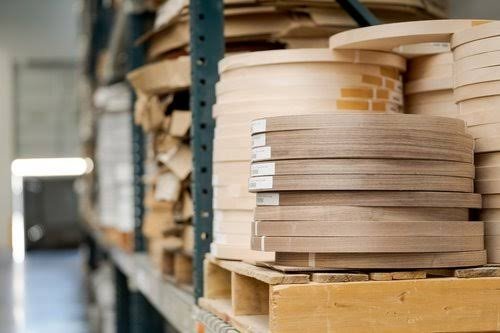
Large veneer sheets are converted into precise widths.
Common widths include:
- 13/16 inch
- 7/8 inch
- 1 inch
- Custom sizes
Rolls are then rewound and prepared for final inspection.
Quality Control Inspection
Every production batch undergoes quality evaluation.
Inspection criteria include:
- Width tolerance
- Thickness accuracy
- Surface quality
- Color consistency
- Adhesive performance
- Roll uniformity
At LUYAO, strict quality standards help ensure consistent performance across global markets.
Packaging and Shipping
Finished products are carefully packaged to prevent damage during transportation.
Packaging considerations include:
- Moisture protection
- Roll stability
- Export compliance
- International shipping requirements
Our global logistics experience helps customers receive products safely and efficiently.
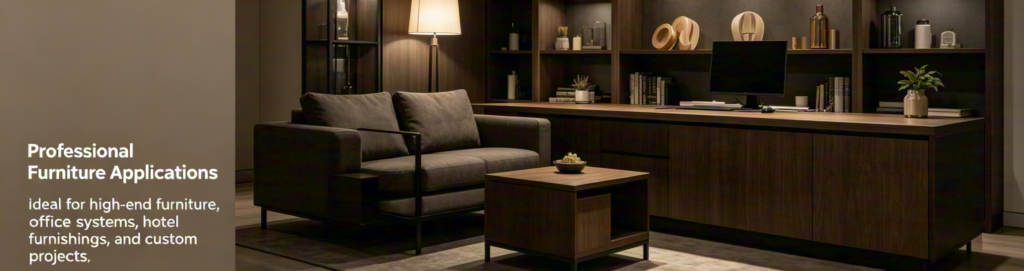
Professional Furniture Applications
Veneer edgebanding is used throughout the furniture and interior construction industries.
Kitchen Cabinets
One of the largest application segments.
Benefits include:
- Seamless appearance
- Moisture protection
- Durable edges
- Enhanced value
White oak veneer edge banding is especially popular in contemporary kitchens.
Bathroom Vanities
Bathroom environments require:
- Strong adhesion
- Moisture resistance
- Attractive appearance
PUR adhesive systems are commonly used in these applications.
Wardrobes and Closets
Veneer edgebanding creates refined, furniture-grade finishes for storage systems and custom closet solutions.
Office Furniture
Applications include:
- Workstations
- Desks
- Conference tables
- Storage units
Natural wood finishes help create premium workplace environments.
Hotel Furniture
Hospitality projects demand:
- Durability
- Consistency
- High-end aesthetics
Veneer edgebanding provides an ideal balance of performance and appearance.
Retail Fixtures
Retail displays often experience heavy use.
Properly applied veneer edge banding improves durability while maintaining a premium look.
Commercial Millwork
Architectural applications include:
- Wall panels
- Reception desks
- Built-in cabinetry
- Decorative installations
These projects frequently require custom veneer matching.
Educational Furniture
Schools and universities use veneer-edged furniture for:
- Classrooms
- Libraries
- Administrative offices
Durability and cost efficiency are key considerations.
Healthcare Furniture
Healthcare environments require durable, easy-to-maintain furniture solutions with professional aesthetics.
Luxury Residential Projects
High-end homes frequently incorporate veneer edgebanding in:
- Custom kitchens
- Walk-in closets
- Home offices
- Entertainment systems
Natural wood finishes contribute to a sophisticated interior environment.
Sustainability & FSC Veneer
Sustainability has become a major purchasing factor for furniture manufacturers and consumers alike.
Why Sustainability Matters
Responsible material sourcing supports:
- Environmental protection
- Long-term resource availability
- Corporate sustainability goals
Furniture brands increasingly seek environmentally responsible solutions.
Responsible Forestry
Sustainable forestry practices help preserve forests while supporting continued wood production.
These practices encourage:
- Reforestation
- Biodiversity protection
- Responsible harvesting
FSC-Certified Veneers
FSC-certified materials provide assurance that wood originates from responsibly managed forests.
Benefits include:
- Supply chain transparency
- Environmental credibility
- Increased customer confidence
Many international projects now specify FSC-certified materials.
Reduced Material Waste
Compared with solid wood edge strips, veneer edgebanding uses significantly less timber.
This improves resource efficiency and reduces waste generation.
Lower Carbon Footprint
Good use of materials can help reduce the impact on the environment in the entire process of production.
Veneer vs Solid Hardwood Sustainability
Veneer allows manufacturers to maximize the value of each harvested log.
Advantages include:
- Higher yield
- Reduced waste
- Improved resource efficiency
- Lower raw material consumption
Environmental Benefits for Furniture Brands
Using sustainable veneer products can support:
- Green building initiatives
- Corporate ESG goals
- Responsible sourcing programs
- Eco-conscious product development
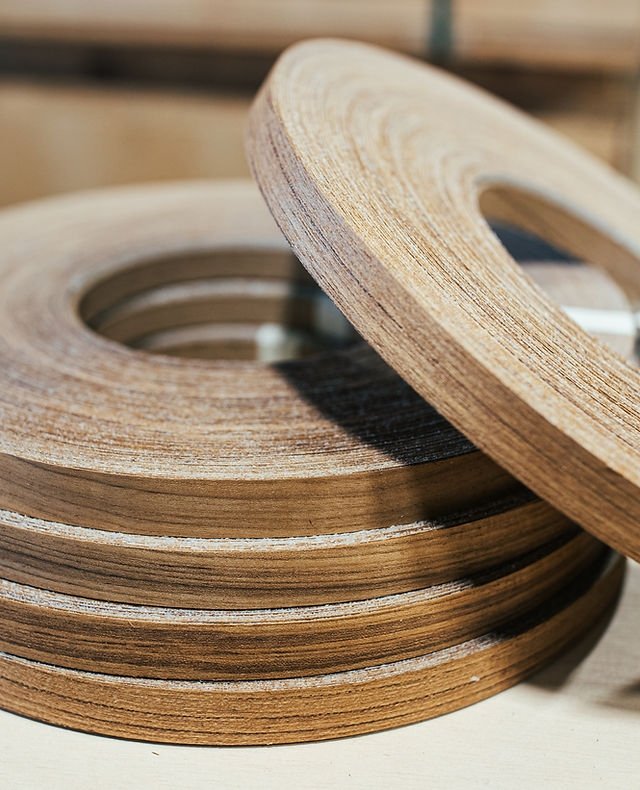
Why Choose LUYAO Veneer Edgebanding
About Shanghai Luyao Industry Co., Ltd.
Shanghai Luyao Industry Co., Ltd. is a professional manufacturer and supplier of edge banding solutions serving furniture manufacturers, cabinet makers, distributors, and interior construction companies worldwide.
Our LUYAO brand is committed to delivering reliable quality, consistent performance, and responsive customer support.
Manufacturing Expertise
Years of industry experience allow us to understand the practical challenges faced by furniture manufacturers.
Our products are designed to support both manual and automated production environments.
Custom Color Matching
We offer custom matching solutions for:
- Wood veneers
- Decorative panels
- Cabinet collections
- Furniture programs
This helps customers maintain visual consistency across finished products.
OEM & ODM Support
LUYAO supports:
- Private label programs
- Custom specifications
- Product development
- Specialized packaging
Global Export Experience
Our products serve customers across:
- North America
- Europe
- Australia
- Southeast Asia
- Middle East
- Latin America
Strict Quality Control
Quality remains a core priority throughout production.
Each batch undergoes inspection to ensure consistency and reliability.
Fast Production and Delivery
Efficient manufacturing systems allow us to support both standard and custom orders.
Professional Technical Support
Our team assists customers with:
- Product selection
- Adhesive recommendations
- Application guidance
- Technical problem solving
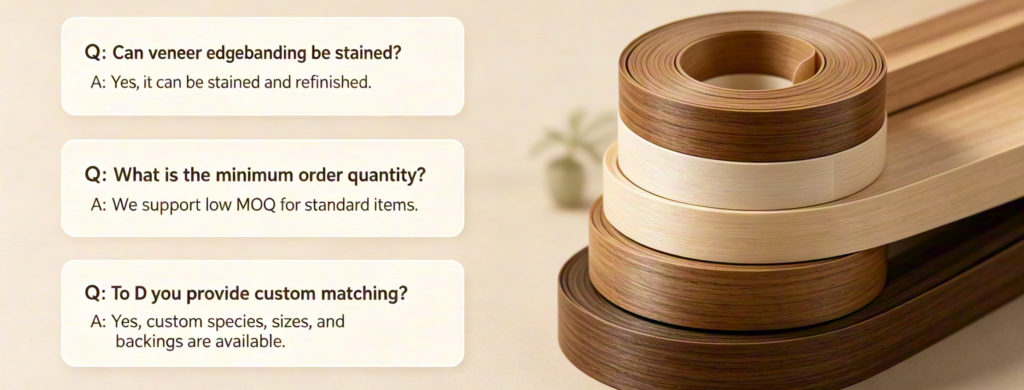
Frequently Asked Questions
Best veneer edgebanding options for kitchen cabinets
White oak, walnut, maple, and birch remain among the most popular choices. White oak veneer edge banding is particularly favored for modern kitchens due to its clean grain pattern and finishing versatility.
What is the best adhesive for unglued wood veneer edgebanding?
PUR adhesive offers the highest performance for moisture resistance and durability, while EVA provides an excellent balance of cost and performance for standard furniture production.
Where to buy veneer edgebanding online with fast shipping?
Manufacturers and distributors should choose suppliers with consistent inventory, quality control systems, and international logistics capabilities. LUYAO supports global shipping for bulk orders.
How to apply pre-glued veneer edgebanding with an iron?
Apply the veneer strip, activate the adhesive with a hot iron, press firmly using a J-roller, allow cooling, trim excess material, and sand lightly for a smooth finish.
How to apply veneer edgebanding for a smooth finish?
Proper preparation, even heating, adequate pressure, careful trimming, and light sanding are essential for professional results.
Troubleshooting common problems with veneer edgebanding application
Most issues stem from insufficient heat, poor pressure, incorrect adhesive selection, or inadequate surface preparation.
Top-rated veneer edgebanding suppliers in the United States
Buyers should evaluate suppliers based on product consistency, species availability, customization options, technical support, and lead times.
Where can I buy flexible wood veneer edgebanding in bulk?
Bulk flexible veneer edgebanding is available directly from manufacturers such as LUYAO and specialized woodworking suppliers.
Cost comparison of veneer edgebanding materials and brands
Pricing varies according to species, thickness, backing type, adhesive options, and order volume. White oak and walnut generally command premium pricing.
What tools are essential for a professional veneer edgebanding finish?
Common tools include an iron or edge banding machine, J-roller, trimmer, utility knife, sanding block, and measuring tools.
Is veneer edgebanding real wood?
Yes. Veneer edgebanding is manufactured from genuine hardwood veneer and displays natural wood grain characteristics.
Can veneer edgebanding be stained?
Yes. Most wood veneer edgebanding products can be stained, painted, oiled, or clear coated.
How long does veneer edgebanding last?
When properly installed and maintained, veneer edgebanding can last for many years in residential and commercial environments.
What thickness of veneer edgebanding should I choose?
Thickness selection depends on the application. Common options range from 0.5 mm to 3 mm.
Is white oak veneer edge banding suitable for kitchen cabinets?
Absolutely. White oak offers durability, excellent finishing performance, and strong market appeal, making it one of the most popular cabinet materials worldwide.
Conclusion
Veneer edgebanding is still the best way to turn engineered wood panels into fine furniture and cabinetry. The result of utilizing real wood and manufacturing efficiencies, veneer edge banding offers tremendous value, durability and design flexibility.
If you need white oak veneer edge banding, walnut veneer edgebanding, flexible veneer edge banding or anything else, a long-term success hinges on the right choice of materials and installation methods.
At LUYAO®Shanghai Luyao Industry Co., Ltd., we play a key role in furniture manufacturers, cabinet makers, distributor, wood working experts’ success by providing dependable veneer edgebanding products, professional technical service and steady quality.