


Complete FAQ Guide for Furniture & Cabinetry
If you’re a furniture manufacturer or cabinet builder, you’ve definitely dealt with raw wood, plywood, or particle board edges that ruin an otherwise clean finished product. No matter how precise your cutting and machining work is, exposed board edges are porous, uneven, and prone to damage—that’s where edge banding comes in. As someone with over a decade of hands-on experience working with edge banding materials for commercial furniture and cabinet projects, I’ve seen firsthand how this simple component elevates product durability, aesthetics, and overall quality.
Whether you’re shopping for edge banding for sale, sourcing edge banding for cabinets, or trying to pick the right edge banding thickness for your woodwork, this practical FAQ guide answers every core question fabricators and builders ask daily. I’ll break down real-world applications, common troubleshooting tips, and material differences between pvc edge banding, abs edgebanding,acrylic edge banding, melamine edge banding, and pmma edge banding to help you make smarter project decisions.

What Does Edgebanding Mean?
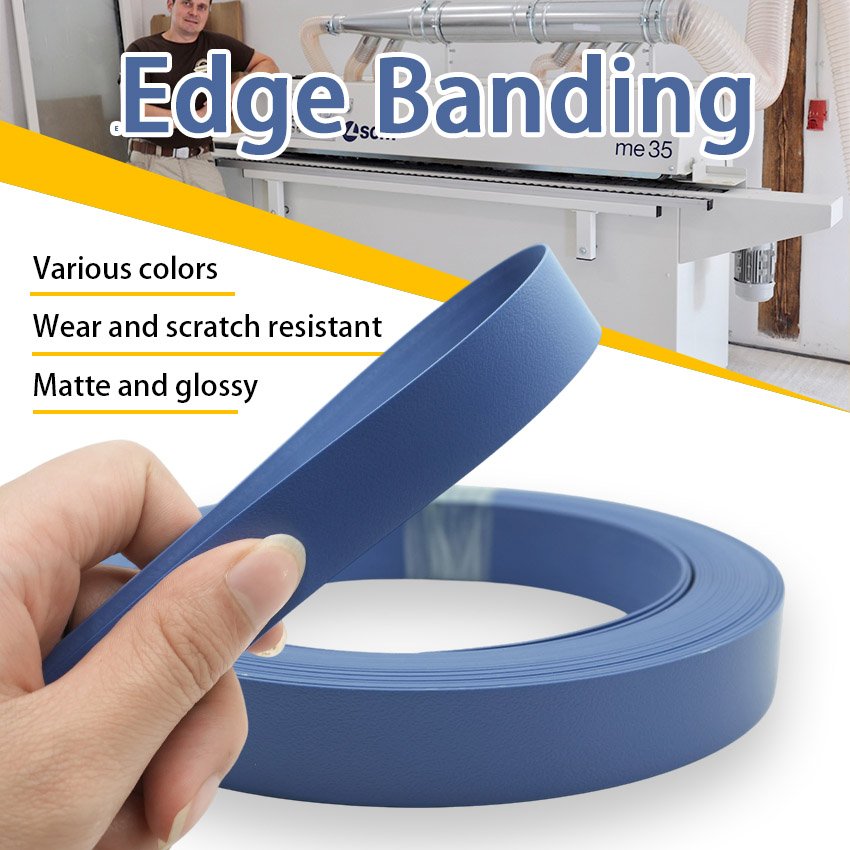
Let’s start with the most basic definition to clear up any confusion. Edgebanding is a thin, flexible strip material designed to cover and seal the raw, cut edges of engineered wood panels, solid wood, plywood, MDF, and cabinet boards. It’s one of the most essential finishing materials in modern furniture manufacturing, and its core purpose is to cover unsightly exposed wood grains, seal porous surfaces, and create a uniform, polished edge across all panels.
In short, edge banding acts as a protective and decorative barrier. Raw board edges are vulnerable to moisture absorption, chipping, cracking, and dirt buildup—issues that quickly shorten the lifespan of furniture and cabinets. Edge banding eliminates these flaws while standardizing the look of every piece. The term itself refers to both the process of applying the strip and the strip material itself, which is why you’ll hear industry professionals reference edge banding tape interchangeably with edge banding strips in day-to-day work.
What Is Edge Banding in Furniture?
For furniture manufacturers, edge banding is non-negotiable for producing market-ready, durable pieces. In furniture production, nearly all engineered wood panels used for tables, wardrobes, shelves, and frames have cut edges that lack the finished coating of the panel’s top and bottom surfaces. Edge banding is applied to these raw edges to create a seamless, finished look that matches the panel’s surface texture, color, and pattern.
From my years of factory and custom furniture work, I can confirm that high-quality edge banding directly boosts furniture value. Unbanded furniture edges look cheap, feel rough to the touch, and warp easily with humidity changes. By applying matching edge banding—whether it’s wood grain melamine, solid edge banding white, or custom colored pvc edge banding—you create cohesive furniture pieces that feel premium and hold up to daily use. It also reinforces panel edges, preventing splintering during assembly, shipping, and customer use, which drastically cuts down on product returns and quality complaints for manufacturers.
What Is Edge Banding on Cabinets?
Cabinetry is one of the largest use cases for edge banding, and edge banding for cabinets has unique functional requirements compared to general furniture edge banding. Kitchen and bathroom cabinets face constant exposure to moisture, steam, grease, and frequent cleaning, so cabinet edgebanding prioritizes water resistance, scratch resistance, and fade resistance above all else.
Cabinet edge banding covers the exposed edges of cabinet doors, drawer fronts, side panels, and shelf boards. Most modern cabinet makers rely on pvc edge banding and abs edgebanding for these applications because both materials resist water and household chemicals far better than basic melamine options. White cabinetry remains one of the most popular cabinet styles globally, making edge banding white one of our highest-demand products for cabinet manufacturers. When installed correctly, cabinet edge banding creates a flush, gap-free edge that prevents water from seeping into the porous cabinet board, stopping swelling, mold growth, and edge deterioration that plagues low-quality cabinet builds.
What Is Edge Banding on Wood?
Many people assume solid wood furniture doesn’t need edge banding, but that’s a common misconception. Edge banding on wood—both solid wood and wood composite panels—serves two key roles: aesthetic uniformity and structural protection. For solid wood panels, cut edges often have inconsistent grain patterns, knots, or rough cuts that disrupt the finished look of the piece. Wood-matched melamine edge banding or acrylic edge banding covers these imperfections to create a uniform finish.
For engineered wood products like plywood and particleboard, edgebanding is even more critical. These wood-based panels have layered, porous edges that soak up moisture rapidly. I’ve worked on countless renovation projects where unbanded wood panel edges swelled, split, or delaminated within a year of installation. Properly applied wood edge banding seals these pores completely, stabilizing the wood panel and extending the life of tables, wall panels, and wooden storage units. Premium pmma edge banding is especially popular for high-end wood furniture, as it delivers a glass-smooth finish that mimics solid wood polish without the high cost of full solid wood construction.


How to Apply Edge Banding: Step-by-Step Practical Guide
Applying edge banding is straightforward once you master the basics, but I’ve seen many new manufacturers ruin batches of panels with rushed or incorrect application. The process varies slightly for manual small-batch work and industrial mass production, but the core principles stay the same for all edge banding tape varieties.
First, prepare your panel edge thoroughly. Trim any excess wood splinters, dust, or uneven material to create a flat, clean surface—debris is the number one cause of bubbling and poor adhesion. Next, select the correct edge banding thickness to match your panel width; mismatched thickness leads to uneven trimming and messy finished edges. For standard 16mm and 18mm furniture panels, 0.3mm to 1mm thick PVC or ABS edge banding is the industry standard, while heavy-duty cabinetry uses 1.5mm to 2mm thick banding for extra durability.
For heat-activated edgebanding (the most common type on the market), heat the strip evenly with a heat gun or edgebanding machine to melt the adhesive backing. Apply steady, even pressure along the entire edge to ensure full contact, working from one end to the other to avoid air pockets. For manual application, move slowly—rushing creates wrinkles and gaps. Once fully adhered, let the bond cool completely before trimming. This step is non-negotiable; I always recommend waiting 5–10 minutes, as premature trimming pulls the banding loose at the edges.

How to Trim Edge Banding for a Flawless Finish
Trimming is the make-or-break step for professional-looking edge banding results. Poor trimming is the easiest way to spot amateur furniture work, so I’ll share the exact method I use for all my commercial projects. After the edge banding is fully cooled and bonded, start with a sharp edge trimmer or utility knife—dull tools will tear the banding, especially thin pvc edge banding and melamine edge banding.
Trim the top and bottom excess banding first, holding the tool at a consistent 45-degree angle to avoid cutting into the panel surface. Always trim away from the panel face to prevent scratches. For curved edges common in custom furniture, use a flexible trim blade and make small, gradual cuts instead of one long slice. After rough trimming, sand the edges lightly with fine-grit sandpaper to smooth out any rough spots or minor unevenness. For high-end pieces with pmma edge banding or acrylic edge banding, follow up with a microfiber polish to restore the material’s glossy finish. Take your time here—clean trimming is what separates factory-grade furniture from DIY builds.
Can You Paint Edge Banding?
Yes, you can paint edge banding, but results vary drastically based on the material type, and there are critical caveats every manufacturer should know. Not all edge banding takes paint well, and improper painting leads to peeling, cracking, and uneven coloration over time.
PVC edge banding and abs edgebanding are the most paint-friendly options. Both materials have smooth, non-porous surfaces that accept spray paint and acrylic paint perfectly after a quick light sanding to create texture for adhesion. I regularly paint white PVC edge banding for custom colored cabinet projects with zero long-term issues. On the flip side, pre-finished melamine edge banding is not ideal for painting. Its factory coating resists paint adhesion, and painted melamine banding will chip and peel with minor friction.
If you plan to paint edge banding, always sand lightly, clean off all dust, and use a primer designed for plastic or synthetic materials. Skip the primer, and the paint will bubble and peel within months. For best results, paint the banding before installation whenever possible for full, even coverage.
Can You Stain Edge Banding?
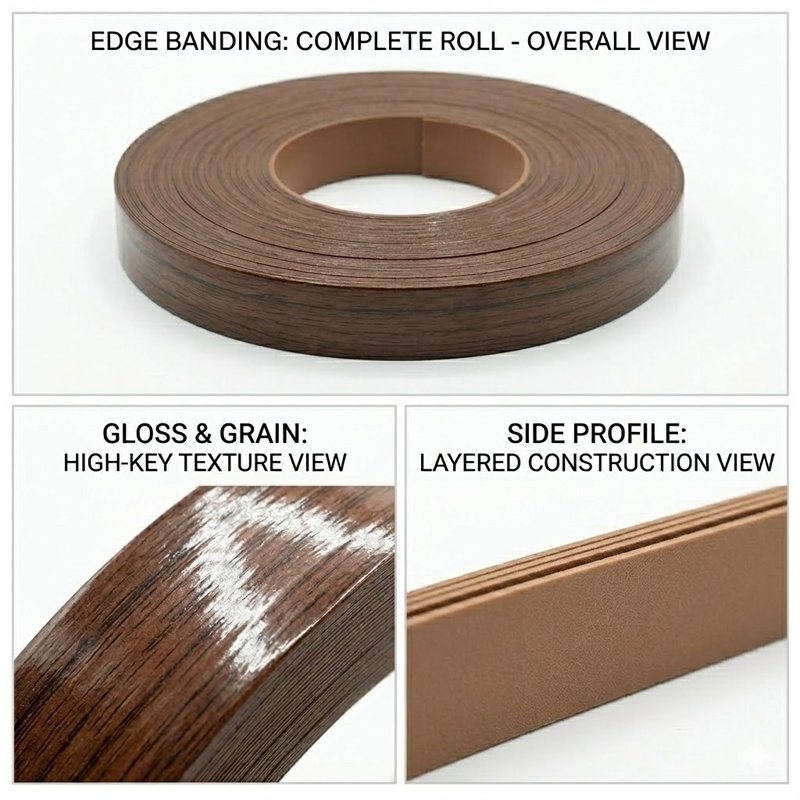
Staining edge banding is possible but only for specific material types—this is a frequent question from custom wood furniture makers. Synthetic banding like pvc edge banding, abs edgebanding, and pmma edge banding cannot be stained. These materials are fully synthetic with uniform color throughout the strip, so wood stain cannot penetrate or alter their hue.
Only wood-based or veneermelamine edge banding accepts wood stain effectively. Veneer edge banding has a real wood surface that absorbs stain just like solid wood, letting you match custom wood tones for high-end furniture restoration and custom builds. From my experience, stained edge banding works best for vintage furniture, solid wood cabinetry, and luxury wood panel projects. If your project requires custom stained edges, always opt for natural veneer melamine banding—synthetic alternatives will waste your time and materials.
Is Bane a Straight Edge Band? (Common Industry Misconception)
This is a frequent search question stemming from industry terminology misspellings and mispronunciations: “bane” is not a type of straight edge band. This term is almost always a misspelling of “band” or a misreference to edge banding defects. There is no industry product named “bane edge banding”.
What many users accidentally reference is straight edge banding—the standard straight-cut edge banding used for all standard flat panel furniture and cabinets. Straight edge banding is the most common variety available when you shop for edge banding for sale, designed for square, straight panel edges, as opposed to flexible curved edge banding for rounded furniture designs. If you’ve seen this term online, it’s simply a terminology error, not a separate product category. All our standard edge banding tape options come in straight edge profiles for conventional furniture manufacturing.
Final Industry Tips for Choosing the Right Edge Banding
After years of sourcing and testing edge banding for mass manufacturers and custom woodworkers, the biggest mistake I see businesses make is choosing banding based solely on price. Matching material type and edge banding thickness to your project type is far more important for long-term quality.
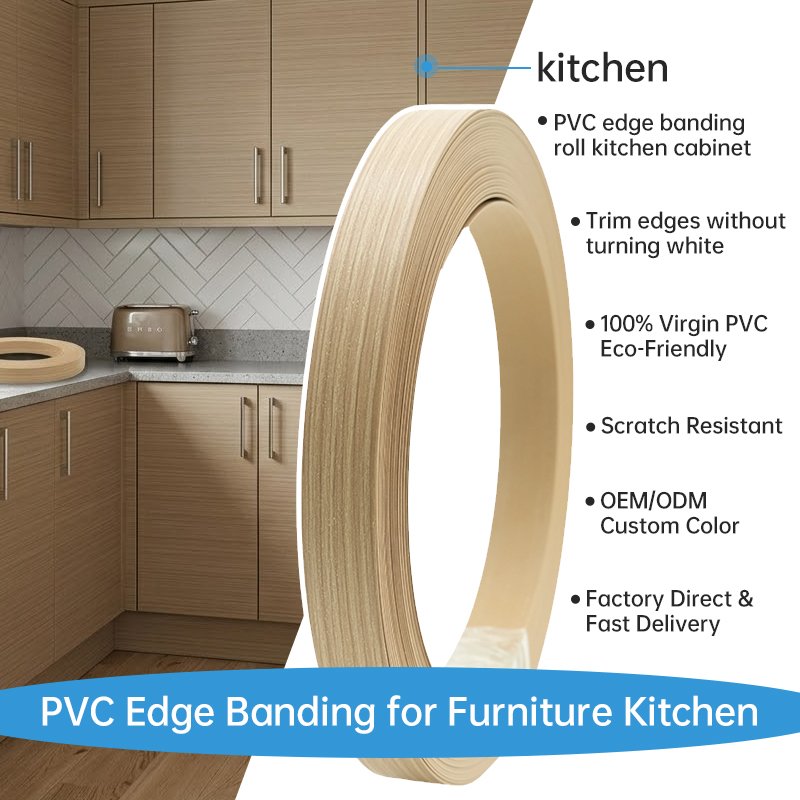
Stick to pvc edge banding for budget-friendly, durable cabinetry and everyday furniture. Choose abs edgebanding for moisture-prone areas like kitchens and bathrooms. Opt for acrylic edge banding or pmma edge banding for high-gloss, premium retail furniture pieces. Use melamine edge banding for wood grain matching and traditional woodwork. And for clean, modern cabinet lines, edge banding white remains the most versatile, high-demand option for residential and commercial projects.
Whether you’re buying in bulk for factory production or sourcing small batches for custom jobs, understanding these material differences and application best practices will eliminate waste, reduce defects, and elevate the overall quality of your finished furniture and cabinetry.