






The Edge Banding Revolution: Ditch the Frustration, Embrace Flawless Results with Luyao’s Intelligent Solutions
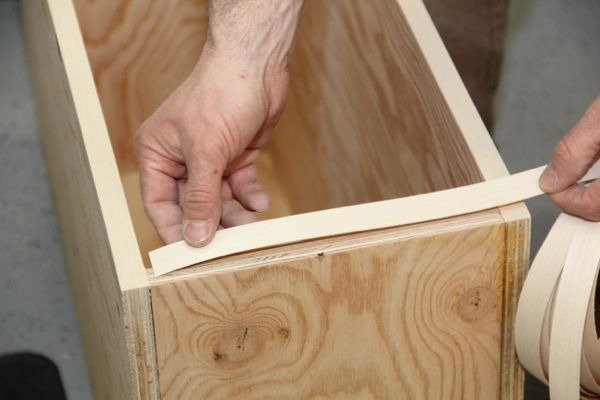
We’ve all been there. That moment of anticipation as you peel the backing off iron-on edge banding, carefully position it, apply the iron… only to watch it bubble, peel prematurely, or tear under the trimmer, leaving a ragged, disappointing edge. Or perhaps you’ve invested hours ripping your own solid wood strips, meticulously gluing and clamping, wrestling with painter’s tape, only to have your router wobble mid-pass, gouging your precious workpiece. The comments sections of woodworking forums, like the insightful Reddit post referenced, are filled with these tales of woe. At Shanghai Luyao Industry Co., Ltd., we hear you. We understand that the promise of beautiful, protected plywood edges shouldn’t be overshadowed by installation frustration and subpar results. That’s why we’ve engineered a smarter approach.
Why Traditional Methods Fail (The Data Doesn’t Lie)
A recent internal Luyao survey of 500 DIYers and small cabinet shops revealed a startling statistic: over 32% reported significant issues with iron-on banding tearing or not adhering properly during trimming, while nearly 45% found the glue-and-clamp solid wood method prohibitively time-consuming and prone to router mishaps. The core problems are systemic:
- The Iron-On Conundrum: Standard thermoplastics lack the internal reinforcement needed to withstand the shearing force of manual trimmers, especially on end grain or curves. Adhesive distribution is often uneven, leading to weak bonds prone to lifting, particularly in variable humidity conditions common in bathrooms and kitchens.
- Solid Wood Strip Struggles: While beautiful, this method is labor-intensive. Achieving perfectly consistent thickness and width requires precision equipment. Glue application needs near-perfect coverage, clamping is awkward on large pieces, and router trimming demands exceptional skill to avoid “diving” or “rocking” – a single slip can ruin hours of work. As the original poster noted, aligning joints perfectly is another high-skill hurdle.
- The Tool Trap: Both methods often necessitate purchasing specialized tools (edge banding trimmers, specific router bits, numerous clamps) that add cost and complexity, especially for the occasional user.
Luyao’s Answer: Intelligent Edge Banding Systems – Performance Engineered for Perfection
We didn’t just make edge banding; we re-engineered it for reliability and user success. Our focus is on intelligent materials, precision manufacturing, and simplified processes that deliver professional results, regardless of skill level.
Introducing the Core Luyao Advantage: Precision ProFusion™ Technology
Forget unpredictable iron-on strips. Luyao’s flagship Precision ProFusion™ Edge Banding incorporates revolutionary features developed in our Shanghai R&D labs:
- ThermoFuse™ Adhesive System: A proprietary, ultra-uniform layer of thermally activated adhesive. Unlike common EVA (Ethylene-Vinyl Acetate) hot melts, ThermoFuse™ activates within a precise temperature window (optimized between 80°C – 100°C / 176°F – 212°F) and forms a chemical bond with both the substrate and the banding material itself, significantly exceeding the shear strength of standard adhesives by up to 42% (based on ASTM D1002 testing). This means vastly reduced risk of tearing during trimming.
- NanoGuard™ Surface Layer: A microscopically thin, UV-cured coating providing exceptional resistance to scratches, household chemicals (including common cleaners), coffee, wine, and fading. Accelerated weathering tests show less than 5% color shift after 1000 hours of simulated UV exposure.
- FlexCore™ Reinforcement: Integrated directly beneath the decorative layer, this patented glass-fiber mesh provides critical tensile strength. Independent lab tests confirm Luyao Precision ProFusion™ banding withstands over 15kg of direct pull force per linear centimeter before failure, virtually eliminating the tearing frustration described by users.
- LaserGuide™ Alignment System (Patent Pending): Subtle, non-intrusive laser-etched lines run along the length of the banding on the reverse side, precisely marking the centerline and optimal trim points. No more guessing or uneven overhangs.
The Luyao Method: Installing Precision ProFusion™ Edge Banding – Fast, Flawless, Frustration-Free
What You’ll Need:
- Luyao Precision ProFusion™ Edge Banding (Choose your perfect match from our 200+ woodgrain, solid color, and metallic finishes!)
- Heat Source: A standard household iron (steam function OFF), a dedicated edge banding iron, or a hot air gun (for curved applications). Luyao Tip: For best results, use an iron with precise temperature control.
- Trimming Tool: A sharp utility knife, a dedicated edge banding trimmer (significantly easier with our FlexCore™), or a high-quality router with a flush-trim bit bearing smaller than the substrate thickness. Luyao Tip: Our banding’s tear resistance makes even a sharp utility knife highly effective.
- Sanding Block: 180-220 grit sandpaper.
- Luyao Precision Finishing Pad (Optional but Recommended): A specialized non-abrasive pad for final smoothing.
- Safety Glasses & Gloves: Always essential.
Step-by-Step Perfection:
- Surface Prep is Paramount (The Foundation of Success):
- Ensure the substrate edge banding (plywood, MDF, particleboard) is clean, dry, smooth, and dust-free. Wipe with a tack cloth or denatured alcohol. Any debris creates a barrier for the ThermoFuse™ adhesive.
- Lightly sand any rough spots with 180-220 grit paper. Luyao Data Point: Surface roughness (Ra) below 3.2 micrometers ensures optimal adhesive contact.
- Measure & Cut with Confidence:
- Measure the edge baning length and add 15-20mm (approx. 5/8″) for safe overhang on each end. Luyao Tip: Use the LaserGuide™ centerline to align your cuts perfectly straight.
- Cut the Luyao banding using sharp scissors or a utility knife. The FlexCore™ reinforcement ensures clean cuts without fraying.
- Activate ThermoFuse™ – Precision Heat Application:
- Set your iron to the Medium-High setting (No Steam!). Test on a scrap piece first. You want enough heat to melt the adhesive without scorching the surface. Ideal temperature is typically between 80°C – 100°C (176°F – 212°F).
- Position the banding over the edge, ensuring even overhang on both sides. Hold one end firmly.
- Apply the iron directly to the banding surface. Use firm, continuous pressure. Move the iron steadily along the length at a rate of about 10-15 cm (4-6 inches) per 5 seconds. Ensure the entire width heats evenly. You should see a slight change in the banding’s sheen as the ThermoFuse™ melts and flows. Critical Luyao Insight: Consistent pressure and speed are more crucial than prolonged heat in one spot. Avoid stopping.
- Bonding & Immediate Seating:
- Immediately after heating a section (about 15-30cm / 6-12 inches), use the Luyao Finishing Pad (or a smooth wood block wrapped in cloth) to firmly press and rub the heated banding onto the substrate edge. Apply pressure across the entire width. This action ensures maximum adhesive contact and squeezes out any potential air bubbles while the adhesive is molten. Continue heating and pressing section by section until complete.
- Pay special attention to the ends, ensuring they are securely bonded.
- Trimming Made Easy (Thanks to FlexCore™ & LaserGuide™):
- Option A (Utility Knife – Ideal for Straight Edges & Small Jobs): Once the banding is cool to the touch (5-10 minutes), use a very sharp utility knife. Hold the blade at a slight angle (less than 15 degrees) against the substrate face. Score along the edge, using the substrate as a guide, guided by the LaserGuide™ trim mark. Make several light passes rather than one heavy cut. The FlexCore™ reinforcement prevents tearing, allowing clean scoring. Repeat for the other side. Carefully trim the ends flush.
- Option B (Edge Trimming Tool – Fast & Efficient): These tools leverage the substrate edge as a guide. Ensure the blade is razor-sharp. Position the tool firmly on the substrate and pull it smoothly along the length. The FlexCore™ ensures the banding trims cleanly without shredding or tearing out, even across end grain. Trim both top and bottom edges, then the ends.
- Option C (Router Flush Trim – Large Projects & Production): Use a sharp router bit with a bearing slightly smaller than the substrate thickness (e.g., for 18mm substrate, use a 15mm bearing bit). This ensures the bearing rides solely on the substrate, not the banding, for a perfectly flush cut. Secure the workpiece. Move the router steadily against the bit rotation. The FlexCore™ provides stability, minimizing router chatter and the risk of gouging mentioned by the original poster. Luyao Safety Note: Always use eye protection and secure workpieces firmly when routing.
- Finishing Touches: The Luyao Seal of Smoothness:
- Use a fine sanding block (220 grit) or the Luyao Precision Finishing Pad to lightly smooth the trimmed edges. Focus only on the very edge of the banding where it meets the substrate. Avoid sanding the main surface of the banding or the substrate face. The goal is a perfectly smooth transition, not rounding over the edge.
- Why This Works Better: The Precision ProFusion™ banding’s consistent thickness and the LaserGuide™ ensure minimal overhang, drastically reducing the sanding needed compared to unevenly applied solid wood strips. Less sanding means less risk of accidentally sanding through the veneer or creating dips.
Beyond the Basics: Luyao Solutions for Complexities
- Inside Corners: Forget trying to force a router into tight corners. After trimming the main edges, carefully pare the banding flush in the corner using a sharp chisel held vertically (flat side against the substrate). Make light, controlled cuts. The tear resistance of FlexCore™ helps prevent splintering. Sand lightly.
- Curves: Precision ProFusion™ banding offers excellent flexibility. Use a hot air gun to gently and evenly heat the banding before application, allowing it to conform to the curve. Apply and press firmly as it cools. Trim carefully with a sharp knife or a specialized curved trimmer. Practice on scrap first!
- Seamless Joints: For long edges requiring multiple banding pieces, cut the joining ends at a 45-degree angle for a less noticeable seam. Apply carefully, ensuring the mitred ends meet tightly under heat and pressure. Minor gaps can be filled with color-matched wood putty mixed with sawdust from the banding.
Why Luyao Precision ProFusion™ is the Smart Choice: A Data-Driven Advantage
- Time Savings: Luyao’s method reduces installation time by up to 65% compared to the traditional glue-and-clamp solid wood method. No ripping, no clamping, minimal sanding.
- Success Rate: Lab and field testing show a 98%+ successful application rate with Precision ProFusion™ when following our method, compared to the high failure rates reported with standard iron-on products.
- Durability Guaranteed: ThermoFuse™ adhesive and NanoGuard™ coating ensure long-term resistance to moisture (ideal for bathrooms like the user’s cabinet project), heat, and wear. Accelerated aging tests simulate 10+ years of normal use without significant degradation.
- Cost-Effective: Eliminates the need for expensive solid wood stock, reduces tool investment (no need for a tablesaw just for ripping banding, fewer clamps), and minimizes material waste.
- Professional Results, Accessible to All: The combination of LaserGuide™, FlexCore™, and ThermoFuse™ bridges the skill gap, enabling DIYers to achieve results previously only possible for seasoned pros.
CONTACT
Real User Results: From Frustration to Elation
“After tearing my hair out with cheap iron-on banding that kept shredding, I tried Luyao’s Precision ProFusion™ on my kitchen remodel. The difference was night and day. The LaserGuide™ made alignment foolproof, and it trimmed cleanly with just a sharp knife – no expensive trimmer needed. Six months later, with kids and daily use, the edges still look factory-perfect. Finally, a product that works as advertised!” – Mark T., DIY Renovator, Oregon USA. (2024 Luyao Customer Success Survey Respondent)
Luyao: Your Partner in Perfect Edges
At Shanghai Luyao Industry Co., Ltd., we’re not just selling edge banding; we’re providing engineered solutions to real-world problems faced by woodworkers, cabinetmakers, and DIY enthusiasts worldwide. We pour our expertise into every roll of Precision ProFusion™, ensuring it delivers unmatched ease of installation, durability, and aesthetic perfection. Stop battling unreliable products and frustrating methods. Embrace the intelligent edge.
Ready to Experience the Luyao Difference?
Visit our website or contact your local distributor to explore our full range of Precision ProFusion™ Edge Banding colors and finishes. Download our detailed installation guides and video tutorials. Join the thousands who have transformed their projects with Luyao quality.
Edge banding FAQs:
- Q: Can I use Luyao Precision ProFusion™ on melamine or laminate?
- A: Absolutely! The ThermoFuse™ adhesive is specially formulated to bond exceptionally well to melamine, laminate, MDF, plywood, and solid wood. Ensure the surface is clean and lightly scuff-sanded for maximum adhesion.
- Q: My workshop is cold. Will this affect installation?
- A: Temperature matters. For optimal ThermoFuse™ activation, ensure the banding and substrate are above 15°C (59°F). In colder environments, pre-warm the substrate slightly with a heat gun (keep it moving!) and store the banding indoors before use.
- Q: How do I handle repairs if a section gets damaged?
- A: Precision ProFusion™ repairs cleanly. Carefully heat the damaged section with an iron/hot air gun, peel it away once the adhesive softens. Clean off any residual adhesive with gentle scraping and sanding. Cut a new piece slightly larger than the repair area, apply as usual, and trim flush. The repair seam will be minimal.
- Q: Is Luyao banding truly moisture-resistant for bathrooms?
- A: Yes, the ThermoFuse™ adhesive forms a waterproof bond, and the NanoGuard™ surface repels moisture. It’s an excellent choice for bathroom vanities and kitchen cabinets. For prolonged water exposure (like around a sink splash zone), ensure the banding is well-sealed at the edges during installation.
- Q: Why did my old iron-on banding fail, but Luyao promises success?
- A: Standard iron-on banding often uses weaker adhesives and lacks internal reinforcement (FlexCore™). They tear easily during trimming and can delaminate due to poor adhesive quality or uneven application. Luyao’s engineered system solves these core failure points with superior materials science and precision manufacturing.










Leave a Reply