Shanghai Luyao Industry Co., Ltd

PVC Edge Banding Manufacturer Since 2002

what we make, how we make it, and how we work with B2B buyers — furniture manufacturers, edge banding distributors, and bulk purchasers placing container orders.

When edge banding fails, the whole panel job falls apart

Anyone who has run a furniture factory knows the feeling. The panels arrive on time, the CNC is humming, the assembly line is ready — and then the edge banding shipment shows up half a shade off from the panel decor. Or the glue line cracks after two weeks in a humid warehouse. Or the surface print rubs off the first time a cleaner wipes it down with solvent.

Edge banding looks like a small line item on the BOM. It isn’t. It’s the part of the panel your end customer actually touches, and it’s the part that decides whether a finished cabinet looks like a $200 piece or a $2,000 piece.

We’ve been making PVC edge banding in Shanghai since 2002. Before that, our founder Emily Gu (顾旗) spent years in the panel board industry — which is the reason Luyao exists in the first place. She kept watching panel factories struggle to find edge banding suppliers who actually understood how decors should match, how batches should stay consistent, and how a banding roll should behave on an automatic edgebander at 25 meters per minute. So in 2002 she started Luyao to fix that gap.

Twenty-two years later, we’re running 25 extrusion lines, shipping roughly 250,000 meters a month, and serving buyers across Central and South America, the Middle East, South Africa, and Southeast Asia.

From panel boards to edge banding

why Luyao’s color matching is different

Here’s something most edge banding factories won’t tell you: matching a decor isn’t really a printing problem. It’s a panel problem.

When a melamine board comes off the press, the surface has a specific gloss level, a specific texture depth, and a specific way it absorbs light. If your edge banding supplier doesn’t understand how the panel was made, they’ll give you a banding roll that looks identical on the color card but obviously wrong once it’s pressed onto the panel edge.

Emily’s background in panel manufacturing is the reason we built our color lab around panel matching instead of just print matching. When a customer sends us a panel sample, we don’t just scan the surface color — Shanghai luyao industry co.ltd look at the substrate, the finish type, and the production batch behavior. That’s how we hit color consistency across multiple containers shipped six months apart.

This isn’t theory. Our Brazilian distributor partner has been re-ordering the same 12 SKUs for over four years, and the color drift across batches stays inside ΔE 1.0 on most decors — which is the threshold below which the human eye basically can’t see the difference under normal lighting.

PVC edge banding
full specification range

Shanghai luyao industry co.ltd produce PVC edge banding across the full range that B2B furniture and panel buyers typically need. The table below covers what “LUYAO” keep available as standard.

ParameterRangeCommon applications
Thickness0.4mm – 3mm0.4-0.5mm for back panels and budget casegoods; 0.8-1mm for mainstream kitchen and wardrobe panels; 2mm for heavy-use commercial furniture; 3mm for countertops, workbenches, and high-impact edges
Width9mm – 120mm9-15mm for drawer fronts and glass door frames; 22-28mm for standard 18mm panels; 35-45mm for thick countertops; 80-120mm for benchtops and structural edges
Roll length100 meters per roll (standard)Customizable for container loads
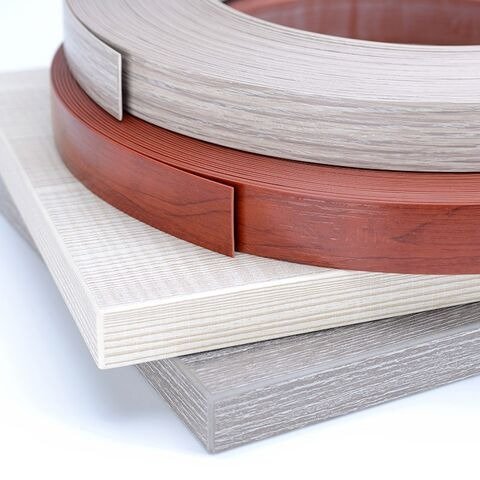
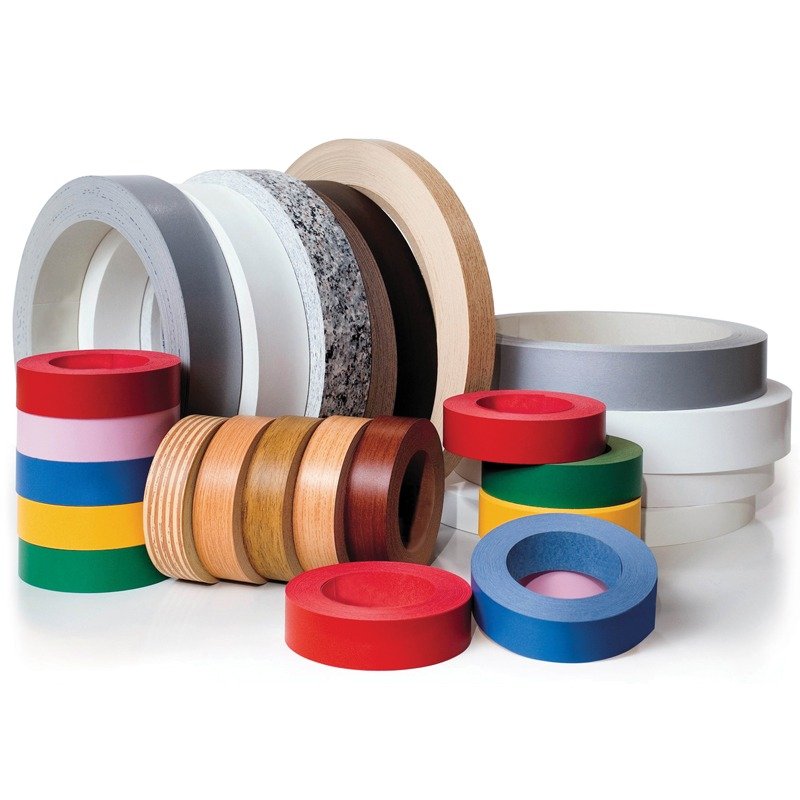
Surface finishesSolid color, wood grain, high gloss, super matt, metallicAll five finishes run in-house
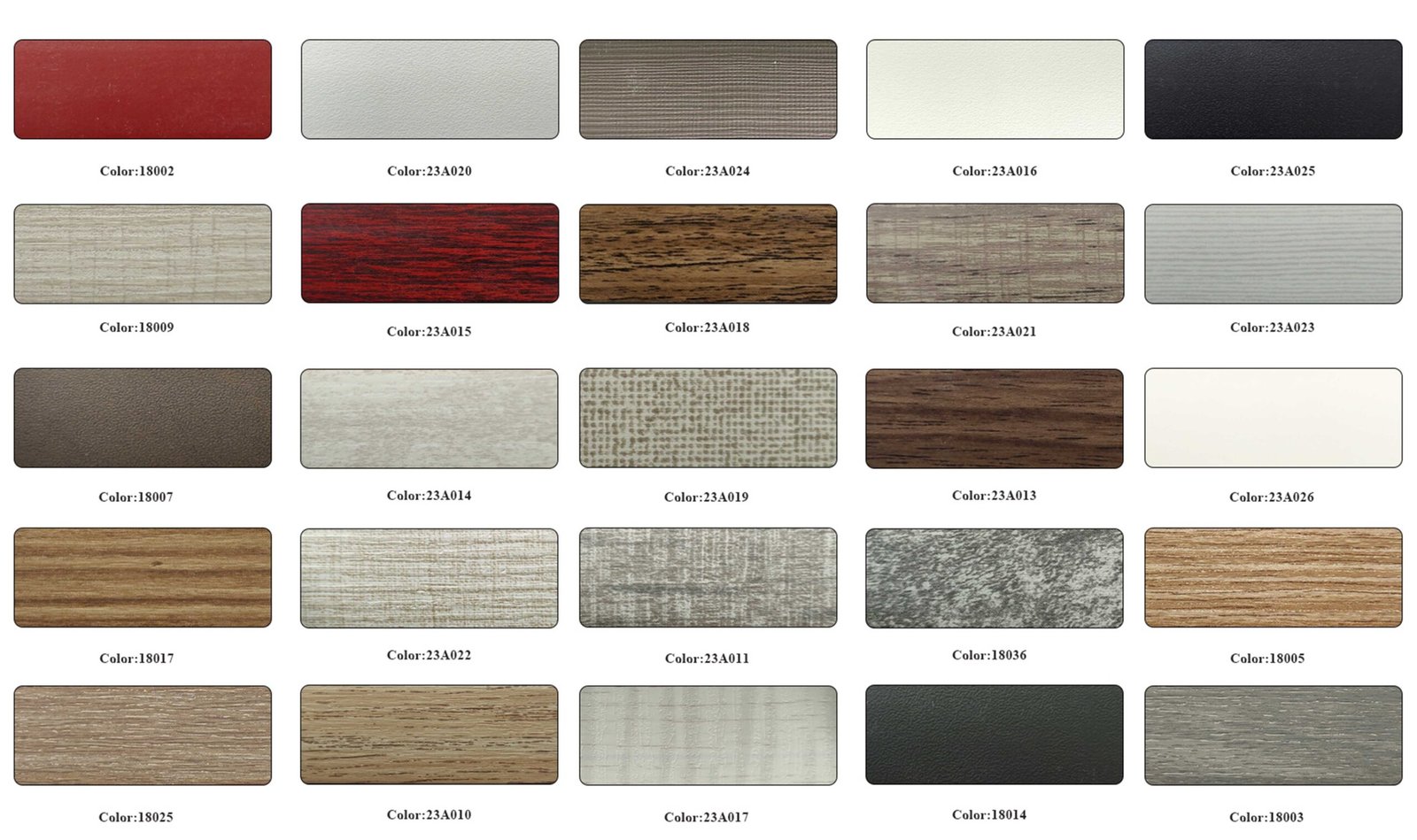
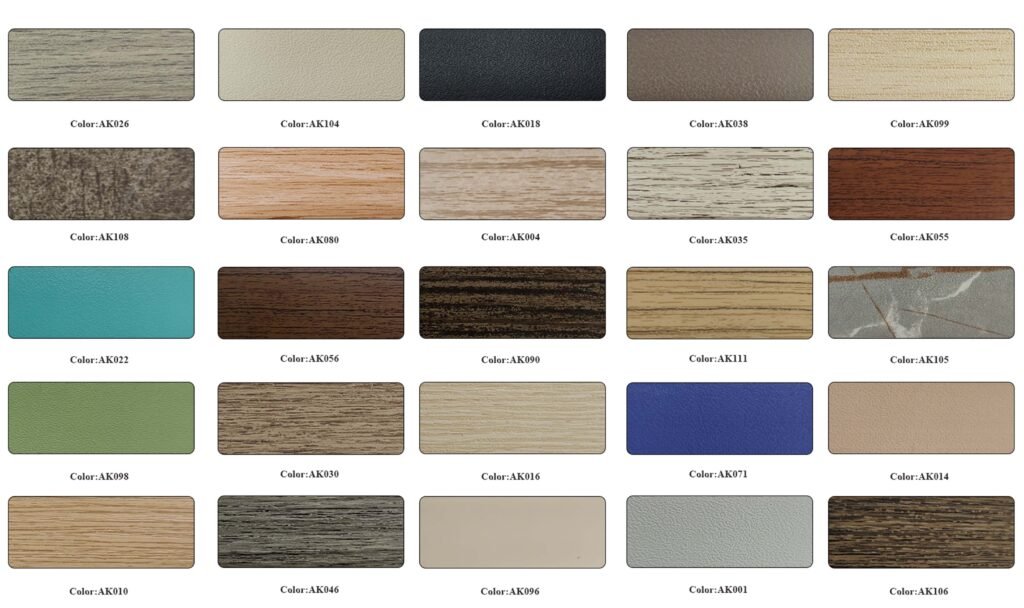
Decor library2,000+ standing SKUs, 500+ active running designsStock decors ship in 15 days
Monthly capacity250,000 metersAcross 15 extrusion lines

A few notes on what those numbers actually mean in practice:

The 0.4mm is genuinely thin. Most factories advertise 0.4mm but only run it cleanly down to 0.6mm. We run it daily because Central American and Middle Eastern buyers serving the budget furniture segment need that price point, and a 0.4mm banding shaves real cost off a flat-pack BOM.

The 3mm at 120mm wide is the other end. That’s the spec you need for hospitality furniture, restaurant tabletops, and any edge that takes mechanical abuse. Most of our 3mm volume goes to South African contract furniture buyers.

luyao logo 1.1

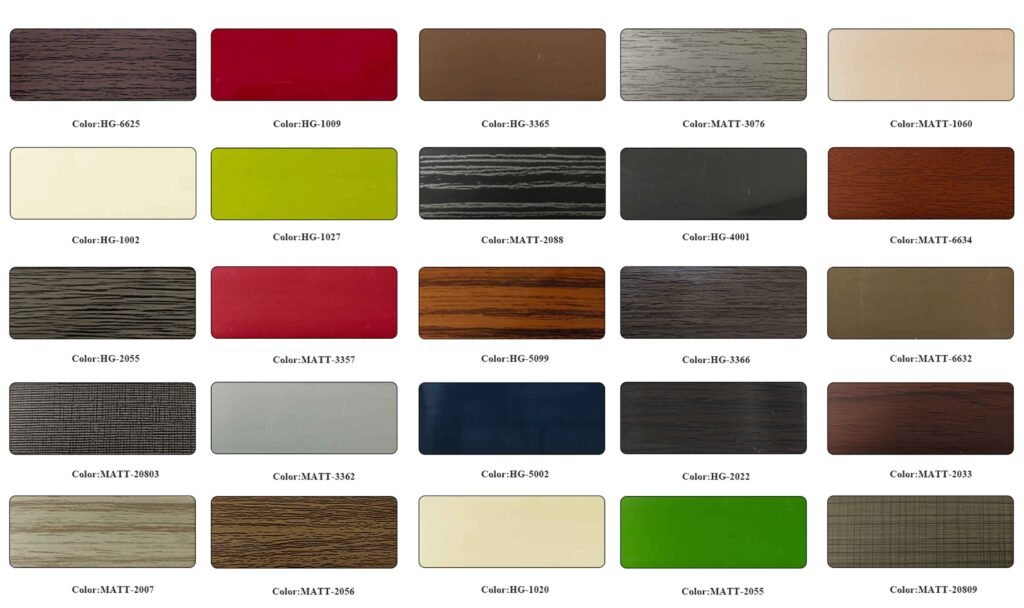
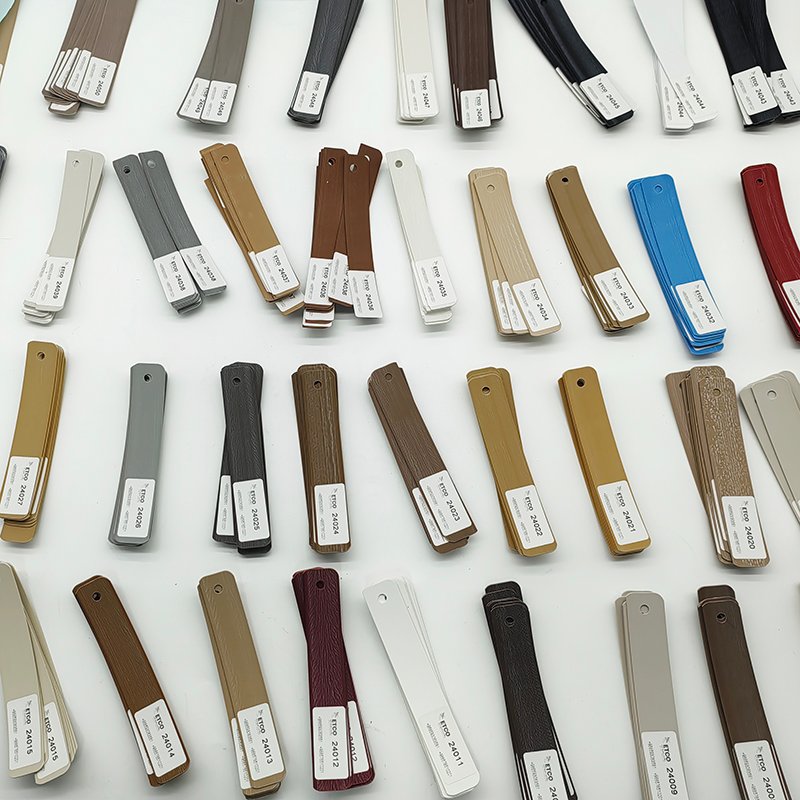
2,000+ decors with full customization

Color and finish

The library breaks down roughly like this:

Metallic and special finishes — about 5%, mostly for commercial and retail fixture buyers

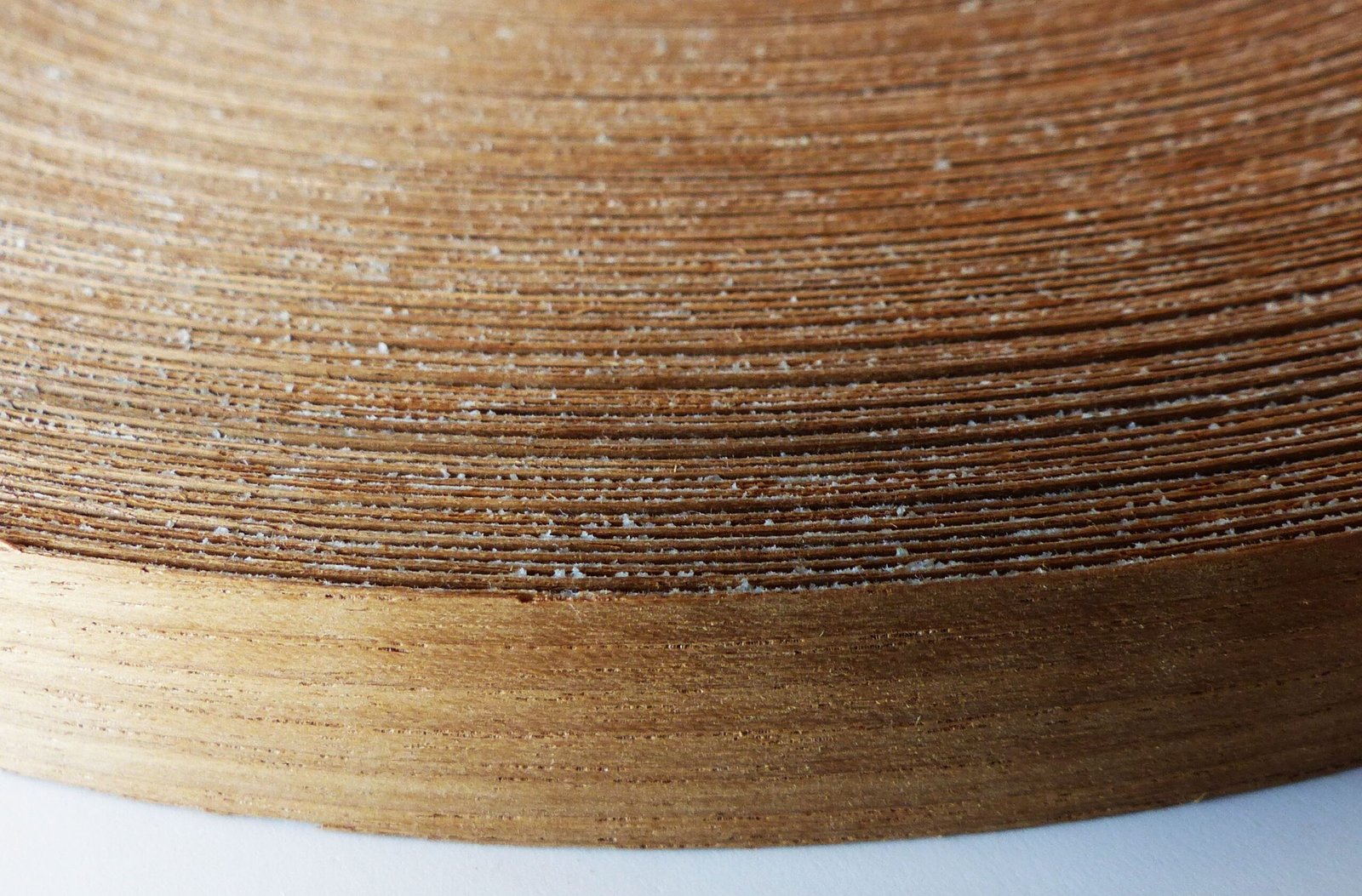
  • Wood grain (oak, walnut, beech, teak, sapele, zebrano, and regional favorites like Brazilian rosewood mimics) — about 60% of total volume
  • Solid colors (whites, blacks, greys, plus the saturated reds, blues, and yellows that move in Middle East and African markets) — about 25%
  • High gloss and super matt — about 10%, growing fast in kitchen cabinet applications

2,000+ designs, 500+ actively running

ship inside 15 days

More Colors & Sizes…

Custom decor development

For OEM printing — your logo, your brand name printed on the banding itself or on the packaging — we support both. No additional setup beyond standard sampling.

Path 1

Full container customization, no mold fee. If you’re placing a full container order (roughly 100,000+ meters depending on mix), “LUYAO” develop your custom decor at no charge. You send us the panel sample, “LUYAO”run color matching in our lab, send back a physical sample within 15 days, you approve, “LUYAO” run production. This is how most of our Brazilian and Mexican distributor partners work — they bring their local panel suppliers’ decors and “LUYAO” match the full set.

Path 2

Small-volume custom, with mold fee. If you want a custom decor but you’re not ready for full container volume, “LUYAO” charge a one-time mold/film development fee of approximately USD 1,500 and the MOQ drops to 5,000 meters per decor. This covers the cost of cutting the gravure cylinder for your specific pattern. After the first run, repeat orders skip the fee.

Sampling

Samples are free. You pay the courier — usually $40-80 by DHL or FedEx depending on destination. We don’t charge for sample preparation because honestly, if a buyer is willing to test our material against another factory’s, that’s already a win for us. We’d rather get on your shortlist than nickel-and-dime the sample stage.

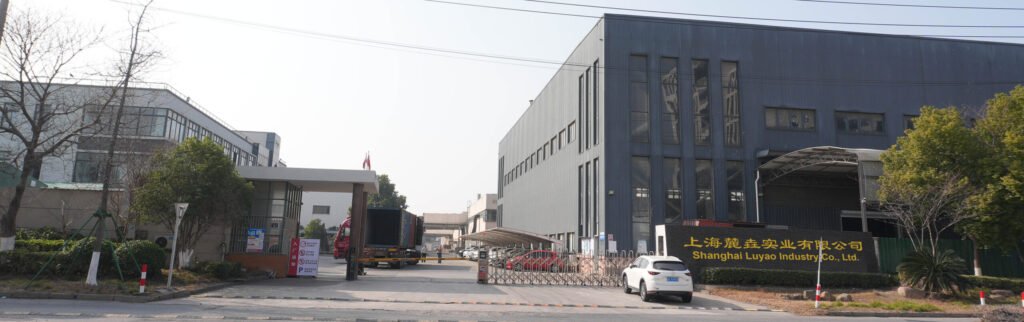
Inside the edge banding factory

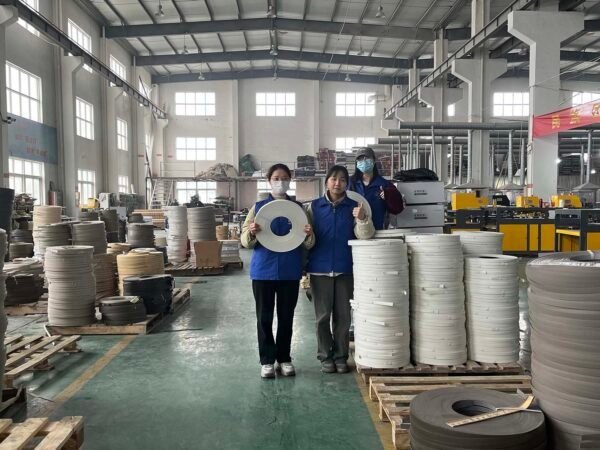
15 lines, 200+ workers, 2,500m² warehouse

About 200 workers on the production floor, 30+ in the export sales team. The sales team is fully English-capable, with Spanish and Portuguese coverage for our Latin American buyers and Arabic-language coordination for Middle East accounts. If you’re emailing in Spanish or Portuguese, you’ll get a reply in Spanish or Portuguese.

Shanghai Luyao Industry co., Ltd.

The Luyao facility runs three main zones: extrusion, printing/lamination, and finishing/packing. Here’s what’s actually on the floor.

Extrusion

Fifteen extrusion lines, all dedicated to PVC edge banding — we don’t share lines with other plastic products, which matters because cross-contamination between PVC formulations is a real quality issue when factories run multiple SKUs on the same screw.

Monthly output runs at around 250,000 meters across the full thickness range. The thinner specs (0.4-0.8mm) run faster, the thicker specs (2-3mm) run slower and need more cooling tank time. Our line speed averages 18-25 meters per minute depending on spec.

Printing and lamination

This is where the decor goes onto the banding. We run gravure printing in-house, which is the only way to maintain color consistency across batches. Factories that outsource printing always have batch drift — different shifts, different ink lots, different humidity in the print shop. Keeping it in-house is more expensive but it’s the only way the color story holds up over four years of reorders.

Finishing and QC

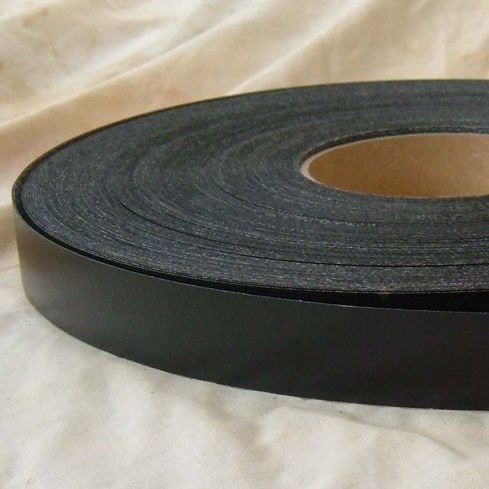
Cutting to width, edge trimming, rewinding to standard 100-meter rolls, and full QC before packing.

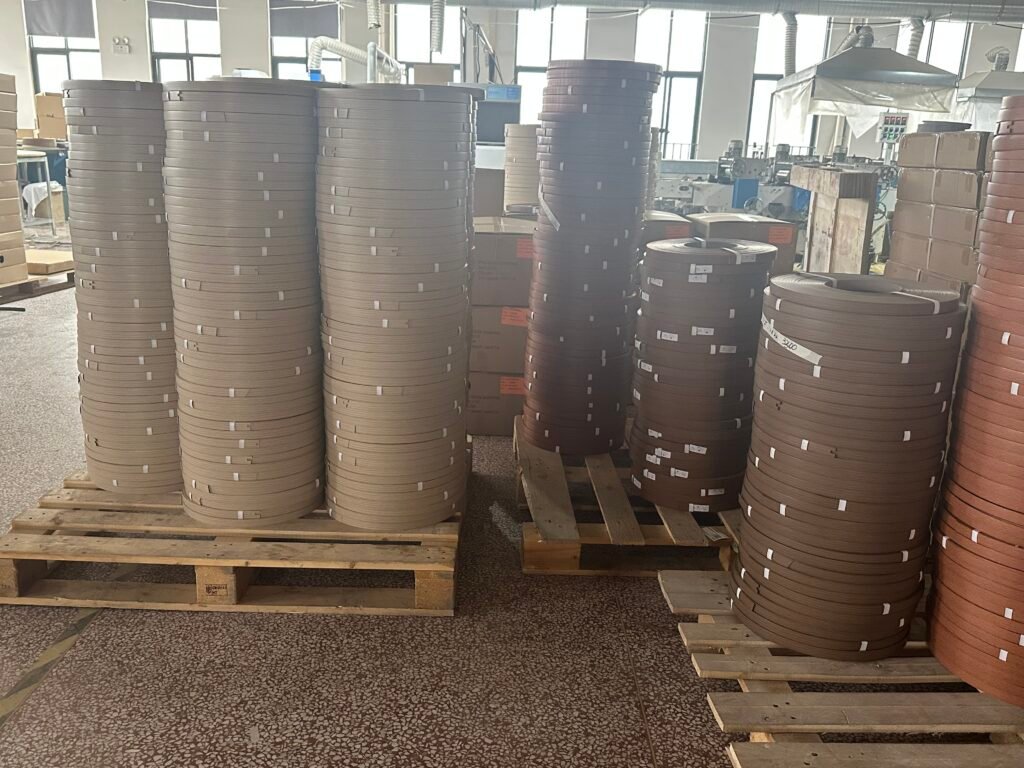
Warehouse — 2,500m²

Holds finished goods and raw material. The finished goods side keeps roughly 6-8 weeks of standard-decor inventory ready to ship, which is why our 15-day delivery on stock decors is realistic and not a marketing claim.

Most edge banding quality complaints come down to three failure modes: wrong dimensions, surface delamination, and print rub-off. Our QC is built around catching all three before the roll leaves the warehouse.

Test 1 — Dimensional check (width and length)

Every roll gets measured. Width tolerance we hold at ±0.1mm — which sounds tight but is necessary because automatic edgebanders are calibrated to a specific width, and a roll that’s 0.3mm over spec will jam the trimming station. Length is measured against the 100-meter standard with a calibrated meter counter on the rewinder.

This sounds basic but I’ve personally seen shipments from other factories where rolls labeled “100 meters” came in at 92-95 meters. That’s a 5-8% short delivery hiding in plain sight, and for a buyer ordering 50,000 meters it’s 2,500-4,000 meters of missing material.

Test 2 — Water immersion test

Sample sections from each production batch go into water immersion to check for surface absorption and edge swelling. PVC edge banding shouldn’t absorb water — but cheap formulations with too much calcium filler will, and the swelling cracks the surface after a few weeks in humid environments. This is critical for buyers in coastal markets — Caribbean, Gulf coast Mexico, UAE, South African coastal cities — where ambient humidity sits above 70% for months at a time.

Test 3 — MEK rub test (methyl ethyl ketone solvent wipe)

This is the one that separates real factories from fake ones. MEK (methyl ethyl ketone, also called 2-butanone) is the industry-standard solvent for testing print adhesion on PVC surfaces. The test is simple: saturate a white cotton cloth with MEK, wrap it around a 1kg weight, and rub the banding surface back and forth for 50 cycles under controlled pressure.

If the print passes, the cloth stays clean and the surface stays intact. If the print fails, you’ll see color transferring to the cloth within the first 10 cycles, and the decor will look washed out in patches.

We run the MEK rub test on every batch. If a batch fails, that batch doesn’t ship — it goes back through reprinting. This is non-negotiable. It’s also one of the reasons we don’t compete on rock-bottom pricing: ink and lamination chemistry that survives the MEK test costs more than what bargain-tier suppliers use.

Certifications and compliance documentation

  • MSDS (Material Safety Data Sheet) — full chemical composition disclosure for customs and importer compliance
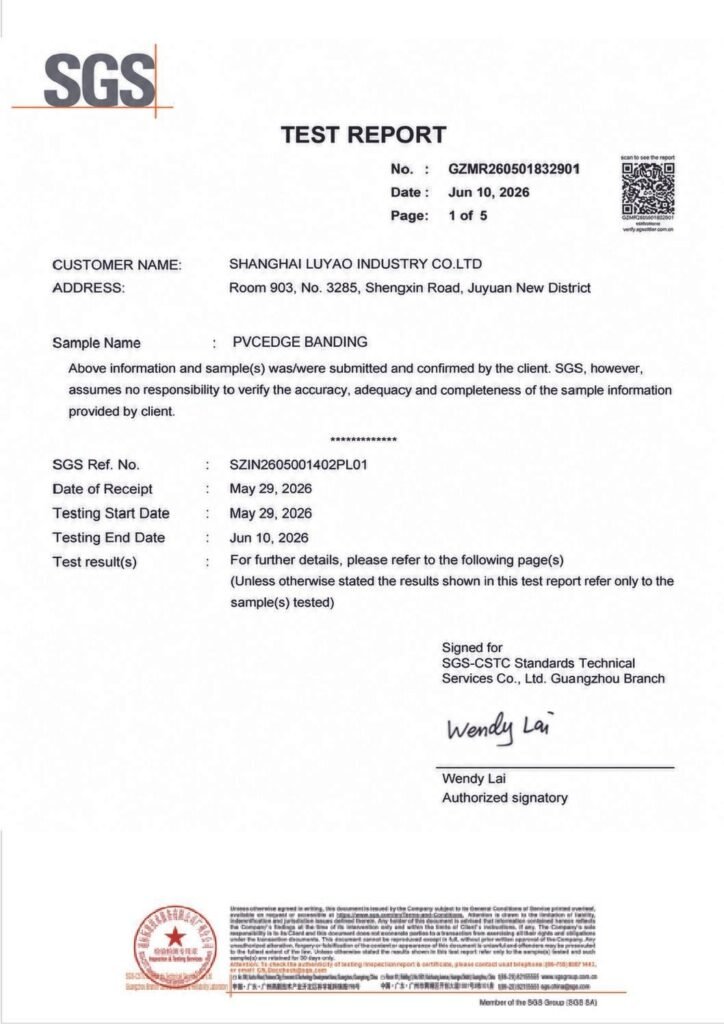
  • SGS test reports — third-party verification on material composition and heavy metals
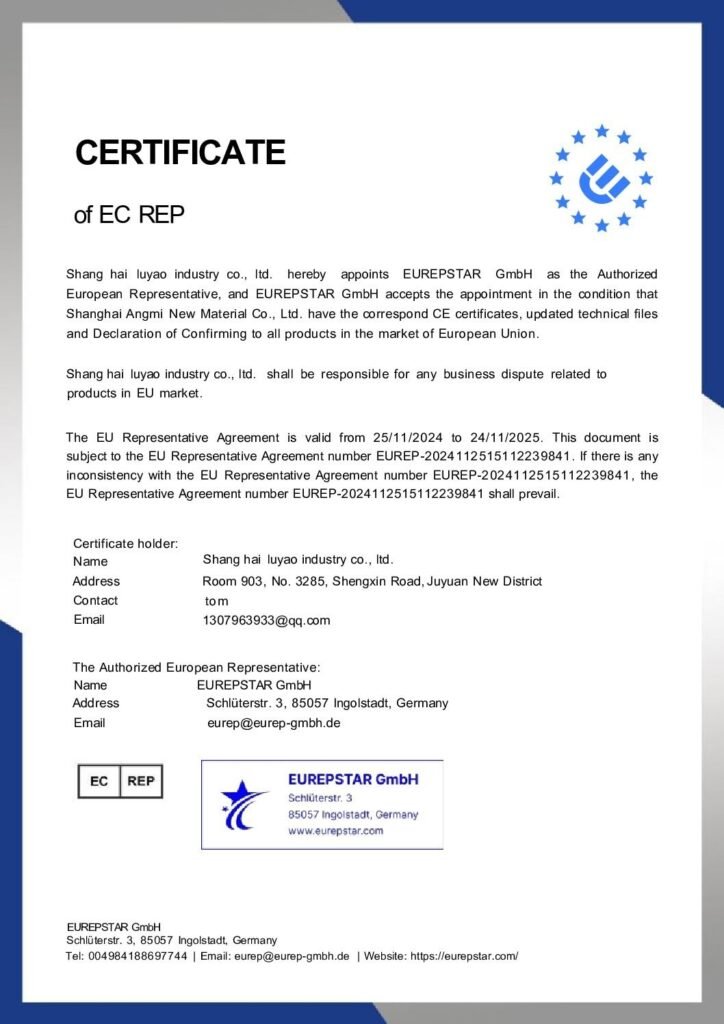
  • REACH compliance — for buyers serving European downstream markets or who need REACH-aligned supply chains
  • CARB compliance documentation — relevant for buyers exporting finished furniture to North American markets

If your market has a specific certification requirement we haven’t listed, ask. We can usually arrange additional third-party testing through SGS or Intertek on a per-order basis.

Who “LUYAO” work with

and how the buying process actually goes

We work directly with the procurement and R&D teams to handle color matching against panel samples. Most of our Mexican, Colombian, and Saudi customers fall into this category.

Wholesalers who resell into local furniture markets. For distributors, we provide branded packaging, multi-language product specs, and local-market decor recommendations based on what’s selling in similar regions.

Hospitality projects, government furniture contracts, large retail fixture rollouts. We’ve handled hotel chain rollouts in South Africa and Gulf-region retail buildouts where the entire decor set had to match an interior designer’s spec sheet.

Standard ordering process

  1. Initial inquiry — you send us the decors you need (panel samples, color codes, or existing edge banding samples)
  2. Quotation within 24-48 hours including FOB Shanghai pricing
  3. Free physical samples sent by DHL/FedEx (you cover courier)
  4. Sample approval, PI issued, 30% deposit
  5. Production — 15 days for stock decors, 30 days for custom decors
  6. Pre-shipment inspection and QC report sent to you
  7. Balance payment, shipment, full documentation package (commercial invoice, packing list, BL, MSDS, COA)

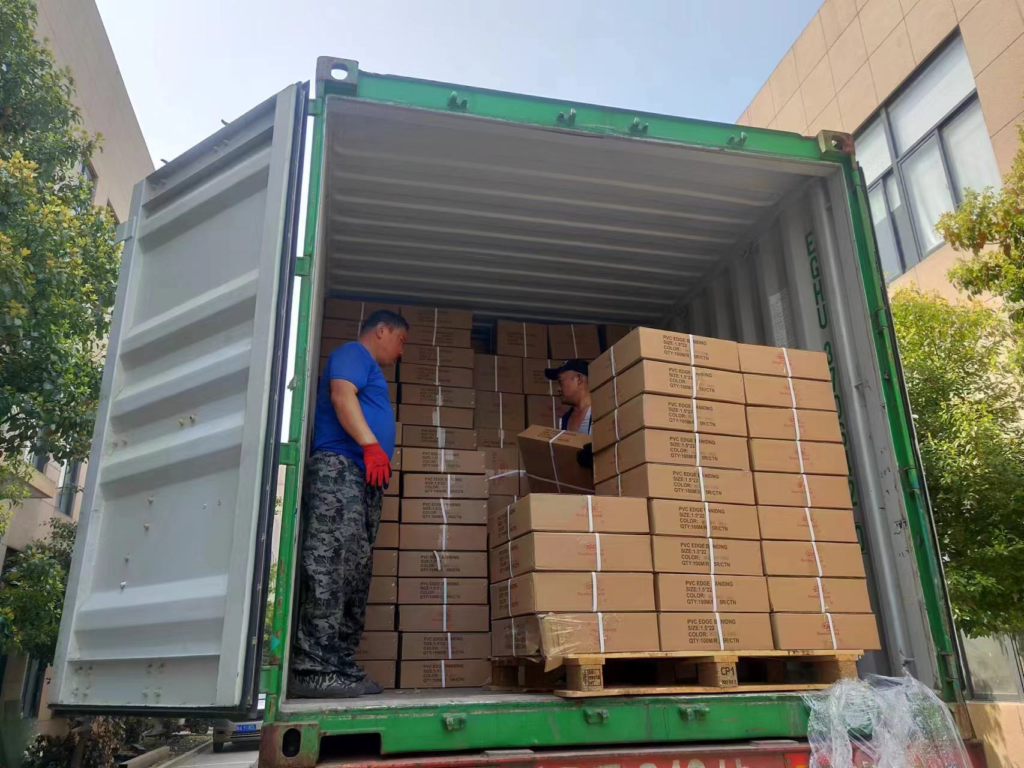
MOQ for production orders sits at 5,000 meters per decor, which translates to 50 rolls. For full container customization, the no-mold-fee benefit kicks in.

Complementary Products

Melamine edge banding

Melamine edge banding

Edge banding glue

PVC laminated film

Frequently Asked Questions

Ready to talk specifics?

If you’ve read this far, you’re probably either evaluating Luyao against another supplier, or you’ve had a bad experience with edge banding quality and you’re looking for someone who actually understands the product.

Either way, the fastest way to get a real answer is to send us your decor list or panel samples. We’ll come back inside 12 hours with pricing, lead time, and a sample plan. No long sales cycles, no chasing — our 30-person export team is structured to give every inquiry a direct response.