


If you only need one paragraph: dry indoor furniture on a normal line, you want to use EVA at 180–200 °C with a coat weight of slightly more than 150–200 g/m². For kitchen, bathroom, laboratory, and tropical-export panels, use PUR at 120–140 °C in a sealed melter, and avoid testing peel strength before day 5–7 of cure. All other things like high heat, almost invisible glue lines (zero-joint appearance) is a matter of equipment, not fragrances of the bag of granules.
What edge banding glue is actually doing
An edge band hides the exposed core of a particleboard, MDF or plywood panel. That core is the most moisture-exposed part of the board: it is open, porous and unsealed. The adhesive has four jobs at once:
- Wet both surfaces before it skins over — the machined panel edge and the back of the tape.
- Hold long enough for the pressure rollers to arrive. This window is the open time.
- Reach handling strength fast enough that the panel can go straight into trimming and buffing without stopping the line.
- Keep holding for the service life of the furniture, through summer warehouse heat, shipping containers and a wet cloth every morning.
Every failure you will ever see on an edge traces back to one of those four. That is why two factories can buy the same 25 kg bag and get completely different results.

The three process variables that decide whether the glue gets to do its job:
| Variable | What it controls | Typical target |
| Application temperature | Viscosity, wetting, whether the polymer starts to degrade | EVA 180–200 °C · PO 160–200 °C · PUR 120–150 °C |
| Coat weight | Glue line thickness and how much heat the film carries | 120–250 g/m² (EVA) · 120–180 g/m² (PUR) |
| Open time vs feed speed | Whether the tape arrives while the glue is still tacky | EVA 3–6 s · PUR 15–60 s |
Wood moisture content also. This application is covered too. Published data sheets from Jowat and KLEIBERIT say the working range is 8–10 % (w.b.) if the workshop temperature is no less than 18 C and especially down below the glue station, no draughts be allowed. This is just what they recommend. Under 18 °C, a 3 mm PVC edge hardens, the glue loses some heat to the board, and the joint looks strong but comes loose in the van.
The four chemistries you will actually be quoted
EVA — ethylene-vinyl acetate
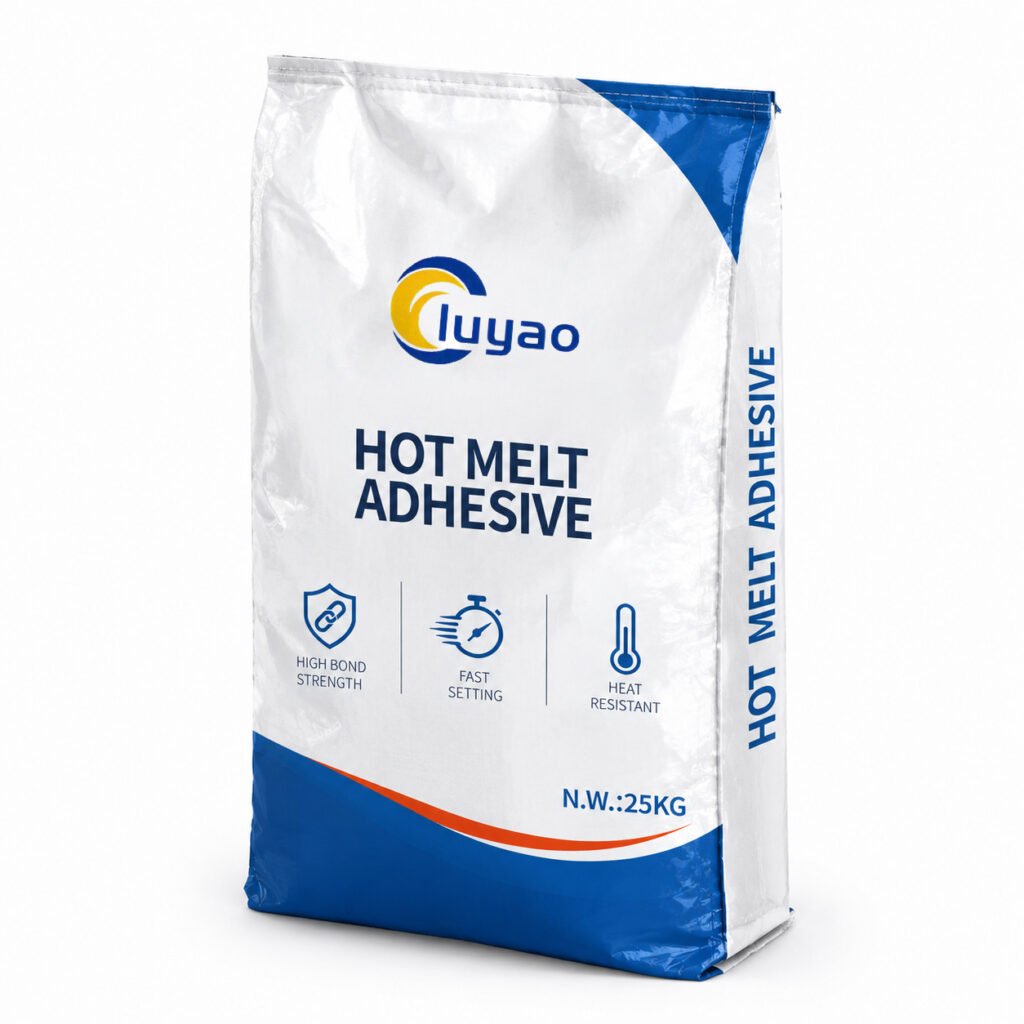
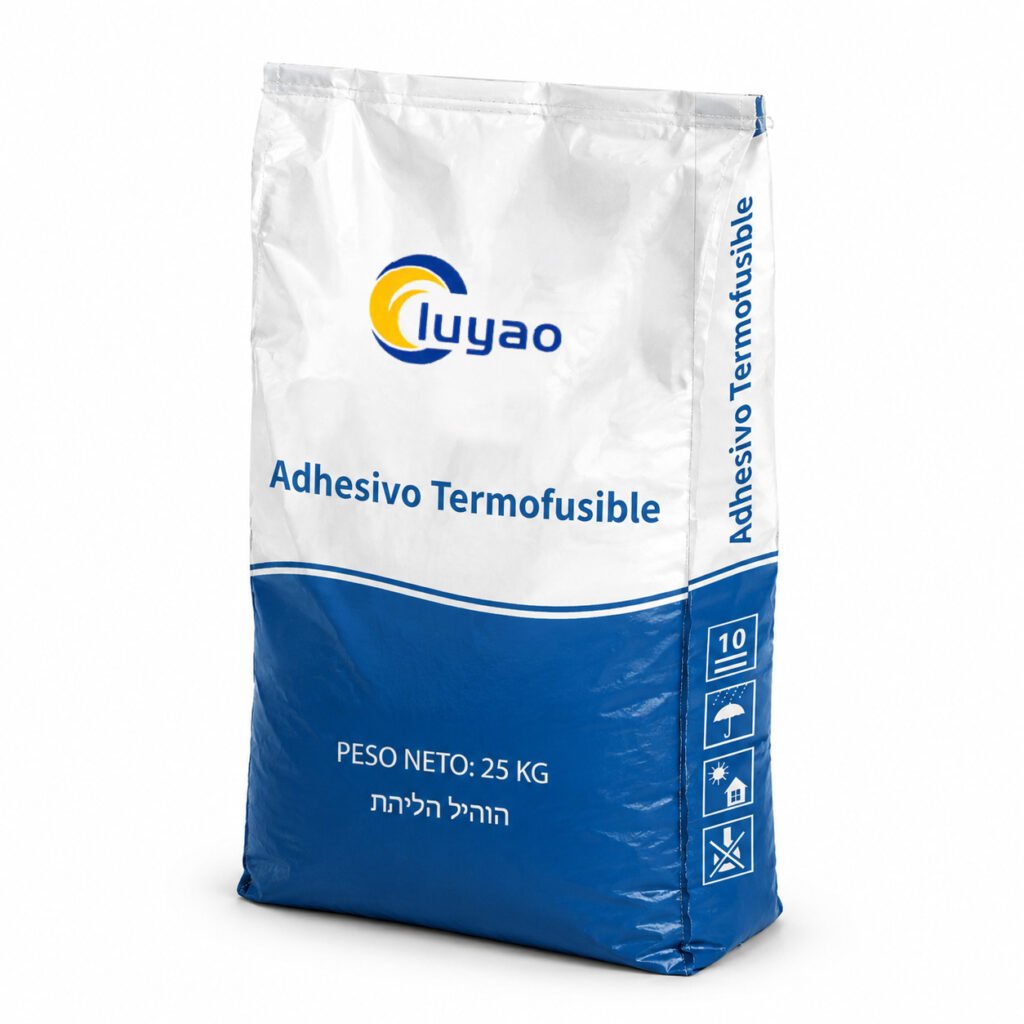
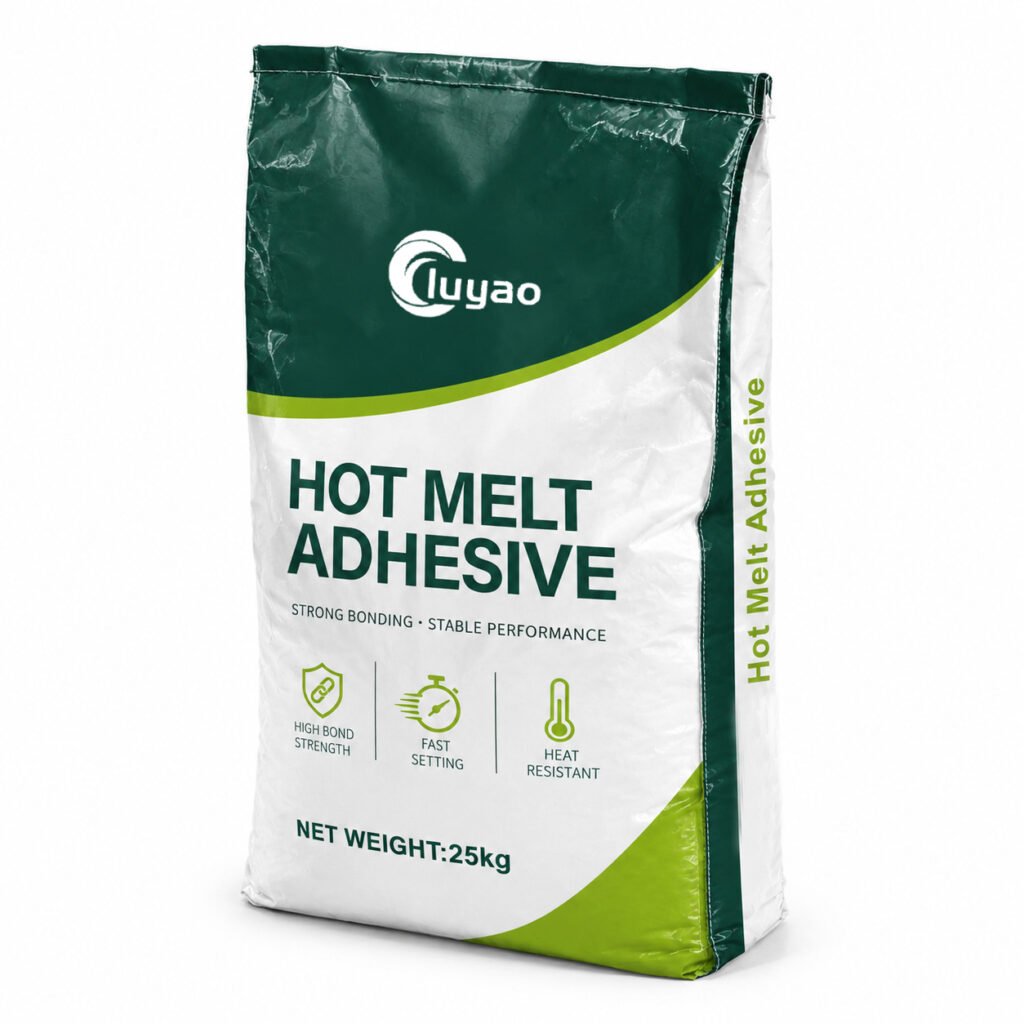
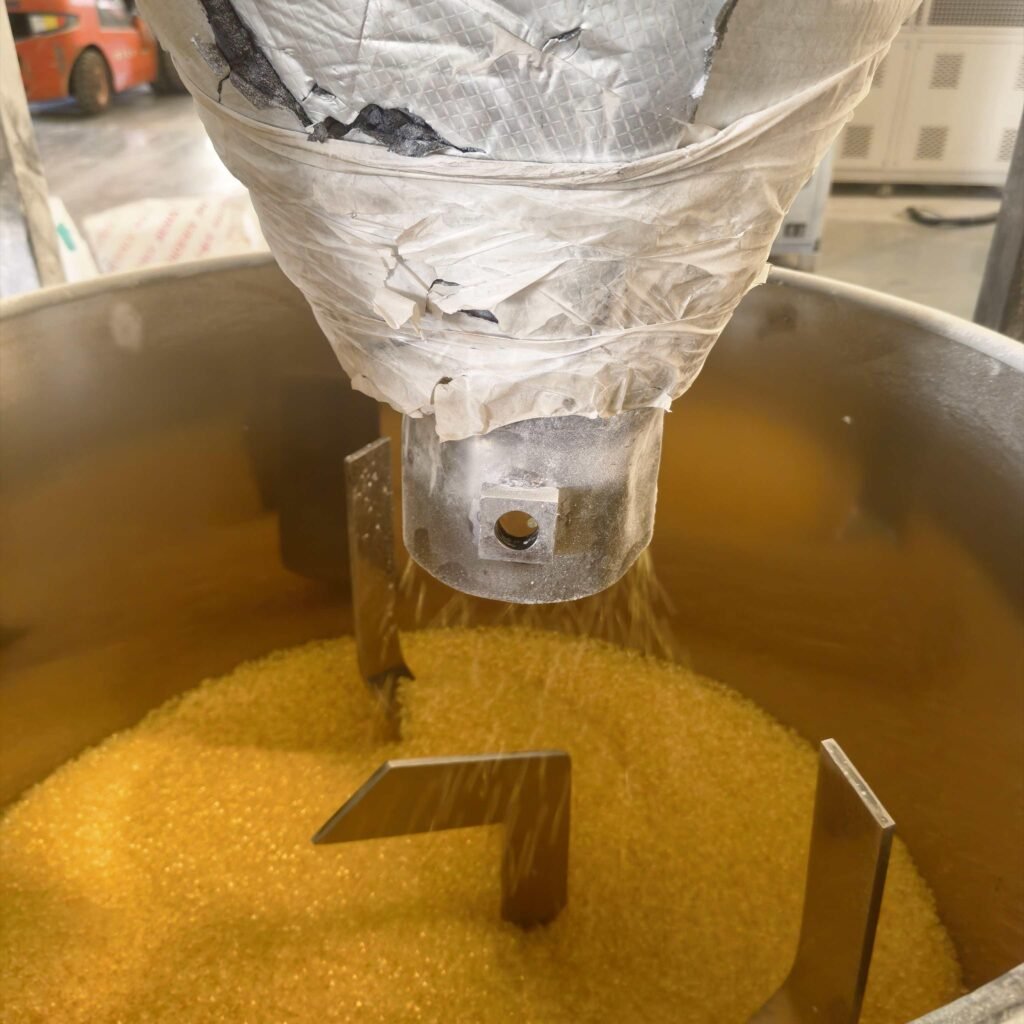
The default. Thermoplastic, so it melts and solidifies purely on temperature, with no chemical reaction to manage. That makes it the easiest adhesive in the plant to start, stop, reheat and rework.
Two grades exist and buyers often do not know it:
- Unfilled EVA — higher viscosity, thinner glue line, better appearance on dark and thin edges.
- Filled EVA — mineral filler lowers viscosity so it flows faster and forgives a badly set machine. It is cheaper per kilo and easier for new operators. The trade-off is a thicker, more visible glue line and more squeeze-out to scrape off.
Standard EVA is rated for continuous heat around 60–80 °C. High-heat EVA grades exist and reach roughly 100 °C, which is enough for a dark worktop in direct sun but not for a cabinet above a dishwasher.
PUR — polyurethane reactive
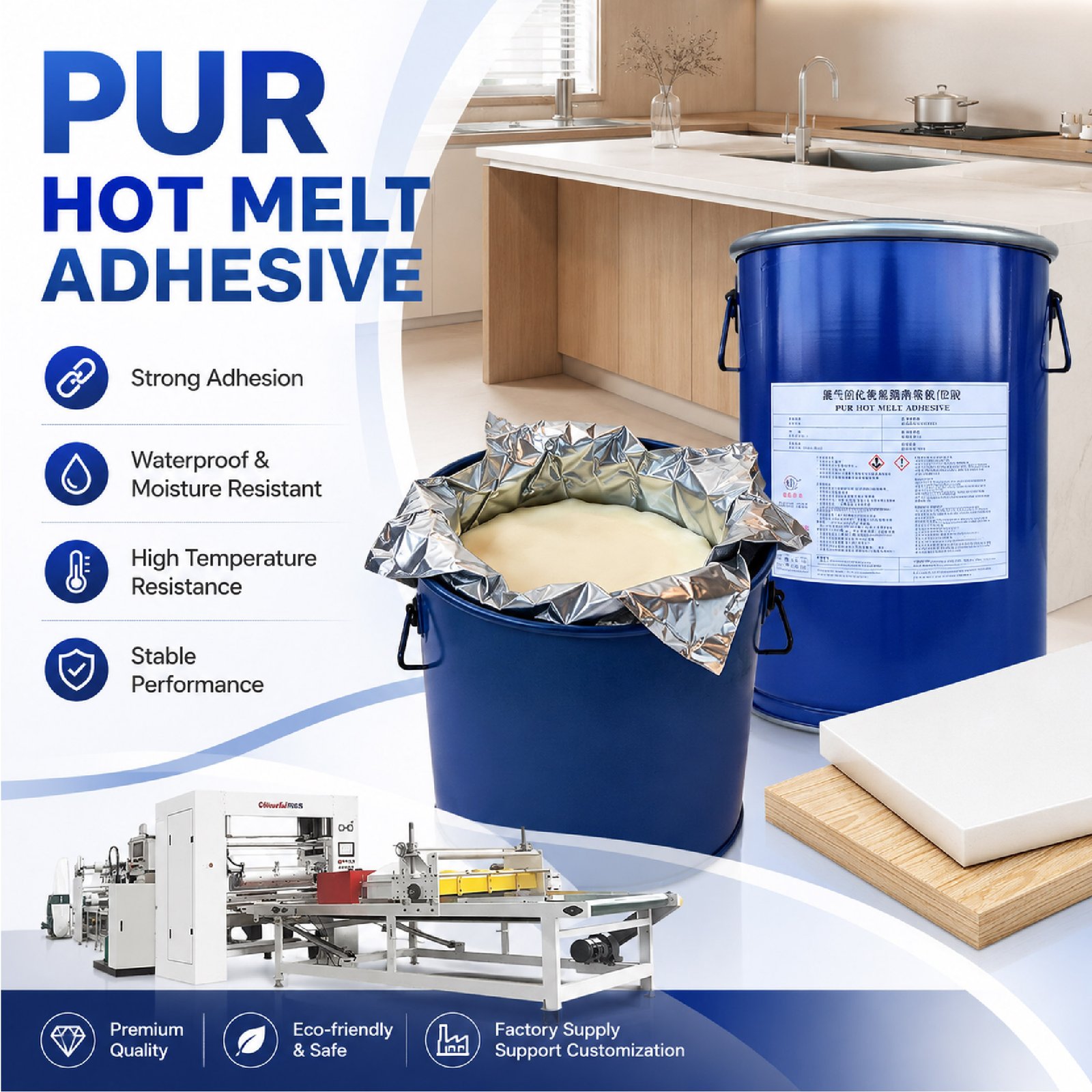
The only chemistry here that changes structure after application. Two stages:
- Stage 1, physical: the melt cools and gives green strength — enough to trim and stack within seconds.
- Stage 2, chemical: terminal isocyanate groups react with ambient and substrate moisture, cross-linking into a thermoset network over roughly 4–7 days at 23 °C / 50 % RH.
After stage 2 the bond cannot be re-melted. Heat resistance moves from 80 °C territory to roughly 150 °C on many grades, water resistance moves from D2–D3 to D4 territory, and coat weight drops because the cured film is stronger per gram. That is also why the glue line looks thinner and cleaner.
The cost of that performance is equipment discipline. PUR must be processed from a sealed, moisture-proof melter — a standard open EVA pot will gel a PUR load within hours. Unused melt cannot sit hot over a weekend. Cleaning is a procedure, not a wipe.
Film and web
Not so much glue pot but instead adhesive film (PES or TPU with backing paper) and hot melt web for curved profiles with small runs, re-lamination or repairs. When you’re using a fixed, new and even bond line with no pot to clean, it becomes more particular on CNC-shaped, more on a straight-line machine.
Side-by-side comparison
| EVA | PUR | |
| Bond mechanism | Cooling only (thermoplastic) | Cooling + moisture cross-linking |
| Processing temperature | 180–200 °C | 120–150 °C |
| Heat resistance after service | ~60–80 °C (high-heat grades ~100 °C) | up to ~150 °C, grade-dependent |
| Moisture resistance | Moderate (D2–D3) | Excellent (D4 territory) |
| Open time | 3–6 s | 15–60 s |
| Typical coat weight | 150–250 g/m² | 120–180 g/m² |
| Glue line | Visible; thicker with filled grades | Thin, near-invisible |
| Adhesion to PP edge | Poor without primer | Good |
| Equipment | Standard open pot | Sealed melter, moisture control |
| Re-meltable / reworkable | Yes | No after cure |
| Shelf life | 12–24 months | 6–9 months, sealed |
| Relative cost per kg | Low (~2–4 USD) | High (~6–10 USD) |
Orientation of that maintained table, rather than a definition. The regulation of the supplier’s technical data sheet, and every grade in a family ticks off a different line — the Jowat range, simply by the fact, includes EVA grades at 200°C from 35,000 to 165,000 mPa·s; this is the difference between a nozzle machine and a roller machine.
Which glue for which product
| Product | Recommended chemistry | Why |
| Bedroom wardrobes, bookcases, office desks | EVA | Dry service, moderate heat, cost-sensitive, frequent color changes |
| Standard kitchen carcasses (dry zones) | EVA | Cheaper, and internal panels rarely see steam |
| Sink units, dishwasher housings, worktops | PUR | Sustained moisture and heat; failure here is a warranty claim |
| Bathroom vanities | PUR | Standing water, humidity, cleaning chemicals |
| Laboratory and medical furniture | PUR | Chemical and steam resistance |
| Export to tropical or coastal markets | PUR | Container heat plus humidity; EVA creep risk rises sharply |
| High-gloss acrylic and dark super-matte | PUR | Thin bond line, low coat weight, no yellowing line |
| PP edges | PUR | EVA needs a primer and still underperforms |
| Curved profiles, short runs, repairs | Film or web | No pot, fixed glue line, workable in small batches |
The most common error is binary thinking: “we are an EVA factory” or “we are switching everything to PUR”. Most profitable plants do both. EVA on the standard SKUs, and PUR on the edge failure orders that would cost more than the entire year’s buy no matter what price we attach to the adhesive used.
Why edges peel: diagnose before you buy new glue
Check in this order. Changing adhesive is the last step, not the first.
| Symptom | Most likely cause | First check | Fix |
| Tape lifts by hand, panel edge completely clean of glue | Glue too cold, or board too cold — thermal shock before wetting | Actual temperature at the application roller, not the display | Raise pot setpoint within the data sheet limit; acclimatize panels; switch on pre-heat |
| Tape lifts, glue still stuck to the tape, board clean | Tape too cold and stiff, or pressure too low | Roller pressure and tape storage temperature | Increase roller pressure; bring tape to room temperature 24 h ahead |
| Glue stays mostly on the tape, thin transfer to board | Pot temperature too high, viscosity too low, glue soaking into the board | Viscosity/temperature against the TDS | Lower setpoint; reduce coat weight |
| Visible white or yellow line on dark edges | Wrong color grade, filled EVA, or excessive coat weight | Grade selection and roller gap | Switch to unfilled or color-matched grade; reduce coat weight |
| Bubbles along the glue line | Glue boiling, or trapped air from uneven pressure | Whether pot temperature exceeds the TDS maximum | Drop temperature, purge carbonized glue, realign rollers |
| Stringing at the roller | Viscosity too high for line speed, or film too cold | Feed speed vs grade | Slow the line or use a lower-viscosity grade; raise roller temperature |
| Peels only at leading and trailing ends | Roller alignment, insufficient glue at the leading edge, trimming unit knocking the tape | Roller position and end-trim setting | Realign; check trimmers are not digging in |
| Peels after 6–18 months in service | Grade too low for the real service temperature, or coat weight too thin | The environment the furniture actually lives in | Move to a higher heat grade or PUR |
| Corners open on radius edges | Bond strength in the radius zone, speed mismatch | Feed speed through the corner | Reduce speed; consider PUR or a more flexible grade |
Two diagnostic rules that save a lot of arguing:
Which surface did the glue stay on? If it stayed on the tape, the board was too cold or too dusty to accept it. If it stayed on the board, the tape was too cold or the pressure was too low. That single observation splits the problem in half.
What does the peeled surface look like? A smooth, glossy, complete transfer means the glue never wet properly. A ragged, fiber-pulling surface means the bond was fine and the board failed underneath — which is a panel quality problem, not an adhesive problem.

Cost per accepted panel, not cost per kilo
EVA at 3 USD/kg against PUR at 8 USD/kg looks decisive. It usually is not, because the comparison stops at the wrong number. Build the number this way:
Total edge banding cost per panel = adhesive consumed (not purchased) + purge and cleaning material + startup and changeover labor + energy + maintenance + scrapped panels + rework + field repair and warranty allowance
PUR particularly works its way three of those in your favor: coat weight drops, budget overrun slavery drops, and field 데 월드 Repair R falls. In most cases EVA bumps the first at the top and the changeover line in its favor. EVA will win on a normal wardrobe run. One site repair in a hotel bathroom package can cost more than the entire adhesive price across the whole order with a five-year warranty.
The energy line is real as well — PUR runs 40–80 °C cooler than EVA at the pot, which reduces both energy draw and glue degradation.
What to put in a purchase specification
Ask for these in writing before the first container, and test on your own board, your own tape and your own machine. A sample panel run on the supplier’s demo line tells you almost nothing.
- Base chemistry and grade — EVA or PUR, with the exact grade code.
- Processing temperature window and the maximum continuous temperature.
- Viscosity at your machine’s working temperature, not at some standard reference. A nozzle machine and a roller machine need different numbers.
- Open time at that temperature, matched to your feed speed.
- Heat resistance of the cured bond, with the test method stated.
- Peel strength with the coat weight used in the test, and the substrate. A number without a coat weight is meaningless.
- Free monomeric diisocyanate content if it is PUR (see the compliance note below).
- Lot-to-lot viscosity tolerance — a ±5 % band is workable, ±15 % means you retune the line every delivery.
- Shelf life from production date and storage conditions, plus batch traceability on the bag.
- Color match capability — a Pantone or physical swatch match, not “natural”.
Compliance note for PUR buyers
PUR is an isocyanate based substance, and that is the reason that in Europe it has legal implications. Commission Regulation (EU) 2020/1149 (REACH) states that industrial and professional users of mixtures with more than 0.1 % weight by monomeric diisocyanate must have completed a certified training on the safe use of these substances which has been documented by the employer and repeated every five years at least. This obligation goes into effect 24 August 2023, and the packaging has always carried the training statement since 24 February 2022.
In practice: request for an SDS section 3, which should indicate the free monomeric diisocyanate level, and see if it is above or below 0.1 %. You can order lower-monomer PUR grades — Jowat for instance, notes these options in the edge banding range — which relieve the need for training to your customers. Finished furniture that you export into the EU has this talked about and sits in your supply chain ones you want or ones you don’t.
Where the market is heading
The direction of travel should be obvious: more reactive adhesive, zero joint, more automation. The global edge banding materials market, estimated to be worth approximately 1.6 billion USD today, is expected to grow rapidly in the high single-digit growth through the mid-2030s, driven mainly by Asia-Pacific furniture production and modular cabinetry. For a glue buyer less choices are at the bottom and more at the top: the EVA commodity sector is crowded and price-based. Here’s where differentiation is happening with low-monomer PUR, PP-compatible and functional-layer tapes.
What is not changing: the physics. A cold board, a dusty edge and a misaligned roller will defeat a 10 USD/kg adhesive exactly as reliably as a 3 USD/kg one.
FAQ
What temperature should edge banding glue be applied at? EVA runs 180–200 °C, PUR 120–150 °C. High-heat EVA grades may need 200–220 °C. Always confirm the actual temperature at the application roller with an independent thermometer — the machine display reads the pot, and the roller can be 10–15 °C cooler in a cold workshop.
Is PUR always better than EVA? No. PUR is better for moisture, heat and appearance. EVA is better for cost, changeover speed, rework and simple maintenance. A dry bedroom wardrobe does not benefit from PUR; a bathroom vanity does not benefit from EVA.
How much glue should be applied? Usually 120–250 g/m² for EVA and 120–180 g/m² for PUR, set so a thin continuous film is just visible at the edge of the bond. More glue is not stronger glue. Excess adhesive produces a thicker, weaker line, more squeeze-out and more trimming contamination.
How long does PUR take to reach full strength? Green strength in seconds, full cure in about 4–7 days at 23 °C and 50 % RH. Testing peel strength on day one understates the final bond by a wide margin. Hold heat-resistance and peel tests until day 7.
Why does my edge banding peel off weeks after production, when it passed inspection? Because inspection on the day of production measures green strength, not service strength. The usual culprits are a grade that is under-specified for the real service temperature, a coat weight that is too thin, or a panel that was too cold or too damp at bonding. Re-check the service environment before you change the adhesive.
Can I run PUR on an EVA edgebander? Only with a proper PUR conversion — a sealed melter, moisture control and validated changeover procedure. An open EVA pot will cure the PUR load inside the tank. Some modern machines support both chemistries with interchangeable containers, but that must be confirmed with the machine builder, not assumed.
What is a zero-joint edge, and does it need glue? A zero-joint edge uses an edge band with a co-extruded functional polymer layer that is activated by laser, hot air, NIR, plasma or hydrogen and pressed directly onto the board. There is no adhesive in the joint, which is why the line is invisible. It requires a compatible machine and a compatible tape.
How should edge banding glue be stored? EVA granules: cool, dry, sealed, 12–24 months. PUR: sealed against moisture, 15–25 °C, typically 6–9 months — ambient humidity cures the product inside the container, so an opened drum has a working life measured in days, not months.